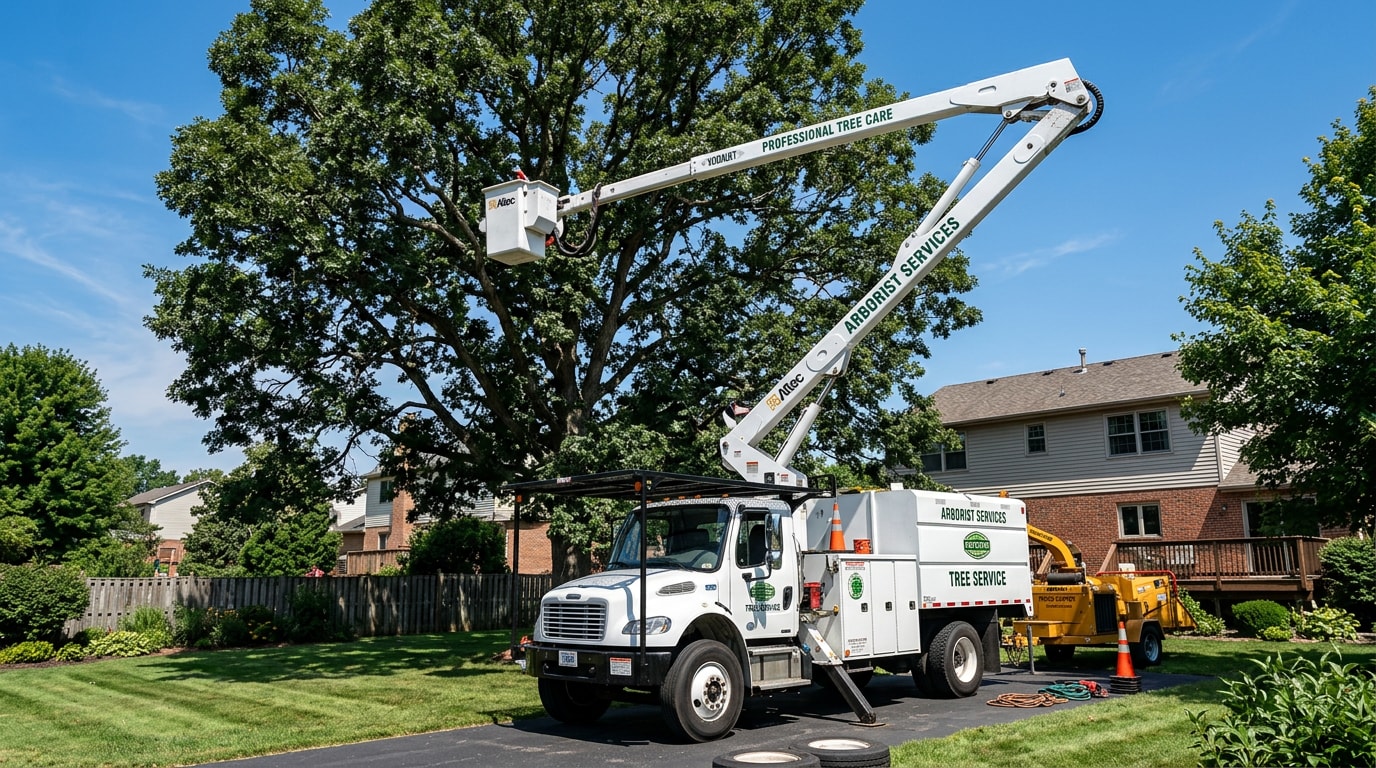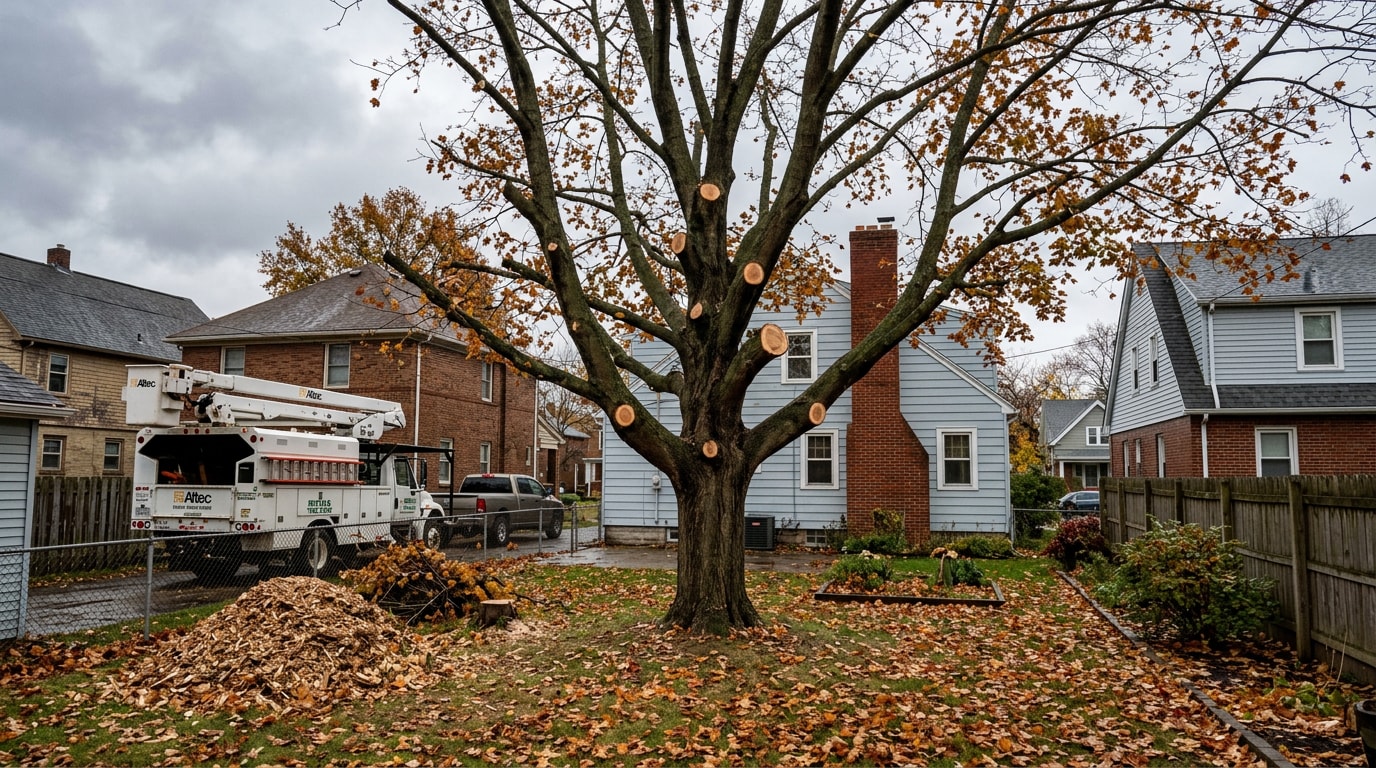
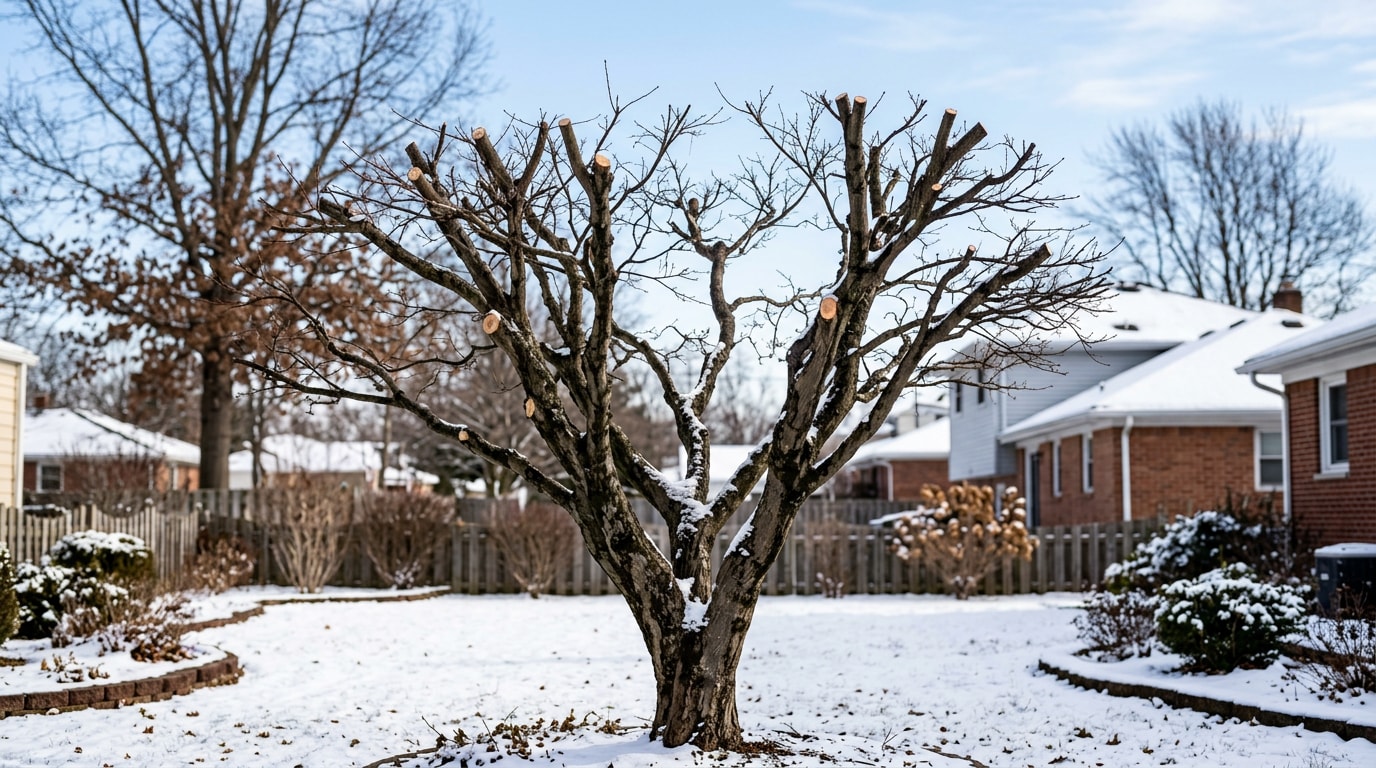
What is pruning a tree? In Cheektowaga, NY, it means selectively cutting specific branches, buds, or roots to improve a tree's health, structure, and safety, not hacking away at random growth. Get the definition wrong and you can pay an arborist to do more harm than good.
What Is Tree Pruning? (Definition)
Pruning trees is the act of cutting and removing branches from a tree to encourage new growth and develop a good structure. It's not random trimming.
Pruning should be done with a purpose in mind. Every cut should remove something unwanted, like a dead limb, a crossing branch, or a weak fork, while directing the tree's energy toward healthy new growth.
The best results are attained through selective pruning, rather than shearing. Selective cuts are slower, but they're the difference between a tree that heals cleanly and one that doesn't.
People often use "pruning" and "trimming" interchangeably, but they're not the same thing. Trimming shapes a tree for appearance. Pruning targets long-term health and structure (more on that distinction in the FAQ below).
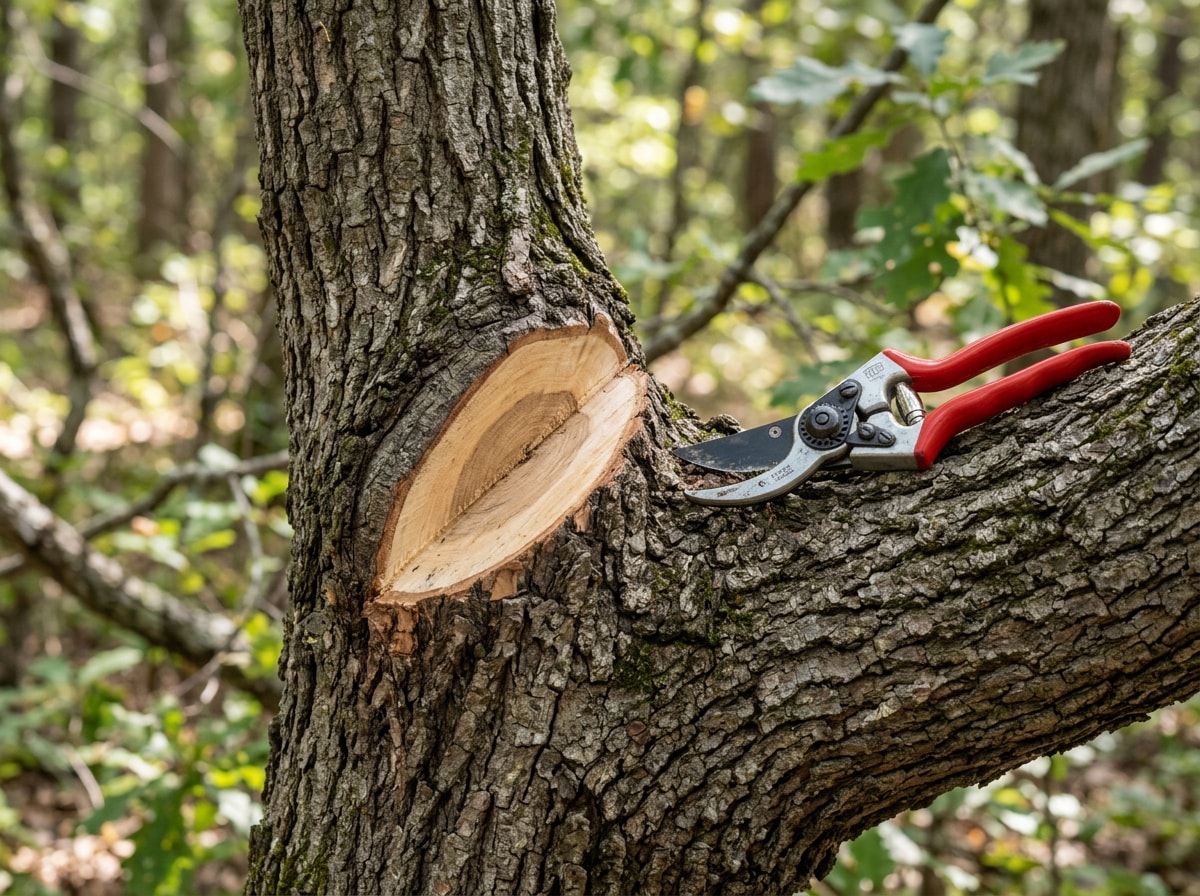
If you're comparing tree pruning options in Cheektowaga, our tree pruning services page walks through what a professional visit typically includes.
Why Prune Trees in Cheektowaga?
Pruning benefits go beyond curb appeal. Done correctly, it strengthens structure, extends a tree's life, and reduces the odds of limb failure during a storm.
The core reasons homeowners prune include:
- Removing dead, broken, or disease-damaged branches before they drop on a roof, car, or fence line
Saying goodbye to dead, broken, or damaged branches before they cause property damage
- Correcting crossing or rubbing limbs that create open wounds
Giving the tree the green light to put out healthy, new growth once old wood is removed
Western New York adds a regional wrinkle: heavy, wet lake-effect snow puts real stress on poorly structured branches. After inspecting storm-damaged trees across Cheektowaga neighborhoods each winter, we consistently see the same pattern: limbs with weak attachments or excess deadwood are the first to snap under wet snow load, while properly pruned trees shed the weight and hold.
When to Prune Trees in Cheektowaga, NY
Cheektowaga sits in USDA plant hardiness zone 6b under the 2023 USDA Plant Hardiness Zone Map , which puts the area firmly in the cold end of the "dormant season" pruning window.
The best time to prune living branches is late in the dormant season or very early in spring before leaves form.
Heavy pruning of live tissue just after the spring growth flush should be avoided, especially on weak trees.
Routine removal of dead, weak, or diseased limbs can usually happen any time of year. Timing matters more for species prone to disease transmission through fresh cuts, which is one more reason a trained eye matters before you schedule work. Our Cheektowaga, NY service area page has more on what's typical for trees in this zone.
Pruning Techniques & Methods
Several techniques fall under the "pruning" umbrella, and each solves a different problem.
| Technique | What It Does | Best For |
|---|---|---|
| Structural pruning | Corrects competing leaders and weak unions in a young or mature tree | Building long-term framework |
| Crown reduction |
Prunes back leaders and branch ends to secondary branches large enough to take over the terminal role
| Scaling back height or spread near a roof or utility line |
|---|
| Crown thinning |
Opens up the foliage of a tree, lessens weight on substantial limbs, and helps keep the tree's natural shape
| Improving light and airflow without changing overall size |
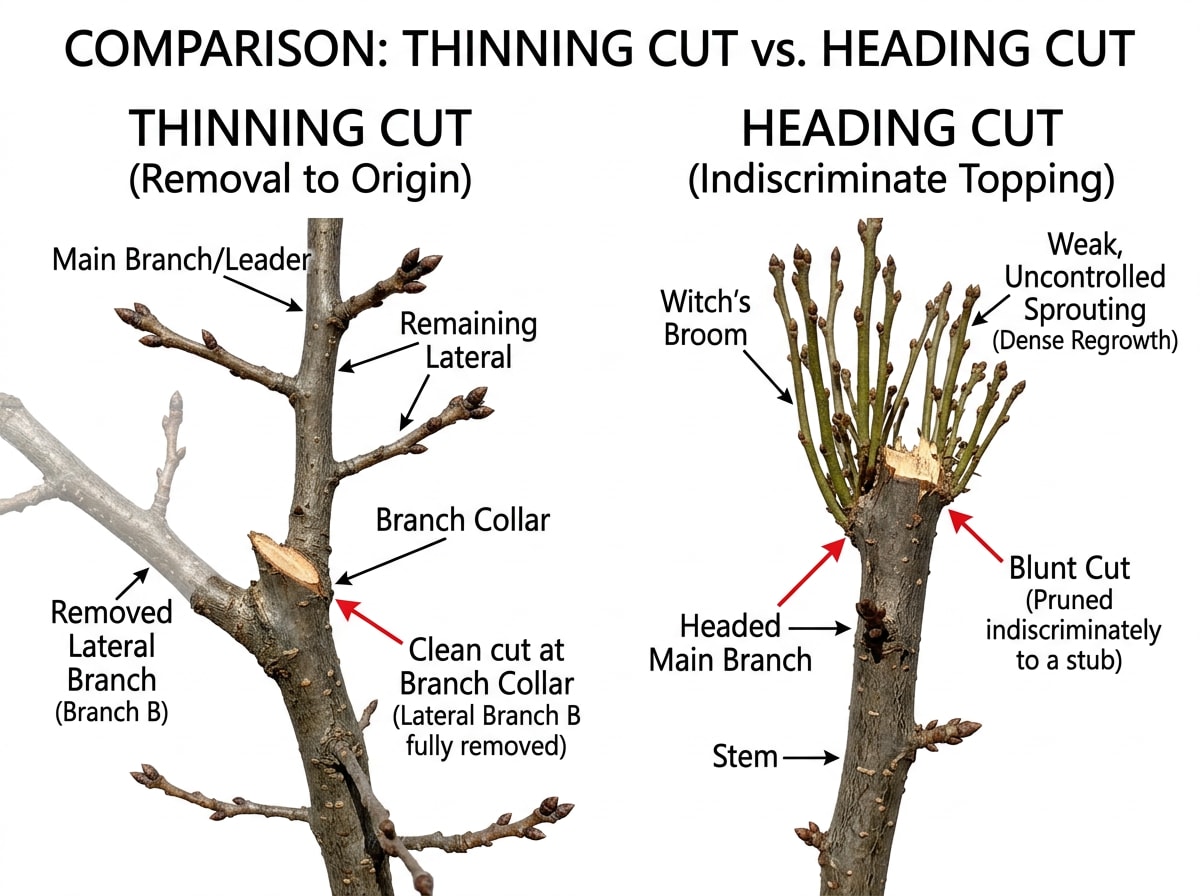
Pruning Cuts: Small Branches vs. Large or Heavy Branches
Small twigs can usually be hand-pruned close to the branch collar. Recognizing the branch collar and branch bark ridge is one of the critical parts of pruning large branches and limbs correctly. Cutting outside that ridge, rather than flush to the trunk, lets the tree seal the wound instead of leaving it exposed to decay.
Large limbs near power lines or over a roofline aren't a DIY job. Only specially trained line clearance tree trimmers are permitted to prune trees close to electrified lines carrying more than 750 volts. If a branch is hanging over a structure or already compromised, our hazardous tree removal team should take a look before anyone climbs.
Don't Confuse Pruning With Topping
Topping isn't an aggressive version of pruning. Topping cuts off all parts of a tree above a certain height or limb size, creating large wounds that close slowly and leave the tree open to decay, disease, and insect attack. A tree that's been topped may leaf out again, but its structure is permanently compromised.
Pruning Young Trees
Correct pruning early in a tree's life pays off for decades. A young tree should be trained to maintain a single dominant leader stem, the tallest, strongest, main branch of the tree.
As a rule, never remove more than one-fourth of a tree's branches at one time.
If you're shaping an ornamental like a weeping cherry, species-specific cuts matter even more than on a typical shade tree. Our weeping cherry pruning guide covers the exact approach for that species.
When to Call a Professional
Because shoddy and unsafe work abounds, national standards for pruning and safety exist specifically to separate qualified arborists from guesswork. Height, large limbs, and utility line proximity are the three biggest reasons to hand a job off.
If you're not sure whether your tree needs a light trim or a structural prune, request a free estimate and we'll walk the property with you before any cuts are made.
FAQ
Is Pruning Necessary?
Yes. It removes hazards before they fail, supports strong structure, and directs a tree's growth in healthy ways.
What Is the Difference Between Tree Trimming and Tree Pruning?
Trimming is mostly cosmetic, shaping branches or hedges for appearance. Pruning is targeted removal of specific growth to support long-term health and structural integrity.
How Often Should Trees Be Pruned?
Mature trees generally do well with pruning every two to five years. Young trees often need lighter shaping annually to establish good structure. Exact timing depends on species and condition.
Can You Prune a Tree Yourself, or Should You Hire a Professional?
Small, low branches are reasonable for a careful homeowner to trim. Anything involving height, large limbs, or power lines is safer left to a trained arborist.
Is Topping a Tree the Same as Pruning?
No. Topping can destroy a tree's structure, health, beauty, value, and even take its life , which is the opposite of what proper pruning is meant to do.
What Is the Best Time of Year to Prune Trees in Cheektowaga, NY?
Late dormant season through very early spring, before leaves form, is generally best for structural cuts. Dead or hazardous limbs can be removed at almost any time of year.
Need a second opinion before cutting anything yourself? The team at 1776 Stump Grinding inspects trees across Cheektowaga, Clarence, Amherst, and the surrounding area, and every estimate is free.