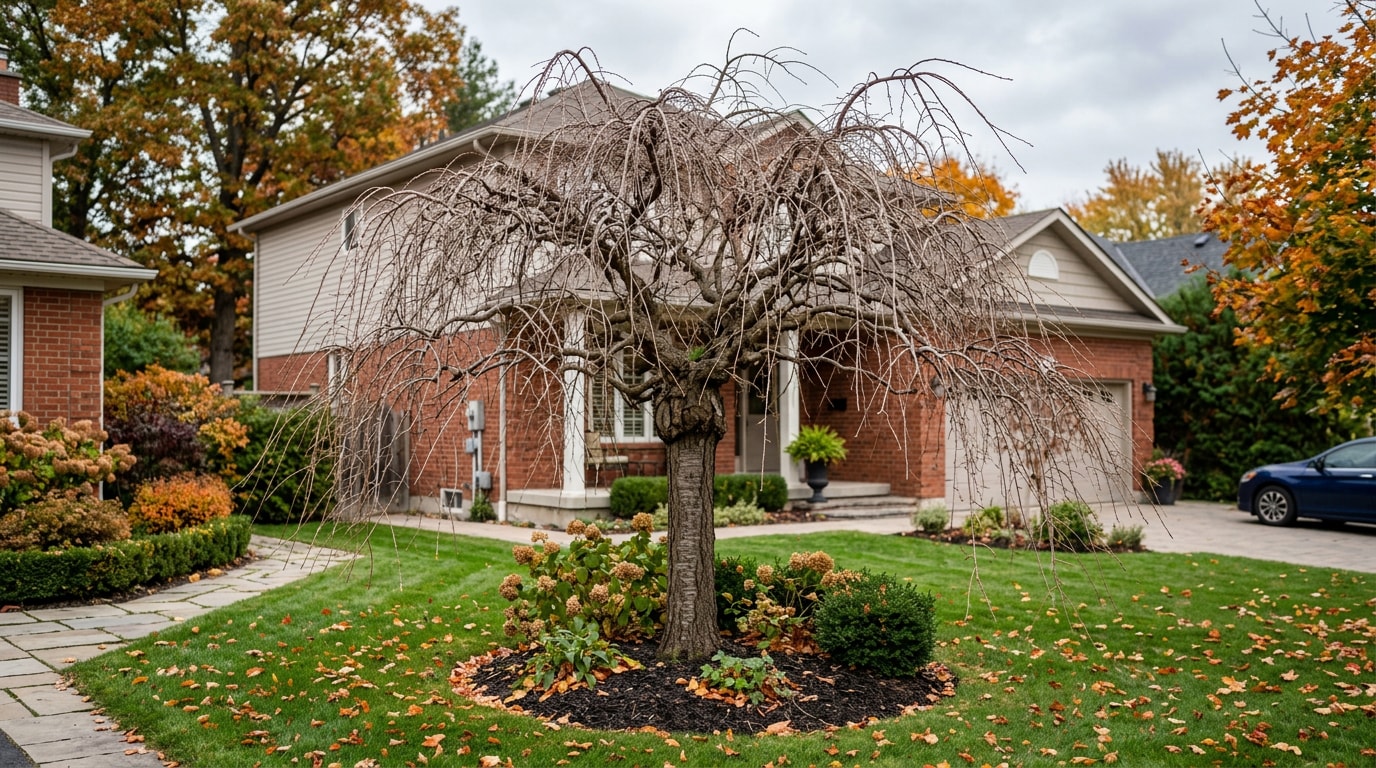
Learning how to prune a weeping cherry tree in West Seneca, NY starts with one question: is the tree grafted or natural? Prunus pendula varieties fall into these two categories, and each reacts differently to the same cut. This guide walks through identification, the right timing for Western New York's climate, the tools you'll need, and the exact steps for keeping a weeping cherry healthy and graceful.
Is My Weeping Cherry Grafted or Natural?
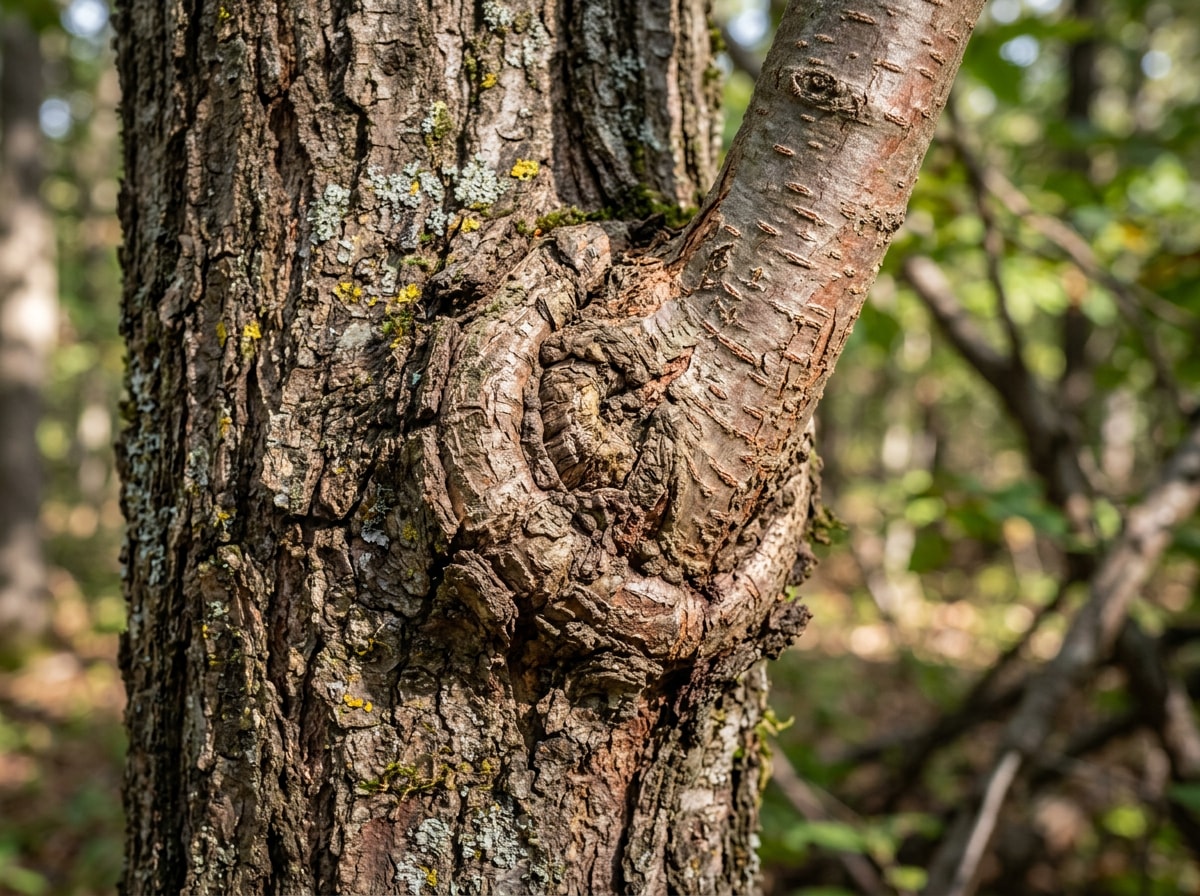
A grafted weeping cherry shows a noticeable knob or swollen ring on the trunk, called a graft union, usually a few feet above the soil, where a weeping Higan cherry top was fused onto upright rootstock. A natural weeping cherry has smooth, even bark with no bulge, because the whole tree grew from a single seed.
Look closely at the bark texture and trunk diameter just above and below that bulge. On a grafted tree, you'll often notice a slight color or texture shift right at the graft knot, almost like a scar that never fully smoothed over. On a natural tree, the trunk tapers consistently with no interruption.
Most weeping cherries sold at Western New York nurseries are grafted, since nurseries graft the weeping Higan cherry onto sturdier upright rootstock to produce a straighter, more predictable trunk. A USU Extension forester notes that with grafted ornamentals, the rootstock, the upright stem, and the weeping top are effectively three separate plants fused together, which is exactly why every later pruning decision depends on knowing which type is in your yard.
| Feature | Grafted Weeping Cherry | Natural Weeping Cherry |
|---|---|---|
| Trunk bark | Visible knot/bulge (graft union), slight scar | Smooth, even, no interruption |
| Upright shoots | Come from rootstock, must be removed | Normal early growth, leave alone |
| Common in WNY nurseries | Yes, most common type | Less common |
| Pruning risk | Cutting below union kills the weeping form | Cutting upright growth too early disrupts shape |
When to Prune a Weeping Cherry Tree in West Seneca, NY
Timing is the single most common mistake homeowners make with weeping cherries, and Western New York's climate makes the window fairly specific. West Seneca falls in USDA hardiness zone 6a/6b under the 2023 USDA Plant Hardiness Zone Map, a small warm-side shift from the older 2012 map's straight zone 6a rating. That shift matters less for pruning timing than the local frost calendar does.
The safest window is full dormancy: after leaf drop in late fall through early spring, before buds swell. For West Seneca, that generally means mid-November through early March. The area's average first fall frost lands in mid-to-late October, and the average last spring frost falls in late April to early May, so structural pruning sandwiched between those dates avoids active growth.
Pruning during dormancy reduces stress on the tree and gives fresh cuts time to callus over before insects and fungal pathogens become active again in spring. One state forestry program puts it simply: the ideal time to prune trees is during the winter months when trees are dormant, with dead or hazardous wood as the only exception.
One exception applies year-round: dead, damaged, or diseased wood can and should come off whenever you spot it, regardless of season. Waiting for the dormant window only applies to structural and shaping cuts.
Homeowners unsure how local microclimates near Cazenovia Creek affect their yard can check our West Seneca service area page for growing conditions specific to the town.
What You'll Need: Tools and Materials
A quick gear check before you make a single cut saves a lot of frustration mid-project. Weeping cherry pruning doesn't require specialty equipment, just the right basics in good condition.
- Bypass pruning shears for stems under ½ inch
- Loppers for branches up to about 1.5 inches
- A pruning saw for anything thicker
- Rubbing alcohol or a disinfectant spray to sterilize pruning tools between cuts
- Gloves and eye protection
- A drop cloth or tarp for easy cleanup
- A stable ladder for taller specimens
Pruning sealant is optional. NC State Extension's pruning guide points out that a flush cut removes the protective collar and increases the chance of fungal infection, while a correctly placed cut just outside the collar lets the tree seal itself. Save your money on sealant tubs and focus on cut placement instead.
If gathering tools and tackling ladder work doesn't sound appealing, our tree pruning services team handles this work directly, and a free estimate takes just a few minutes to schedule.
Step-by-Step Instructions for Pruning a Weeping Cherry Tree
The actual pruning process splits depending on whether your tree is grafted or natural, a distinction covered above. Once that's settled, every weeping cherry needs the same problem-growth removal and shaping work to stay healthy and attractive.
Pruning a Grafted Weeping Cherry
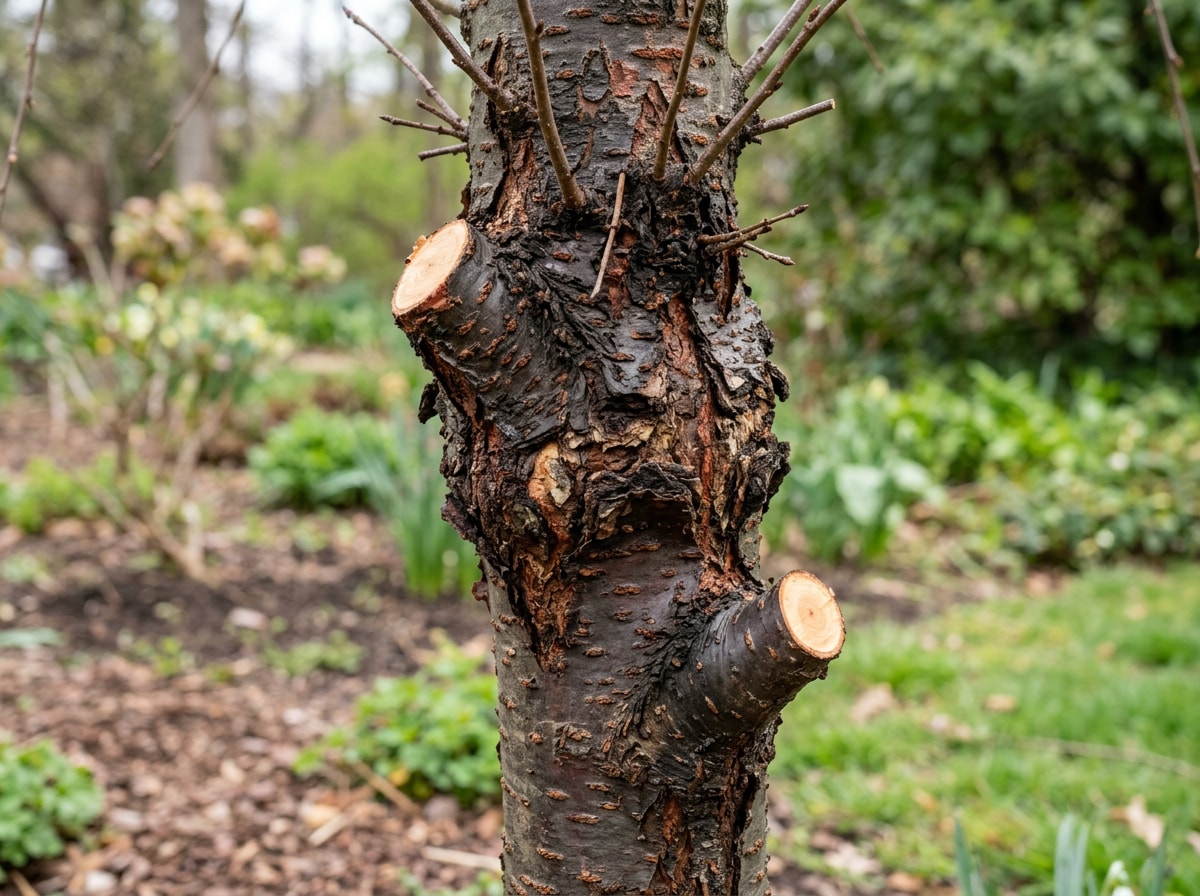
Grafted weeping cherries often develop a tangled "snarl" of crossing branches near the graft union as the weeping top grows unevenly in its first several years. Thin this snarl by removing crossing or rubbing branches so light can reach the canopy's interior.
Remove any upright, non-weeping shoots growing below the graft union as soon as you spot them. These shoots come from the rootstock, not the ornamental top, and they'll eventually overpower the tree's weeping form if left alone. Aim to keep 5 to 6 inches of clear, sucker-free trunk visible between the soil line and the graft union.
Trim weeping branch tips so they hang at least 6 inches above the ground. This keeps foliage out of mower blades and away from soil-borne disease.
Pruning a Natural (Ungrafted) Weeping Cherry
Natural weeping cherries follow the opposite rule from grafted ones: leave upright shoots alone. On an ungrafted tree, those upright branches are young growth that hasn't yet arched downward. Cutting them off prematurely disrupts the tree's natural weeping form rather than protecting it.
Instead, focus on trimming branch tips that drag on the ground and removing any crossed, broken, or diseased wood, the same housekeeping a grafted tree needs. Give young upright growth a season or two before judging whether it needs attention. Patience matters more here than with grafted trees.
Remove Suckers, Dead Wood, and Watersprouts First
Before any shaping cuts, clear out three categories of problem growth in a single pass:
- Suckers at the base
- Dead or dying wood
- Watersprouts near the graft area
Use the scratch test on questionable branches: scrape a thin patch of bark with a thumbnail, and green underneath means the wood is alive.
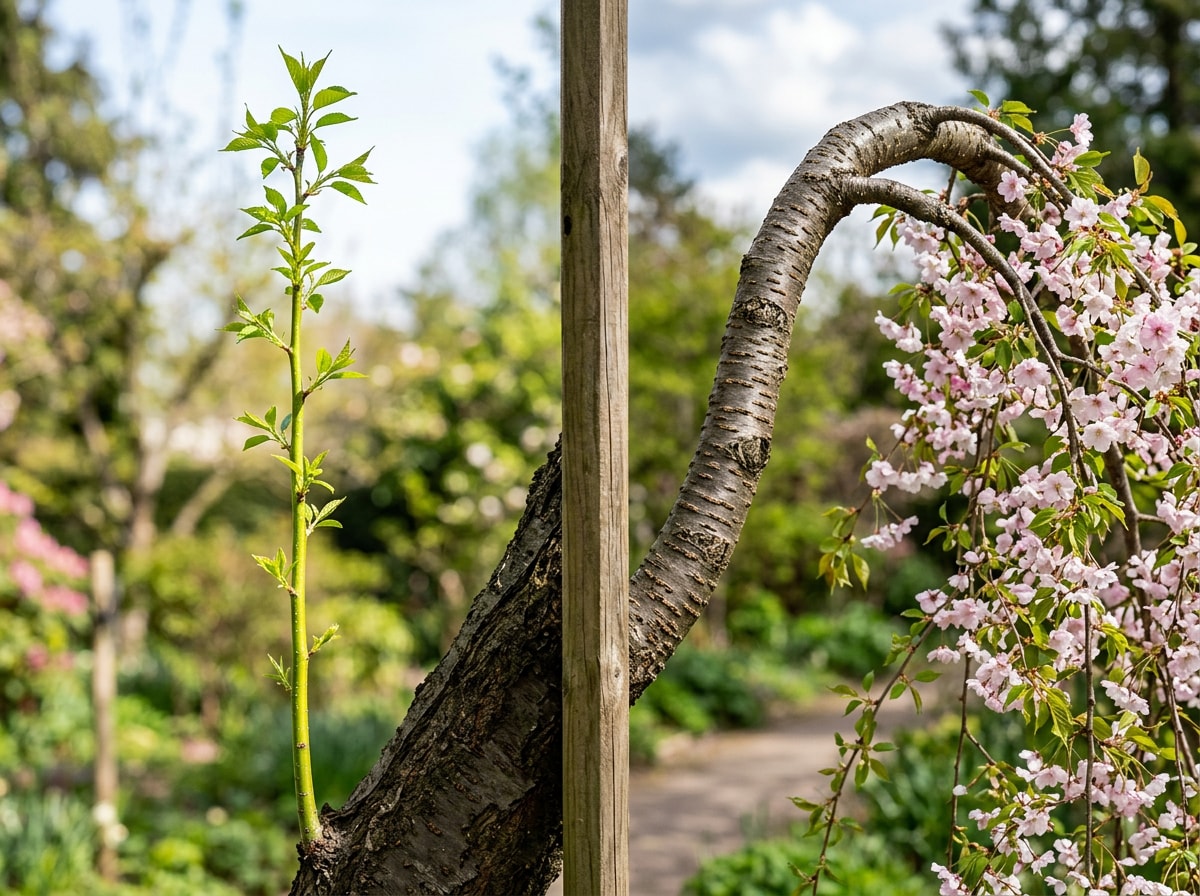
Watersprouts can be tricky to spot at first glance. A true weeping branch grows from older wood, has a slight arch already forming, and bark that matches the rest of the canopy. A watersprout shoots straight up from the trunk or a main limb, often with thinner, brighter green bark and no downward curve at all. It looks almost like a separate plant growing out of the tree.
Cut suckers and watersprouts flush at their point of origin. For every other branch, cut just outside the branch collar, the slightly swollen ring where a branch meets the trunk, rather than flush against the trunk itself. Iowa State University Extension recommends a three-cut method for any branch over 1.5 inches thick to keep bark from tearing as the branch drops. Never snap or break a branch off by hand; a clean cut heals faster and resists disease better. Always sterilize pruning shears with rubbing alcohol between cuts, especially when moving between diseased and healthy wood.
Prune for Shaping
Once problem growth is cleared, shaping cuts refine the tree's umbrella-like silhouette. Trim weeping tips to roughly 6 inches above the ground and selectively remove any remaining upright growth that's disrupting the canopy's outline.
Stick to removing no more than 25% of the canopy in a single session. Cutting more stresses the tree and can trigger a flush of weak, unruly regrowth instead of the clean shape you're after. It's better to spread heavier shaping work across two dormant seasons. On service calls across West Seneca, we see far more damage from one aggressive summer "haircut" than from any winter cold snap, which is the main reason we push clients toward smaller, dormant-season cuts over multiple years instead of one big cleanup.
Reasons for Trimming a Weeping Cherry Tree
Pruning isn't just cosmetic upkeep. It directly affects tree health. Light, consistent pruning rejuvenates older, congested weeping cherries by opening up airflow and light that congested interior growth tends to block.
The second major benefit is maintaining the graceful, cascading shape that makes weeping cherries so popular in the first place. Left unpruned for several years, even a well-grown tree can turn into a dense, shapeless mass that loses its signature look. The University of Minnesota Extension groups routine cuts into two basic types, noting that thinning cuts remove entire branches at the collar and are usually the recommended approach, while heading cuts are used more sparingly.
Homeowners who'd rather leave this work to a professional can review our tree trimming services or visit the 1776 Stump Grinding homepage for the full range of tree care options we offer around West Seneca. If flowering and fruiting cherries on the property are also dealing with pests or fungal spotting, our guide to tree spraying programs in West Seneca covers timing and costs for that separate issue.
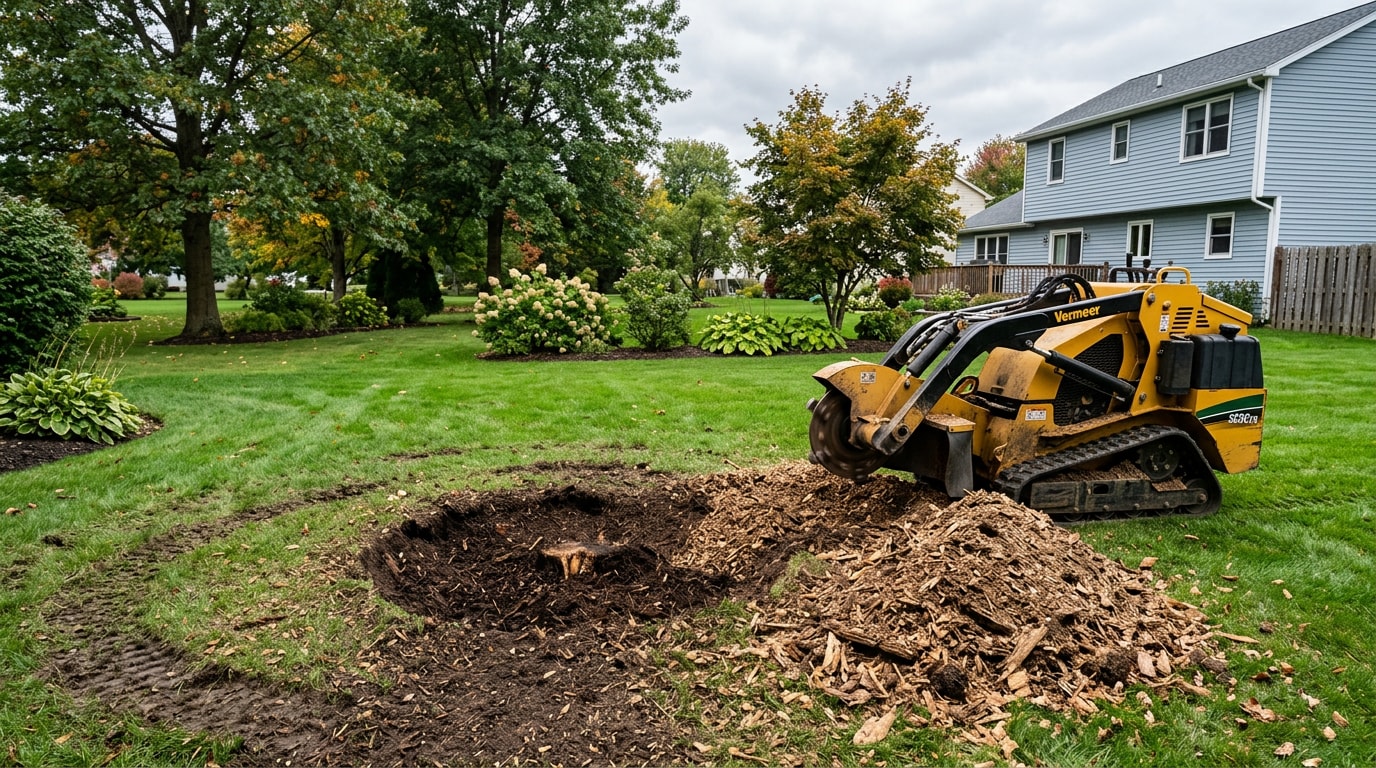
Our crew at 1776 Stump Grinding handles pruning calls across Erie County every dormant season, and weeping cherries are one of the trees we get asked about most, usually because a homeowner cut into the graft union by accident on a previous attempt. If you're unsure which type of weeping cherry you have or how much to take off, a free estimate gets you a second opinion before you make a cut you can't undo.
FAQ
How Often Should You Prune a Weeping Cherry Tree?
Most weeping cherries need pruning once a year during the dormant season to manage suckers, watersprouts, and shape. Mature trees over 10 years old typically only need light touch-up pruning once established, rather than the heavier structural work young trees require.
Can You Prune a Weeping Cherry Tree in Summer?
Summer pruning should be limited to corrective work only: removing dead or diseased wood, suckers, or storm-damaged branches. Save structural shaping cuts for the dormant season, since pruning during active growth puts more stress on the tree.
Can You Prune a Weeping Cherry Tree in Winter?
Winter dormant pruning is generally fine, but very cold, frozen wood can tear rather than cut cleanly, leaving a ragged wound. Pick a milder stretch above freezing when possible, and avoid pruning during a deep cold snap.
How Much of a Weeping Cherry Tree Can You Cut Back at Once?
Stick to the 25% canopy rule covered in the shaping section above. Removing more than a quarter of the canopy in one session stresses the tree and often triggers weak, overcrowded regrowth instead of the clean shape you're aiming for.
What Is a Graft Union and Why Does It Matter?
The graft union is the knot or bulge where the weeping top was fused onto upright rootstock. Cutting below it removes the genetics that make the tree weep, so that section of trunk should stay clear of shoots but should never be cut into directly.
What Happens If You Prune at the Wrong Time of Year?
Pruning outside the dormant window, especially heavy structural cuts in summer, stresses the tree, slows wound closure, and can encourage a flush of weak regrowth instead of the clean shape you want. Dead or damaged wood is the only category safe to remove anytime.