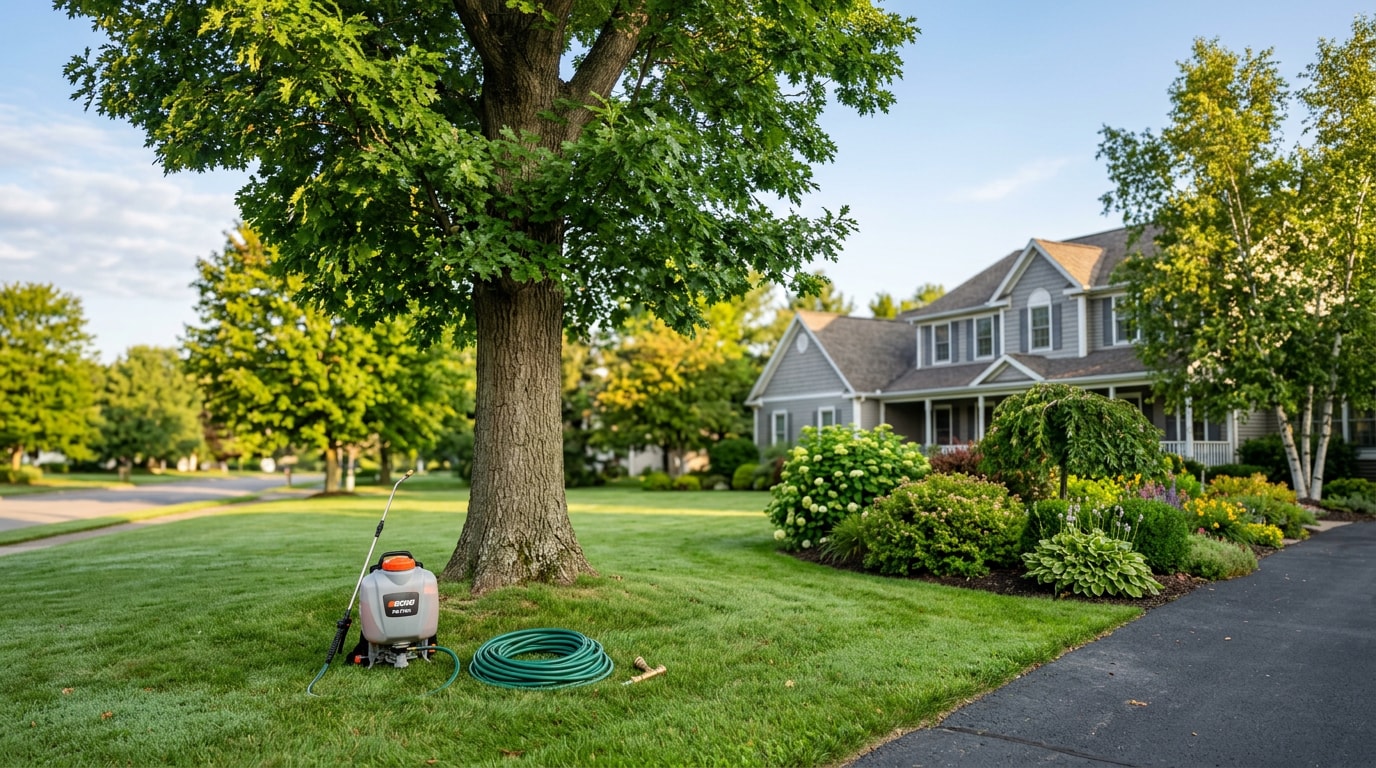
Tree spraying in West Seneca, NY protects maples, oaks, and ornamentals from the insects and fungal diseases that thrive in our humid Western New York summers. Left untreated, a single bad infestation can defoliate a mature tree in one season and turn into a much more expensive removal job later. Here's what a properly timed spray program actually includes, what it costs in 2026, and how to tell a licensed applicator from a guy with a tank on his truck.
Why West Seneca Trees Are Under Pressure
West Seneca's tree canopy deals with the same regional threats as the rest of Erie County: scale insects on spruce, spider mites on arborvitae, and fungal leaf spot on maples and crabapples after wet springs. Defoliation caused by fungi, bacteria, or insect activity can seriously stress a tree over several seasons, even if it survives the first attack.
Spongy moth is a good example of why timing matters. The species is naturalized in New York forests and residential landscapes, and in New York, we tend to see regional outbreaks, or large spikes in population numbers, every 10–15 years . That cyclical pattern is exactly why a diagnosis-first spray program, not a one-time blanket treatment, is the better long-term investment for established trees.
On properties we've treated around West Seneca and neighboring Cheektowaga, the most common calls are for scale on blue spruce and anthracnose on sycamore and maple, both of which respond well to correctly timed dormant and foliar applications rather than a single rescue spray.
If a tree is already past the point where spraying helps, our tree pruning and hazardous tree removal crews can step in instead.
Seasonal Tree & Shrub Spray Programs
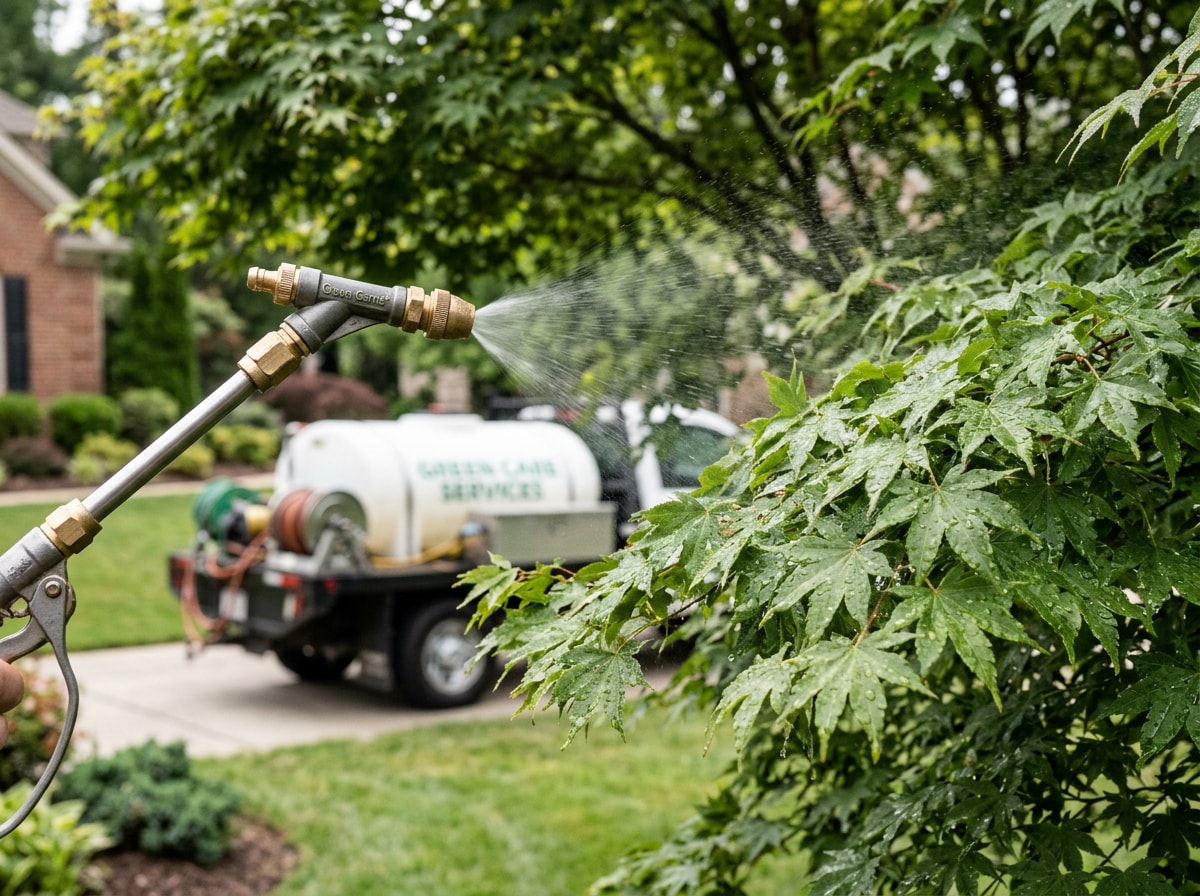
A full program runs as a sequence of applications timed to pest life cycles, not a single visit.
- Dormant oil treatment — Applied in early spring before buds break, this suffocates overwintering scale insects and their eggs before they become an active infestation.
- Foliar insect and fungus control — Starts in early May and repeats every 4-6 weeks through the growing season, targeting active insects, mites, and fungal pathogens on leaves and bark.
- Microinjections — Pressurized capsules deliver pesticide, fungicide, or fertilizer directly into a tree's vascular system. This works well near buildings, pools, or chemically sensitive neighbors where spray drift isn't an option.
What Tree Spraying Costs in West Seneca, NY (2026)
Pricing depends on three things: treatment type, tree size, and how many applications the season requires. Preventative barrier sprays cost less than curative treatments for an active outbreak.
| Service | Estimated Cost (WNY, 2026) |
|---|---|
| Single small/medium tree spray | $65–$120 |
| Single large tree spray | $125–$225 |
| Full seasonal program (per property) | $350–$600 |
| One-time curative treatment | $150–$300 |
These are regional ballpark figures. Actual pricing varies with lot size, tree count, and pest severity. Request a free estimate and we'll walk the property before quoting a number.
Our IPM Approach: Diagnose First, Treat Second
Reputable providers don't blanket-spray a property. They identify the specific pest or pathogen first, then apply a calibrated treatment, an approach rooted in Integrated Pest Management (IPM).
That means using systemic insecticides or commercial-grade fungicides matched to the actual threat, not a generic cocktail that also kills soil microbes and pollinators along with the target pest. In New York, this work is regulated: anyone applying pesticides commercially on property they don't own is required to hold a DEC Commercial Pesticide Applicator certification, which requires passing a state exam after completing approved training. Always ask to see a copy of the applicator's current certification before a treatment begins.
Is Tree Spraying Safe for Pets, Kids, and Pollinators?
Materials used in professional tree spraying must be EPA-registered before they can be sold or applied at all, and applicators must follow label directions covering dosage, timing, and re-entry periods. Most residential applications call for a short re-entry window, typically until the spray has dried, after which the area is safe for normal use.
If you ever suspect a pet has had contact with a fresh application and is showing symptoms like drooling, vomiting, or lethargy, the National Pesticide Information Center is a free, science-based resource for pesticide safety questions, separate from the applicator or product manufacturer.
Added Protection: Mosquito, Flea & Tick Control
Many West Seneca properties pair tree spraying with outdoor pest protection, treating ants, spiders, mosquitoes, fleas, and ticks on a 4-week cycle. A typical season runs five applications starting in May, with room to add visits during a heavy bug year. It's a natural add-on to a tree and shrub program since both rely on the same licensed applicators and similar equipment.
Service Areas Beyond West Seneca
Coverage extends through the Southtowns and greater Buffalo area, including:
See the tree service page for the full range of pruning, removal, and health-care work that often pairs with a spray program.
FAQ
How much does tree spraying cost in West Seneca, NY?
Single-tree treatments generally run $65 to $225 depending on size, while a full seasonal program for a property typically costs $350 to $600. A one-time curative treatment for an active outbreak runs $150 to $300.
How often and when should trees be sprayed?
A typical schedule starts with dormant oil in early spring, then shifts to foliar insect and fungus control every 4-6 weeks through the growing season. Timing is built around pest life cycles, not a fixed calendar.
Is tree spraying safe for pets and family?
Yes, when EPA-registered products are applied by a licensed professional following label directions. Most applications require a short re-entry period, usually just until the spray dries.
Do I need a license to spray my own trees?
No, homeowners can treat their own property with over-the-counter products without certification. Anyone applying pesticides commercially on someone else's property, though, is legally required to hold a DEC Commercial Pesticide Applicator certification.
What's the difference between spraying and trunk injection?
Spraying coats leaves, bark, or soil and works well for broad coverage. Microinjection delivers material directly into the tree's vascular system and is better suited to sites where spray drift isn't acceptable, such as near a pool, patio, or property line.
Will one spray treatment fix an infestation?
Usually not on its own. Most pests and fungal diseases need two or more correctly timed applications across a season to break the cycle, which is why seasonal programs outperform single visits for anything beyond a minor issue.
About the Author
This guide was reviewed by the tree care team at 1776 Stump Grinding & Tree Service, who treat scale, mite, and fungal issues on residential properties throughout West Seneca and the Southtowns each season. Questions about a specific tree or shrub? Contact us for a free on-site estimate.