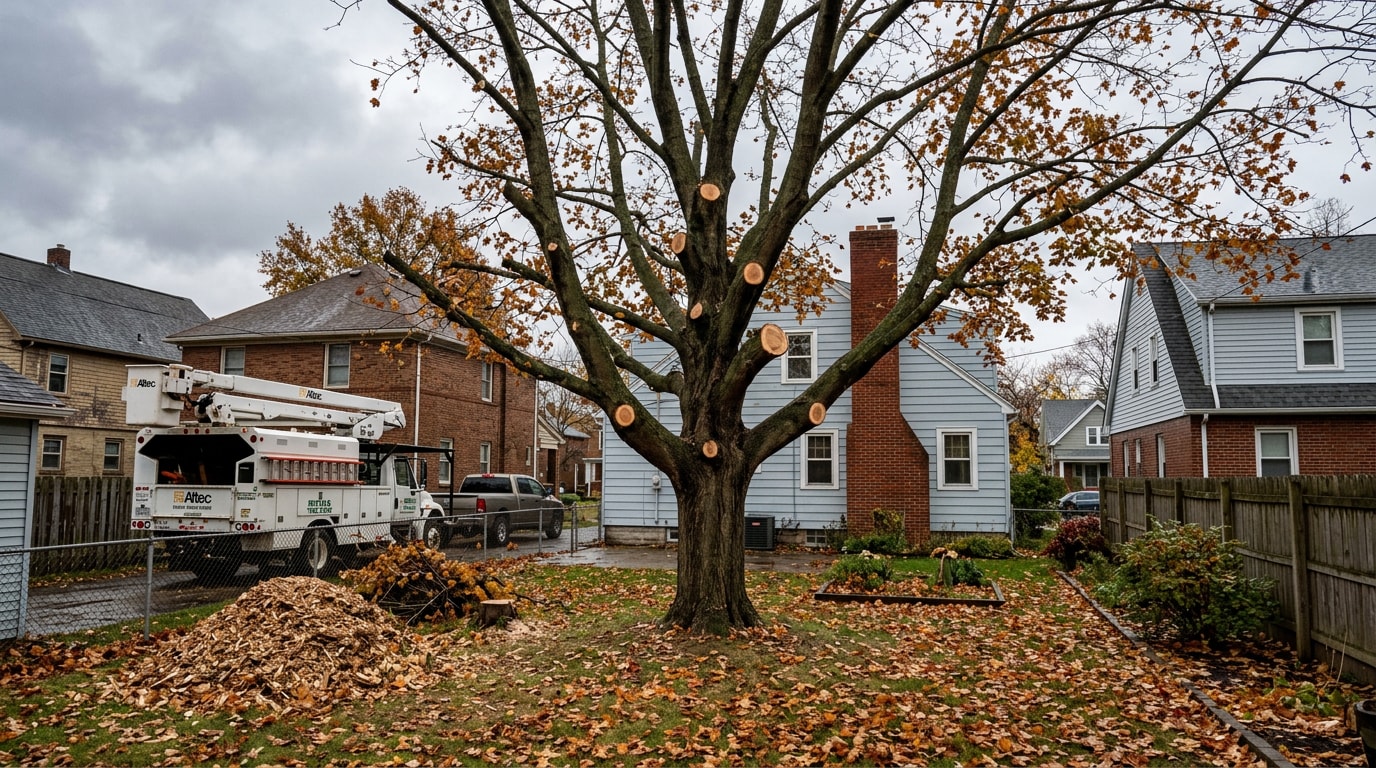
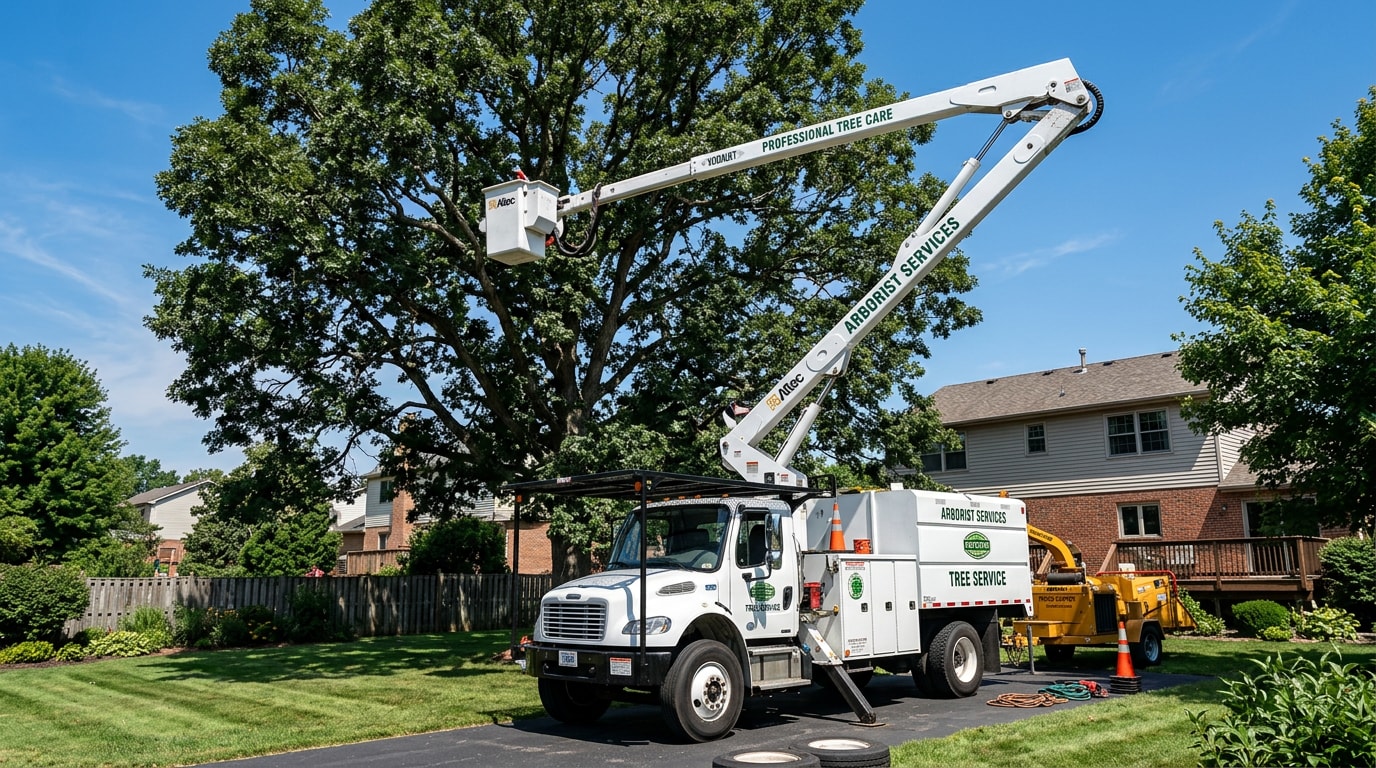
Bucket truck tree service in Clarence, NY puts a trained crew safely at the crown of a tall oak or maple, no spikes in the bark, no ladder leaned against wet siding. Clarence's acreage lots grow wider, taller canopies than tighter suburban yards, so ground-level tools run out of reach fast. Here's how aerial lift equipment actually works, when a crane takes over instead, and what drives the final price.
Why Clarence Properties Need Aerial Access
Clarence homes sit on bigger lots than most of the surrounding towns, and the trees reflect it. Mature oaks and maples here routinely climb past 50 feet, with canopies wide enough to overhang a roofline, driveway, or power line. A ladder tops out around 20 feet. A bucket truck doesn't.
Dead and storm-weakened trees are the most common reason Clarence homeowners call for aerial equipment. A rotted limb forty feet up needs a stable platform, not guesswork from the ground. Our tree removal services start with that same evaluation every time.
How a Bucket Truck Works on a Tree Job
A bucket truck is a hydraulic boom mounted on a truck chassis, topped with an insulated platform that lifts a worker directly alongside a tree's crown. That's a different tool than a stump grinder or chipper, which process wood at ground level, or climbing spikes, which depend on the tree itself for support.
Most trucks serving Clarence reach working heights of roughly 40 to 75 feet, enough for the typical residential maple or oak. Taller trees, soft ground, or narrow side-yard access usually call for a crane or spider lift instead.
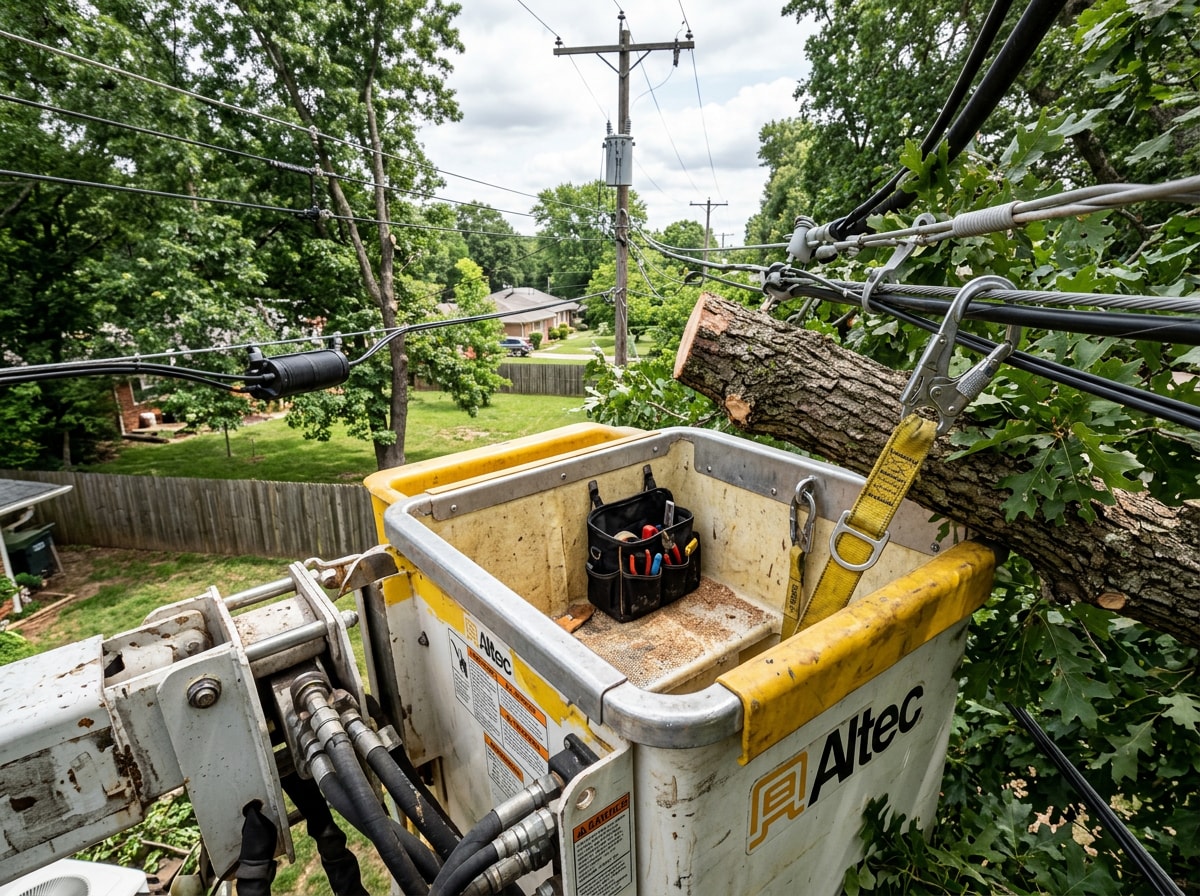
Picture a large backyard maple leaning near a power line, with solid driveway access nearby. A 60-foot bucket truck puts a trained crew member right at the problem limb. No spikes in the bark, no guessing on clearance near energized lines. A worker engaged in tree care or removal operations can be electrocuted if the worker, their tools, or equipment comes into contact with an overhead power line. That's why clearance checks happen before the boom ever moves.
Matching Equipment to the Site
| Equipment | Typical Working Height | Best For | Site Requirements |
|---|---|---|---|
| Bucket truck | ~40-75 ft | Mature residential maples/oaks, storm limbs, plaza street trees | Reasonably level, stable ground; clear truck access |
| Crane | 75 ft+, lifts whole trunk sections | Oversized trees, tight access, trees overhanging a roof | Room for outrigger setup; longer lead time |
| Climbing arborist | Varies by tree | Tight side yards, no vehicle access, specialty pruning | No truck access needed; more labor hours |
Bucket Truck vs. Crane: Which One Fits Your Tree
Sometimes a bucket truck isn't the right tool for the job. When a tree is unusually large, leans over a roofline, or sits where a truck can't find stable, level ground, a crane steps in instead, either alongside the bucket truck or in its place.
Cranes lift entire trunk sections in one controlled move, which limits the drop zone near a house or fence line. That judgment call gets made during the site visit, weighing bucket truck access against crane access before any cutting starts. Our hazardous tree removal crew handles that evaluation for leaning, split, or storm-damaged trees specifically.
Estates, Plazas, and Everything in Between
Clarence spans large residential estates and commercial plazas alike, and bucket truck mobility suits both. One estate lot might need a single tall maple addressed. A plaza might need a row of street trees trimmed on a set schedule.
Routine tree trimming and tree pruning often hinge on the same question as a full removal: can the crew reach the crown safely, and with which tool? Before any cut is made, a crew checks height, canopy spread, and obstacles like fences, power lines, or tight driveway access. A tree that's both high and wide often rules out climbing gear, making a bucket truck the safer, faster choice.
Storm and Emergency Response
Storm work is where aerial access matters most. A cracked limb hanging over a roofline needs fast, stable equipment, not a ladder against wet siding in the rain. Our emergency tree removal line runs on the same bucket trucks used for routine jobs, so there's no gap between "storm hit" and "crew on-site." If you're weighing whether a fallen limb needs a crew right away, our tree trimming truck breakdown covers what a bucket crew actually carries on a storm call.
What Drives the Cost
Pricing for Clarence tree work comes down to tree volume, height, and the equipment reach needed to finish the job safely. A small ornamental tree reachable from the ground costs far less than a tall maple requiring bucket truck access and a multi-person crew.
Labor is part of that number, too. National wage data for tree trimmers and pruners shows a median annual wage of $49,070, with a mean hourly wage of $25.41 , and aerial work on tall or hazardous trees typically sits above that baseline because of the added training, insurance, and equipment cost. An on-site visit gives the most accurate number for your property. Get a free estimate before you commit to anything.
Questions to Ask a Tree Service Before You Hire
Ask these before signing anything:
- Is the crew insured for general liability and workers' compensation?
- Is a certified arborist involved in the assessment, not just the cut?
- Does the company own its bucket truck and crane equipment, or subcontract it out?
- What's the plan if the tree is closer to a power line than expected?
Request proof of insurance such as liability for personal and property damage as well as worker's compensation before any crew starts work on your property. A straight answer to all four questions is a good sign you're dealing with a crew that does this regularly, not occasionally.
Our tree service team serves Clarence homeowners and other properties across the area with the same bucket truck and crane equipment described here. Visit our homepage to see the full range of services we run out of Western New York.
FAQ
How high can a bucket truck reach for tree work?
Most bucket trucks reach working heights of roughly 40 to 75 feet, though actual reach depends on ground slope, overhead wires, and how close the truck can park to the tree.
Is a bucket truck or a crane better for tree removal?
Neither is universally better. A bucket truck sets up fast and suits accessible street-side or backyard trees, while a crane handles oversized trees or tight-access removals where a truck can't get stable footing.
When do you need a bucket truck instead of a climbing arborist?
Bucket trucks make sense for brittle or storm-damaged trees where climbing gear adds risk, and for trees too tall to climb safely. A crew should evaluate each site before choosing equipment rather than defaulting to one method.
How much does bucket truck tree service cost in Clarence, NY?
Cost depends on tree height, trunk volume, and how much equipment time the job needs. A tall tree requiring a bucket truck and a multi-person crew costs more than ground-level work, but an on-site visit is the only way to get an exact number.
Do I need a permit to remove a tree in Clarence, NY?
It depends on the tree and its location. Trees in road right-of-ways or certain protected categories may require town approval, so it's worth checking with Clarence's town offices before work begins, especially for large removals.