
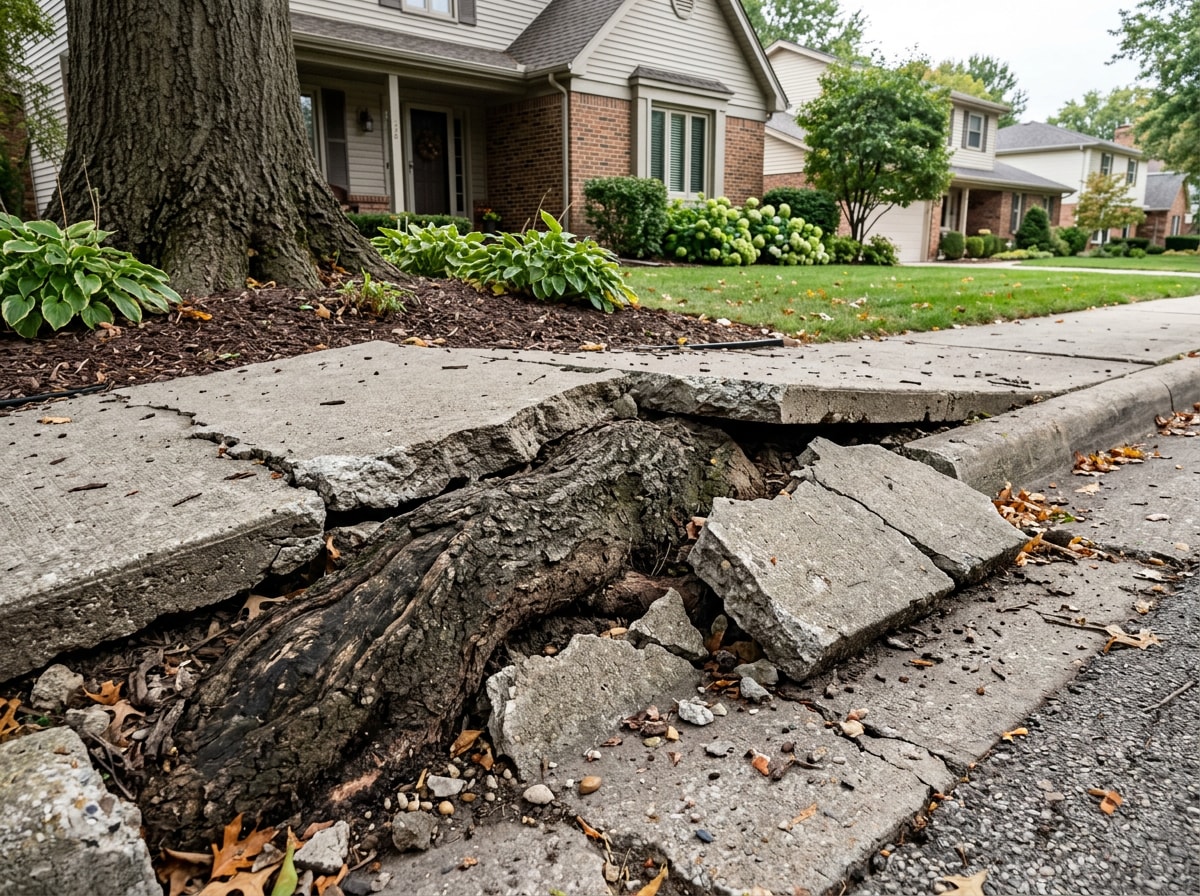
Cutting tree roots in West Seneca, NY can fix a buckled sidewalk slab or a root crowding your foundation, but the wrong cut can destabilize a healthy tree or kill it outright. This guide covers exactly how much root you can remove, when to do it, and the technique that gives the tree its best shot at recovery. We'll also tell you the point where this stops being a weekend project and becomes a job for a professional.
Can You Cut Tree Roots Without Killing the Tree?
Cutting tree roots doesn't automatically kill a tree, but it does add real risk every time. A tree's root system does two jobs at once: it anchors the tree against wind and storms, and it pulls the water and nutrients the tree needs to survive. Damage either function carelessly and you can affect both the tree's stability and its long-term health.
A mature tree with an established canopy tolerates root loss better than a young one still getting established. Large structural roots near the trunk carry far more risk than small feeder roots near the surface. If roots are near a foundation, driveway, or sewer line and you're not sure how much is safe to remove, a tree service specialist can assess the tree before anything gets cut, or you can go straight to root removal if the root is already causing damage.
How Many Tree Roots Can You Safely Cut?
Most arborist guidance puts the safe limit between 15% and 25% of a tree's root system at one time, and the exact number depends on what you're measuring. A municipal root-pruning field guide used by landscape crews specifies that no more than 25% of the root zone may be removed, and roots 3 inches and larger may be structural and need to be evaluated by an Arborist prior to removal . The same guide notes that tree roots are ideally pruned no closer to the trunk than 5 times the trunk diameter, with 3 times the trunk diameter as the absolute minimum distance .
Here's how those numbers break down in practice:
| Root Zone or Diameter | Safe Removal Limit | Why |
|---|---|---|
| Exposed surface roots | Up to 15% | More exposed to sun, soil compaction, and mechanical injury |
| Full root system (buried + surface) | Up to 20-25% | Buried roots are better protected, so trees tolerate more loss here |
| Roots within 3x trunk diameter | Avoid cutting | This is the structural root plate that keeps the tree upright |
| Roots 3x to 5x trunk diameter | Proceed with caution | Transition zone; outcome depends on species, age, and health |
| Roots beyond 5x trunk diameter | Lowest risk zone | Preferred location for any pruning cut |
| Roots over 2 inches in diameter | High risk regardless of location | Likely structural; have it evaluated before cutting |
A practical approach for anything beyond a single small root: divide the root zone into quadrants, cut only one quadrant at a time, and wait at least two years before touching another section. This spreads the stress out instead of hitting the tree with everything at once.
Factors That Affect Root Pruning Success
Two variables decide whether a tree bounces back from root pruning or goes into decline: how severe the cut is, and when you make it.
Severity of the Cut
Severe cuts to large, structural roots can compromise a tree's stability and lead to decline or death. Minor trims to small feeder roots under an inch in diameter carry much lower risk and usually heal without lasting harm. Root size, number of cuts, and proximity to the trunk all compound each other. Cutting one large root close to the trunk does far more damage than cutting several small feeder roots farther out.
Timing: Why Dormant Season Matters
Avoid cutting tree roots during spring or summer, when trees are in active growth and more vulnerable to stress. A published study in the ISA's own technical journal found that one day after root pruning, photosynthesis was reduced 35% to 50% , which is a meaningful hit for a tree that's already working to recover. That stress compounds if you cut during the growing season instead of dormancy. Late fall through winter, when the tree has dropped its leaves and growth has slowed, is the window with the least added stress.
How to Cut Tree Roots Safely in West Seneca, NY
Once you've confirmed a cut falls within safe limits, technique matters as much as the amount you remove.
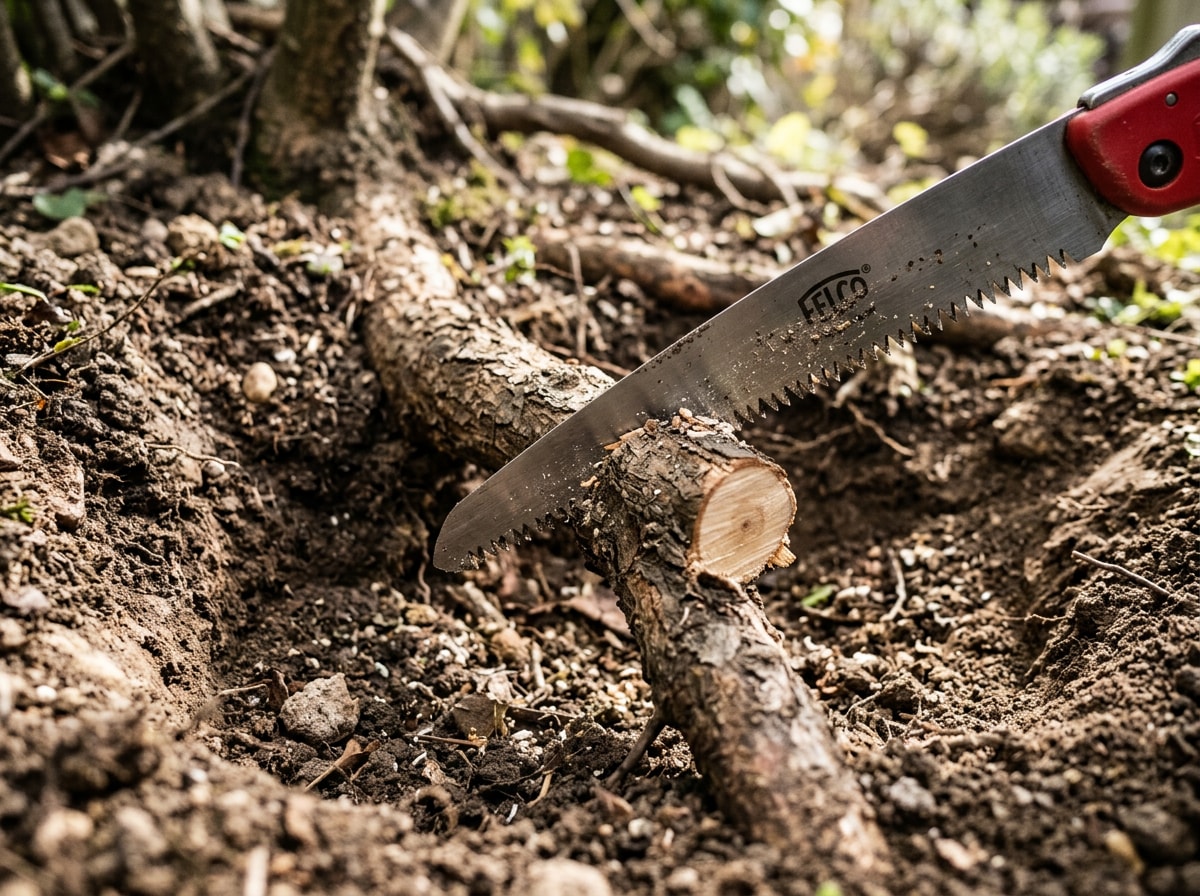
- Expose the root first. Dig or hand-rake the soil away rather than cutting blind through soil and root together.
- Use a clean, sharp pruning saw. A dull blade tears tissue instead of cutting cleanly, which invites disease and slows healing.
- Cut at a natural root junction when one is available, rather than mid-root.
- Avoid disturbing nearby roots while you're working, especially feeder roots close to the surface.
- Backfill promptly and water the area to reduce stress on the remaining root system.
For larger structural roots, the International Society of Arboriculture recommends involving a certified arborist, since professional root pruning gives the tree its best chance at a full recovery. If a root is already lifting a slab or pressing on a foundation and you'd rather not take the risk yourself, our tree pruning service can handle the cut correctly, and if the tree's stability is already in question, hazardous tree removal may be the safer path forward.
Root Pruning Before Transplanting
Determining a Safe Pruning Radius
Root pruning before a transplant follows its own rule of thumb: roots located three to five times the trunk's diameter away from the trunk can typically be pruned safely ahead of the move. Skip the DIY approach if the roots you're dealing with are thicker than 2 inches, or if the trunk itself exceeds 2 inches in diameter. At that point, the margin for error gets too thin to risk without professional judgment.
Freeing the Root Ball for the Move
To free the root ball, dig a trench roughly 1 to 2 feet deep around the tree, following the root ball's outer edge. Then cut cleanly underneath the roots to lift the ball intact, keeping as much surrounding soil attached as possible. The more soil you keep around the roots during the move, the less transplant shock the tree experiences afterward.
When to Call a Professional in West Seneca, NY
West Seneca's older neighborhoods have a lot of mature shade trees planted close to sidewalks, driveways, and foundations, which is exactly the setup where root cutting goes wrong fastest. If you're dealing with a root under a foundation, near a sewer line, or thicker than 2 inches, the safer move is a professional assessment before anyone starts digging. Get a free estimate and we'll tell you honestly whether the root can be cut safely or whether the tree needs a different plan.
We also work throughout West Seneca, NY on pruning jobs beyond roots. If you're dealing with an ornamental tree instead of a root problem, our guide on pruning a weeping cherry tree in West Seneca covers a different but related set of timing and technique questions. For general tree care across the region, visit our homepage to see the full range of services we offer.
For additional background on root pruning standards used by landscape and facilities crews, Purdue Extension's pruning guidelines are a useful reference, noting that severe pruning, especially during times of stress such as drought conditions, can have severe consequences on tree health , which applies to root cuts just as much as canopy cuts. You can review the full guidance from Purdue Extension or the root pruning field guide referenced above for more detail on distance and diameter thresholds.
About This Guide
This guide was prepared by the tree care team at 1776 Tree Service, who have pruned surface roots lifting sidewalks and driveways on properties throughout West Seneca and the greater Buffalo area for six years. In our experience, the trees that recover best from root work are the ones where the homeowner called before cutting, not after. If you have a specific root problem, contact us and we'll walk the property with you.
FAQ
Will Cutting Tree Roots Kill the Tree?
Not necessarily. Whether cutting tree roots kills the tree depends on root size, how much of the root system is removed, and the season you cut in. Small feeder root cuts in dormant season carry low risk. Large structural root cuts in the growing season carry high risk.
How Many Tree Roots Can You Cut Without Killing a Tree?
Guidance generally falls between 15% and 25% of the root system, depending on whether you're measuring exposed above-ground roots or the full buried root zone, plus the tree's overall health and species.
Can I Cut Tree Roots on My Property Line in West Seneca, NY?
Property owners generally have the right to trim roots that cross onto their property. Still, cutting roots carelessly can damage a neighbor's tree or destabilize it, which can create liability for the damage. When in doubt, talk to your neighbor before cutting roots near a shared property line.
Do Tree Roots Grow Back After You Cut Them?
Yes, many species regrow roots after pruning, though regrowth speed and success vary by species, cut severity, and timing. Cuts made in dormant season on healthy trees tend to recover fastest.
What Is the Best Time of Year to Cut Tree Roots?
Late fall through winter, during the tree's dormant season, is generally the safest window. Cutting during active spring or summer growth adds unnecessary stress on top of the root loss itself.
How Much Does Professional Root Cutting Cost in West Seneca, NY?
Cost depends on the root's size and location, the tree's species and health, and how much excavation is needed to expose the root safely. Request a free estimate for a price based on your specific property.
Should I Hire a Professional Instead of Cutting Roots Myself?
If the root is under 1 inch and far from the trunk, careful DIY pruning is usually fine. If the root is over 2 inches, near a foundation, or close to the trunk, hire a professional. Our tree service team can evaluate the risk before any cutting starts.