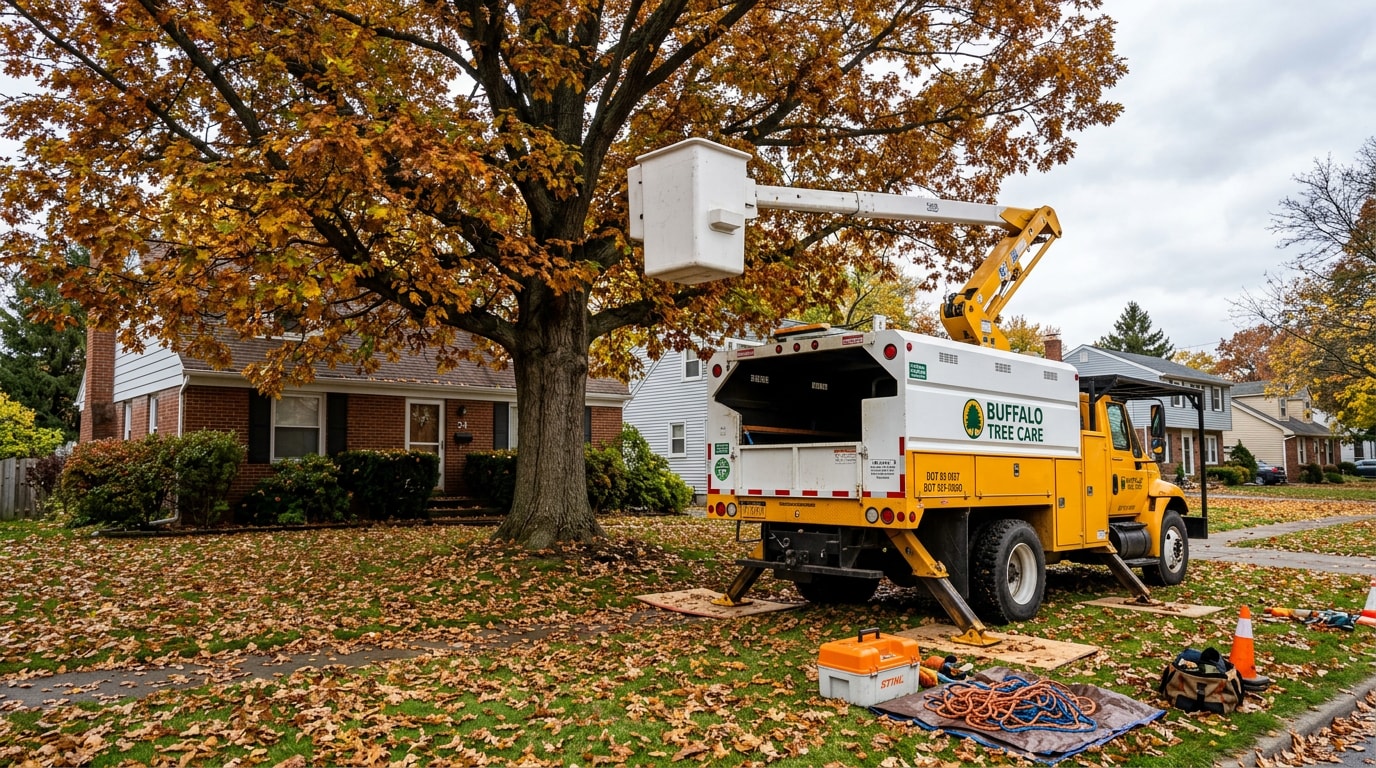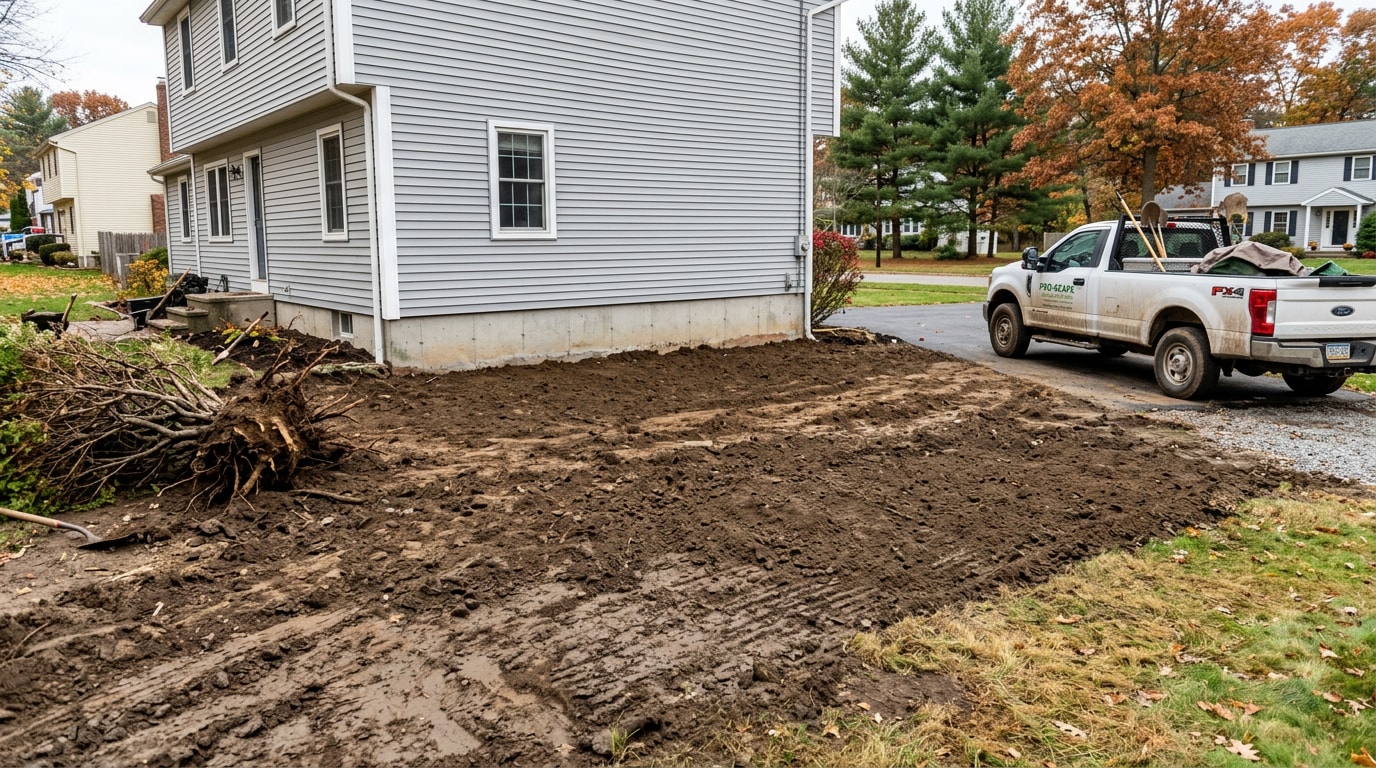
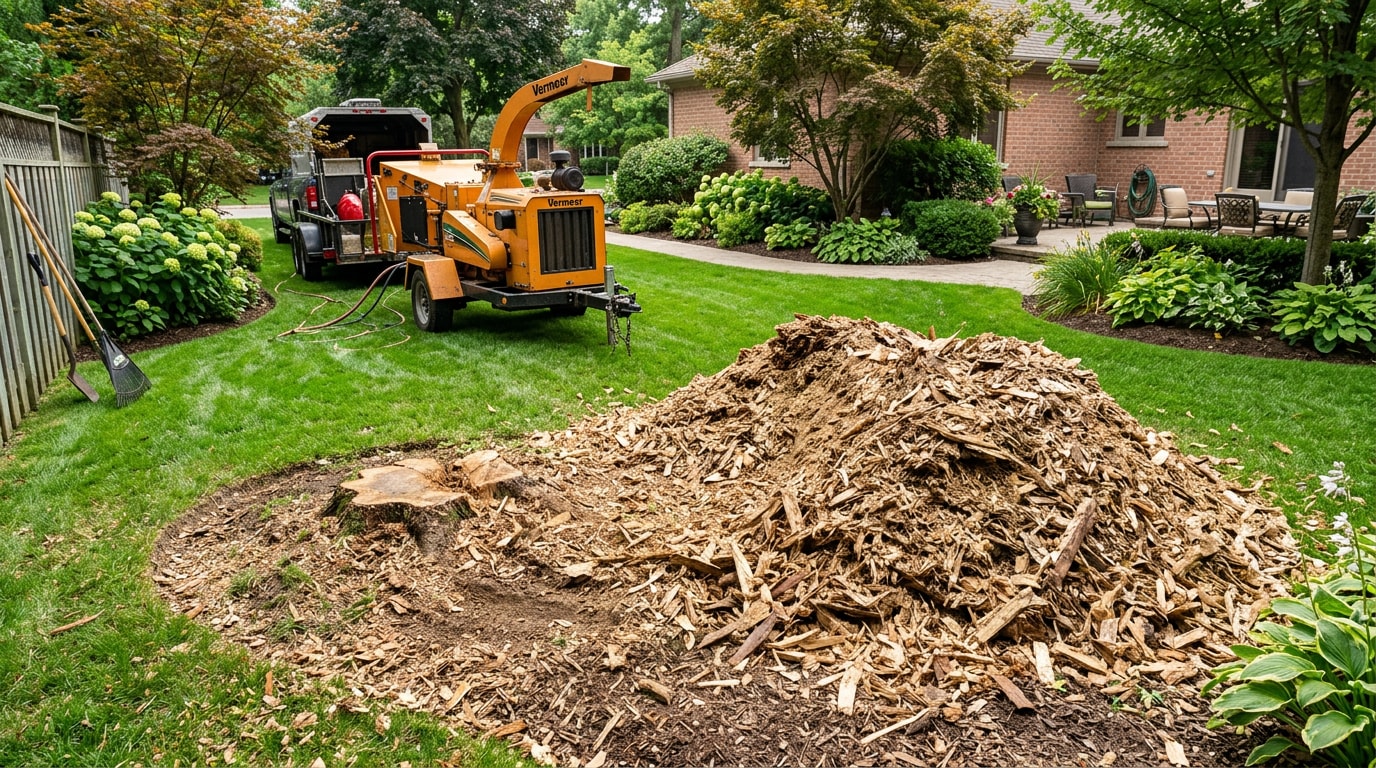
What to do with wood chips after tree removal in Clarence, NY comes down to one fact: that pile in your yard is a free resource, not trash for the curb. Mulch, garden paths, compost, erosion control, playground surfacing, and smoker fuel all come straight out of it. Here's how Clarence homeowners put every bit of it to work instead of paying to haul it away.
Use Wood Chips as Mulch
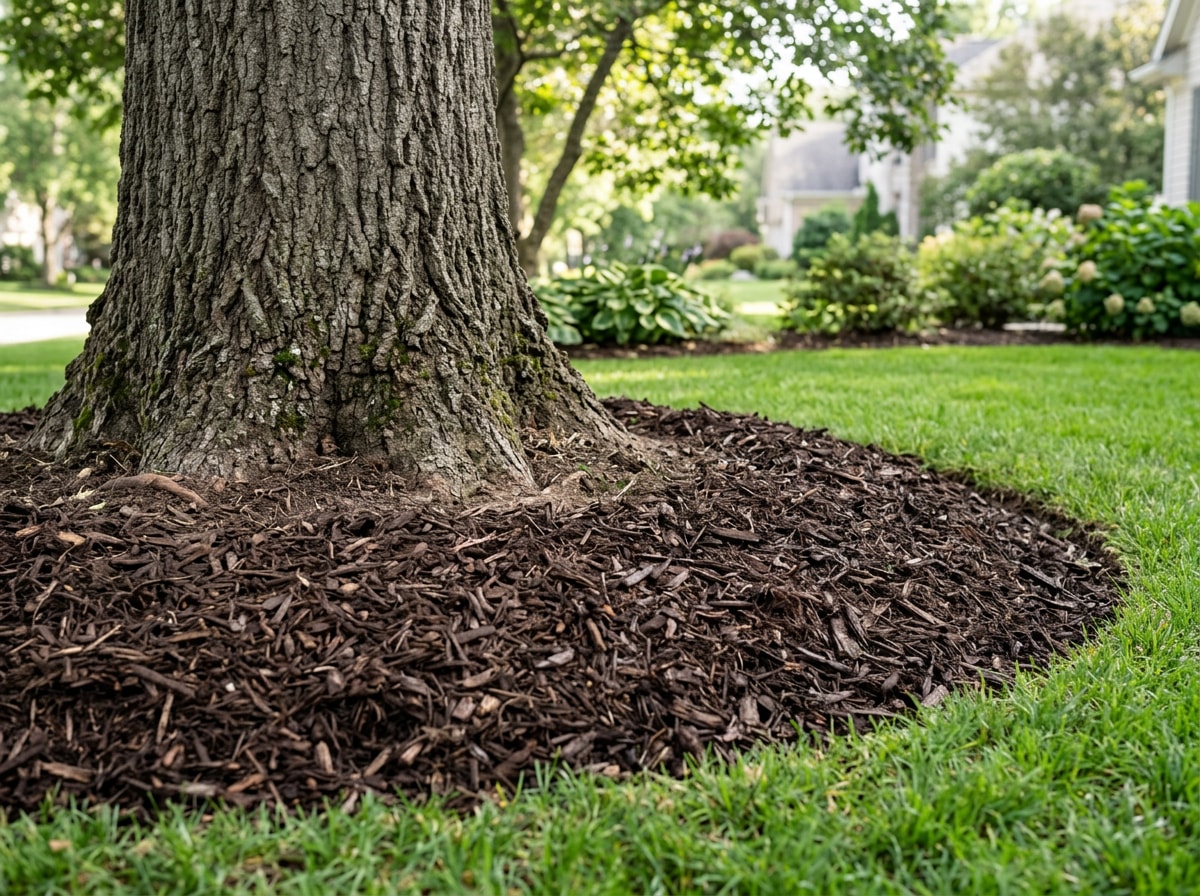
Mulch is the simplest, most common use for leftover wood chips, and it works because it protects soil while the chips slowly break down.
A layer of wood chip mulch around trees, shrubs, and garden beds holds moisture, blocks weeds, and feeds the soil as it decomposes over a season or two.
For depth, follow arborist guidance rather than guessing. Fine mulches, such as composted materials, should be applied in a 2-3 inch layer and coarse mulches, such as arborist wood chips, should be applied in a 3-4 inch layer.
Apply mulch near, but not touching, the trunk, and extend it out to the drip line if practical.
Quick depth cheat sheet:
- Mulch beds: 3 to 4 inches, pulled 3 to 6 inches back from trunks and stems
- Garden paths: 4 to 6 inches over landscape fabric
- Erosion control: 3 to 4 inches on slopes and bare patches
- Playground surfacing: 9 to 12 inches, per CPSC guidance below
Clarence winters freeze and thaw repeatedly, which packs mulch down faster than it does in milder climates. Plan to top off beds each spring rather than assuming last fall's layer held its depth.
If your project included grinding a stump, ask whether that material can be reused as mulch through our stump grinding service instead of being hauled off-site.
Create a Garden Path or Walkway
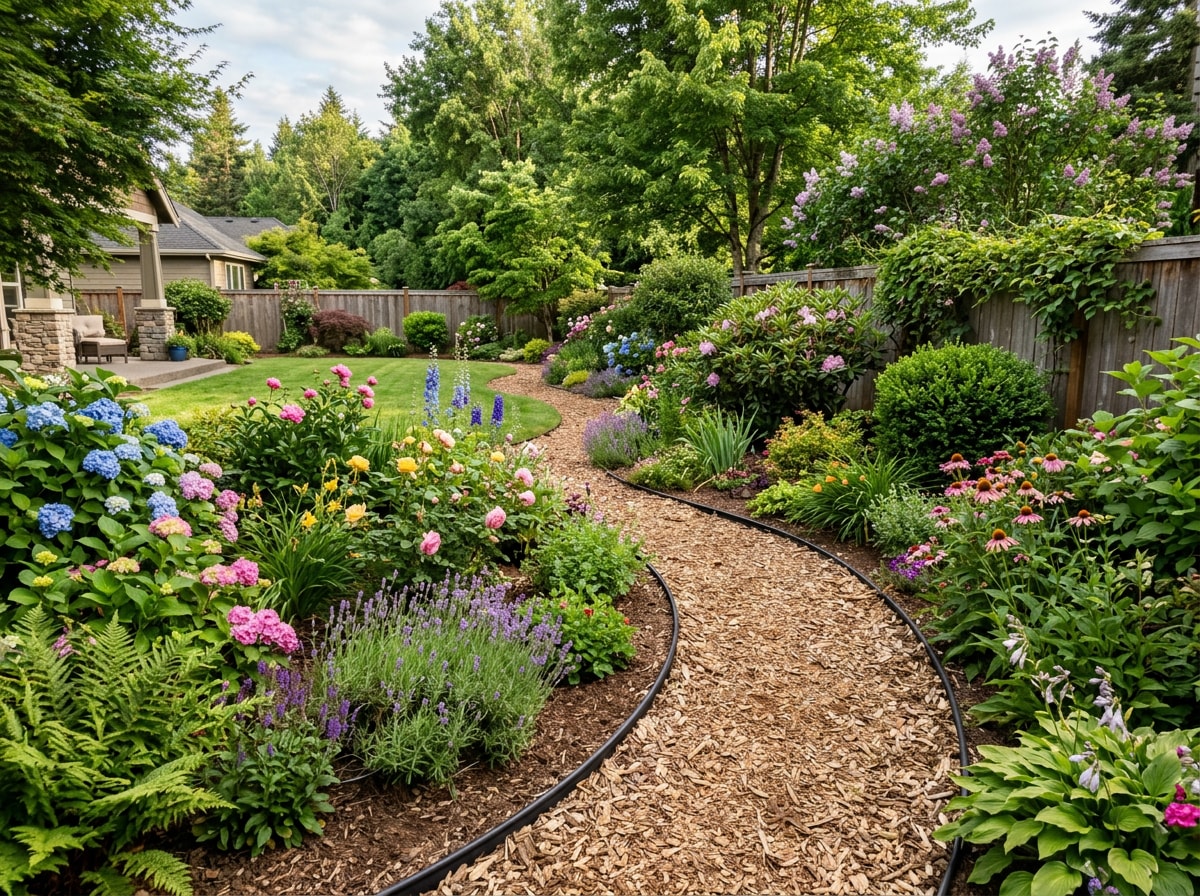
Wood chips make an easy, natural-looking path for connecting garden beds, a shed, or a side-yard access point.
To build one:
- Clear grass and debris along the route.
- Lay landscape fabric underneath to block weeds from pushing through.
- Spread chips 4 to 6 inches deep for a walkable surface with a little give.
A chip path costs far less than pavers or gravel and takes an afternoon rather than a weekend. It won't last as long, though, since chips compress and break down over time. Plan to refresh the path once or twice a year, more often in high-traffic spots.
Compost Wood Chips
Composting turns tree debris into future garden fertilizer instead of waste.
Chips count as a carbon-rich "brown," which balances nitrogen-rich "greens" like grass clippings, vegetable scraps, and coffee grounds. The ideal C/N ratio for composting is generally considered to be around 30:1, or 30 parts carbon for each part nitrogen by weight.
Brown or woody materials such as autumn leaves, wood chips, sawdust, and shredded paper are high in carbon.
One catch: wood chips break down slower than leaves or grass because of their size and density. A one-inch wood chip will decompose much slower than grains of sawdust. Smaller chips, or chips mixed with faster-decomposing material, finish composting noticeably quicker than large pieces left alone.
Use Wood Chips for Erosion Control
A thick layer of chips is a genuinely useful, low-cost tool on the problem spots in a yard.
Spread 3 to 4 inches deep, chips slow runoff, soak up rainfall before it pools, and help stabilize banks or hillsides where grass struggles to grow. They also work well near downspouts or drainage swales, where stormwater carries topsoil away after every heavy rain.
If a large tree removal left slopes or drainage areas exposed, our land clearing and site preparation team can regrade the area for a more permanent fix. We cover this in more detail in our guide to ground clearing services in Clarence, NY, including what a regrade typically costs.
Chip-based erosion control is a short-term fix, not a permanent one. On steep or chronically wet slopes, pair it with ground cover plants or other long-term stabilization.
Use Wood Chips as Playground or Play Area Surfacing
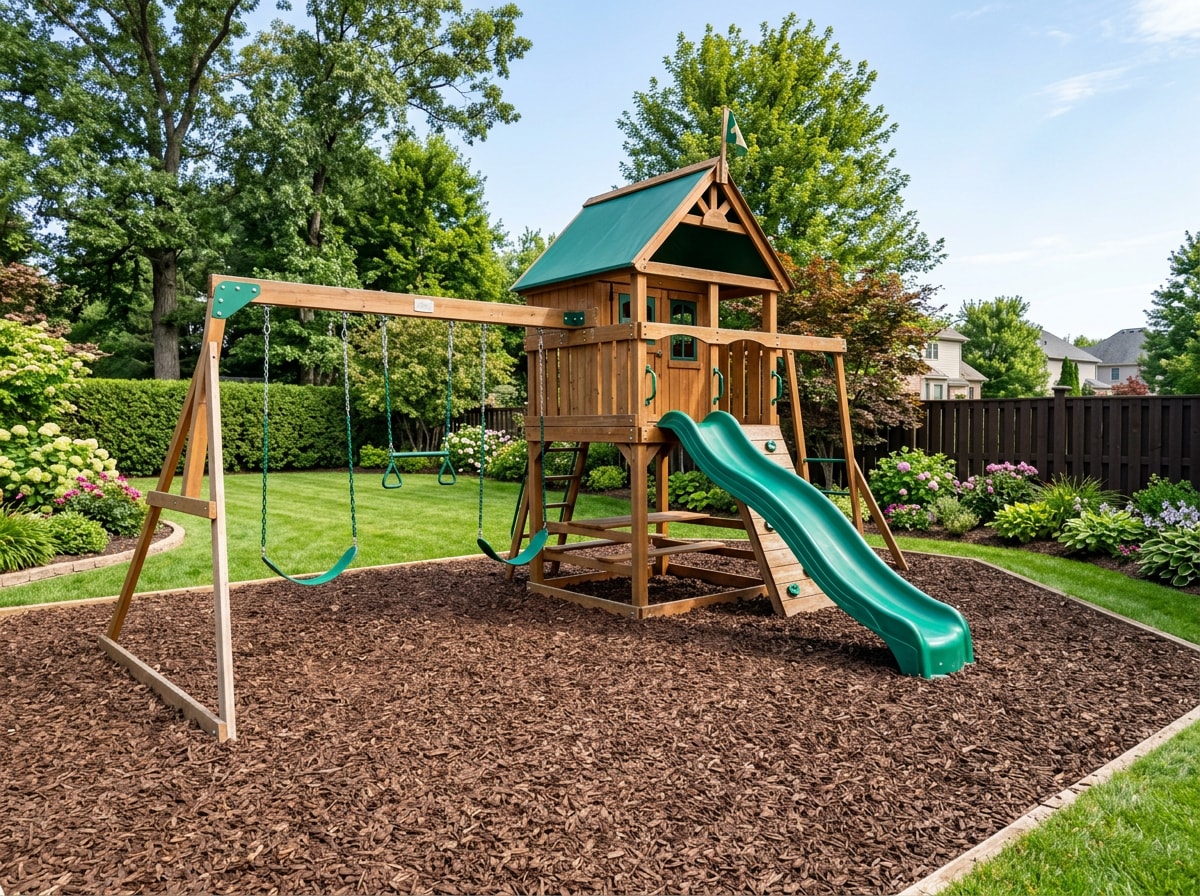
Wood chips create a cushioned surface under swing sets, slides, and climbing structures that absorbs impact far better than bare dirt.
Depth matters more than anything else here. Loose-fill materials will compress at least 25% over time due to use and weathering.
Never maintain less than 9 inches of loose-fill material under play equipment, which is why most installers start with 12 inches of fresh chips to account for settling.
Only use chips from untreated, chemical-free wood. Painted, stained, or pressure-treated material can transfer chemicals to skin or kick up as dust. Check depth every few months and rake redistributed chips back under swings and slide exits.
Use Wood Chips as Animal Bedding
Chips absorb moisture and control odor far better than bare flooring, which is why they work well for chickens, horses, and goats. Many homeowners swap fresh chips in a coop every couple of weeks to keep it dry.
Stick to chips from untreated wood with no signs of pest infestation or disease. If the removed tree had visible disease or insects, compost or dispose of those chips rather than use them as bedding.
Use Wood Chips as Firestarter or Smoker Fuel
Dry chips catch quickly under kindling and help get logs burning without lighter fluid. Chips from hickory, apple, or cherry also work as smoker wood, adding flavor to grilled or smoked food. Softwoods like pine aren't a good choice for smoking because the resin produces acrid smoke.
Whichever use you pick, the chips need to be fully dry first. Damp or green chips smolder, smoke heavily, and burn poorly.
Donate, Sell, or Dispose of Extra Wood Chips in Clarence, NY
A full tree removal or large-scale land clearing job can leave far more chips than any yard can use. A few options once your beds, paths, and compost pile are full:
- Offer them free to neighbors or gardeners. Chip piles disappear fast on local classifieds and community groups.
- Check municipal drop-off options.
The Town of Clarence Highway Department accepts residential brush at 6223 Goodrich Road, in an area marked Brush Only, though it must be clean yard brush with no stumps, manufactured wood, or other non-organic material.
- Mind the seasonal pause.
The town asks residents not to place brush or yard waste on the roads from December through April.
- Have your contractor haul it. If you're already having a tree taken down, ask whether chip removal is included in the tree removal quote so there's no surprise pile left behind.
If you're planning a removal in Clarence and already know how you want the chips handled, mention it when you get a free estimate so the crew can plan for it.
Wood Chip Depth Guide by Use
| Use | Recommended Depth | Notes |
|---|---|---|
| Mulch around trees/shrubs | 3-4 inches | Keep 3-6 inches off the trunk |
| Garden path | 4-6 inches | Lay landscape fabric first |
| Compost pile (bulking layer) | 4-6 inches | Mix with greens; breaks down slowly |
| Erosion control | 3-4 inches | Pair with ground cover on steep slopes |
| Playground surfacing | 9-12 inches | CPSC minimum, accounts for settling |
FAQ
What is the best way to use wood chips after tree removal?
Mulch is the best all-around use since it retains moisture, suppresses weeds, and enriches soil as it breaks down. Garden paths, composting, erosion control, and playground surfacing are all solid options too, depending on what your yard needs.
Can wood chips be used for composting?
Yes. They add carbon-rich "brown" material that balances nitrogen-rich "greens" like food scraps and grass clippings. They break down slowly, so smaller pieces or regular turning speeds up the process.
Are wood chips safe for children's playgrounds?
Yes, if they come from untreated wood and are kept at a safe depth. CPSC guidance calls for a minimum of 9 inches of settled wood chips under play equipment, installed at around 12 inches to allow for compression over time.
How can wood chips help prevent soil erosion?
A 3 to 4 inch layer slows rainfall runoff, absorbs moisture, and holds soil in place on slopes, bare patches, or areas near downspouts. It's a short-term fix best paired with ground cover on steep or chronically wet ground.
Can I just leave the wood chips where they fall instead of spreading them?
You can, but a thick pile left in one spot smothers grass and can trap moisture against anything underneath it. Spreading chips thin across beds, paths, or problem areas puts the material to work instead of killing a patch of lawn.
How long does it take for wood chips to break down?
Depends on size and moisture. Small chips mixed into a managed compost pile can break down in several months, while a thick mulch layer left undisturbed often takes one to two years to fully decompose.
Where can I get rid of extra wood chips in Clarence, NY?
Offer them to neighbors or local gardeners first. Clean yard brush can also go to the Town of Clarence Highway Department drop-off at 6223 Goodrich Road, though stumps and treated wood aren't accepted there. For large volumes, ask your tree service to include hauling in the job.
Do fresh wood chips attract bugs or termites?
Fresh chips can attract some insects, mainly ones that feed on decaying wood, but they're a low risk for structural termite problems when kept a few feet away from the house foundation. Avoid piling chips directly against siding or wood structures.
If a tree removal, stump grinding job, or larger land clearing project is what left you with a chip pile in the first place, our team can also handle what comes next. Browse our tree service and stump removal and grinding options, or visit 1776 Stump Grinding to see the full range of work we do across Western New York. For homeowners dealing with tree work questions beyond wood chips, our post on what a tree surgeon actually does in Buffalo, NY is a useful next read. Ready to clear a job and figure out the chip pile at the same time? Get a free estimate and we'll walk through it on-site.