Tree thinning services in Buffalo, NY open up a tree's crown by removing select branches, so wind and snow move through the canopy instead of loading it down. A dense, unthinned maple or oak is exactly the kind of tree that loses limbs during a lake-effect storm. Here's what the service involves, what drives the price, and the narrow seasonal window when cuts heal fastest.
What Is Tree Thinning, Exactly?
Tree thinning, also called crown thinning, is selective pruning to reduce density of live branches . It's different from topping, which hacks off the top of a tree, and different from a basic shape-up trim.
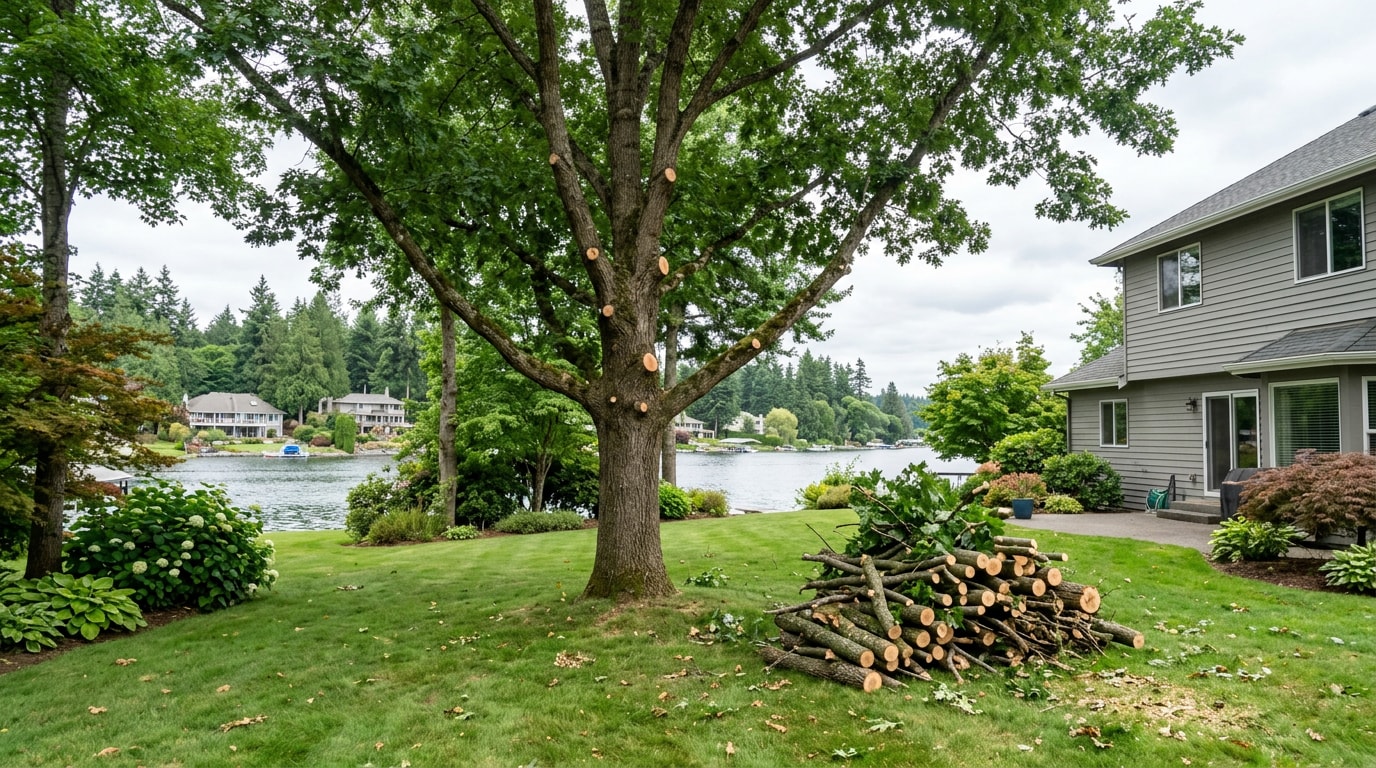
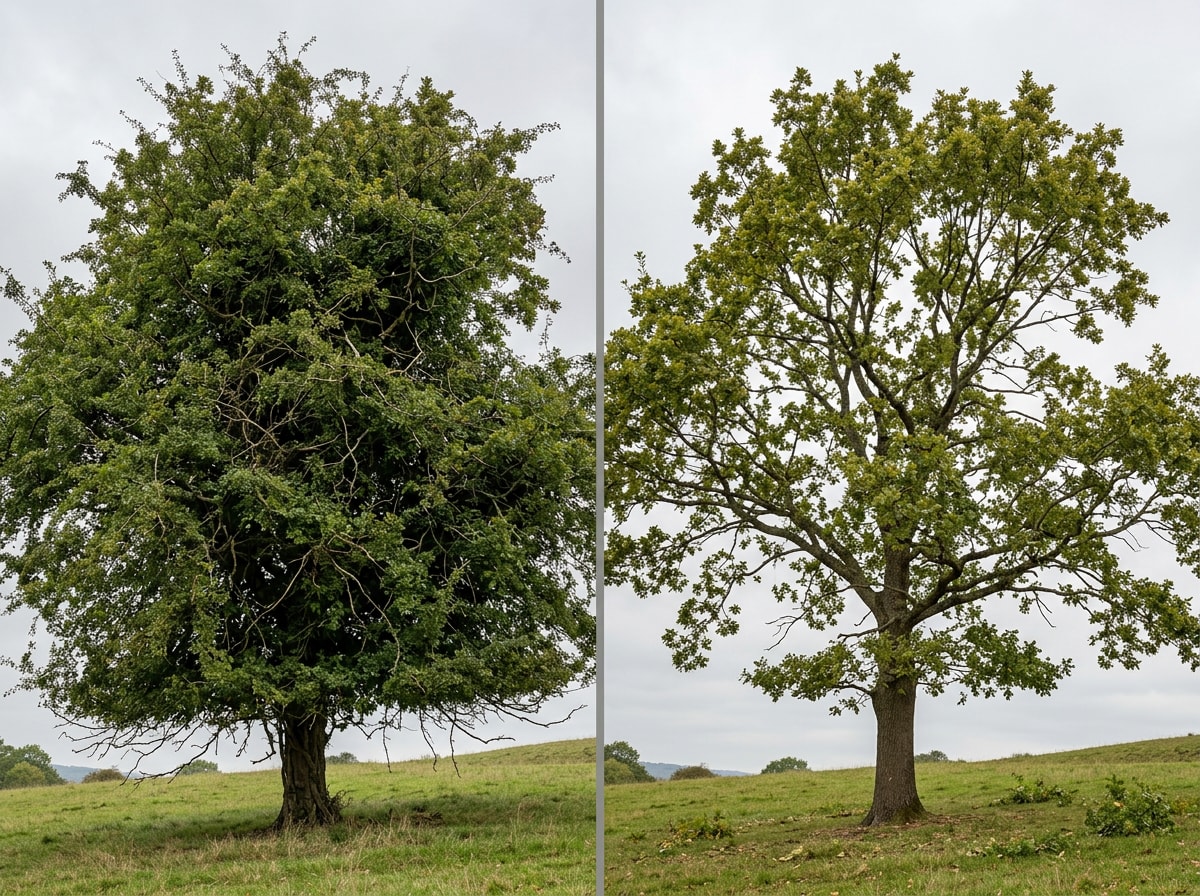
Thinning targets the inside of the crown. Crews remove crossing, rubbing, and crowded interior branches while leaving the tree's natural outline intact. Done correctly, a thinned tree still looks like itself from the curb, just lighter and less wind-resistant.
There's an industry limit on how much can come out at once. The national pruning standard says not more than 25 percent of the crown should be removed within an annual growing season. Go past that and the tree loses more leaf surface than it can recover from, which stresses it instead of helping it. This is the kind of detail a tree pruning visit should account for every time, not just the first one.
Signs Your Buffalo Tree Needs Thinning Now
Most homeowners notice a thinning problem long before they put a name to it. Look for:
- A canopy so dense it blocks noticeable light from reaching the lawn or garden beds below it
- Broken or hanging limbs left over from a storm that was never properly cleaned up
- One side of the tree visibly heavier or lower than the other
- Branches that whip and sway hard in wind instead of flexing with it
- Visible deadwood tangled inside the crown, not just at the tips
If a storm already took a limb down on its own, that's less a thinning question and more a hazardous tree removal question. Thinning is prevention; removal is cleanup after the fact.
Why Lake-Effect Winters Make Thinning a Priority Here
Western New York's weather office covers this region specifically because much of the office's work focuses on lake-effect snow . That's not a minor detail for tree owners. A single band can drop inches of wet, heavy snow onto a canopy in a few hours, and every extra branch inside that crown is extra surface area for snow to pile on.
The same density that traps snow also resists wind. A tree with thick, uncut growth takes the full force of a gust across its whole crown. A thinned one lets gusts pass through gaps instead of pushing against a solid wall of foliage. For homeowners planning ahead of a specific storm, the National Weather Service's Buffalo lake-effect page tracks regional snowfall patterns worth checking each winter.
What Drives Tree Thinning Cost in Buffalo, NY
There's no flat rate for crown thinning, because every tree presents a different job. These are the factors that actually move the price up or down:
| Cost Factor | Why It Matters |
|---|---|
| Tree size and species | Larger crowns and denser species (maple, oak) take longer to thin properly |
| Number of trees | Crews already on-site can often do additional trees more efficiently |
| Access and clearance | Trees near power lines, roofs, or fences require slower, more careful cuts |
| Equipment needed | Ground-work, bucket truck access, or climbing all carry different labor costs |
| Crown condition | Storm-damaged or long-neglected trees need more cuts to reach a healthy structure |
Because these variables swing the price so much, the only accurate number is the one written for your specific trees. Get a free estimate and a crew can walk the property and quote the job in writing before any cuts are made.
Best Time of Year to Thin Trees in Buffalo, NY
Timing changes how well a tree recovers from thinning cuts. Extension horticulturists agree that the late dormant season is the best time for most pruning , and Buffalo's own late-winter stretch fits that window well.
Season-by-Season Breakdown
- Late winter (late Jan–early Apr): The strongest window. Trees are dormant, structure is easy to see without leaves, and cuts close up before spring growth starts.
- Spring: Active growth makes trees more sensitive to stress; stick to minor touch-ups only.
- Summer: Generally avoided. Actively growing trees are more exposed to pests and disease after a fresh cut.
- Fall: Workable for cleanup before the first heavy snow, though it carries slightly more disease risk than true dormancy.
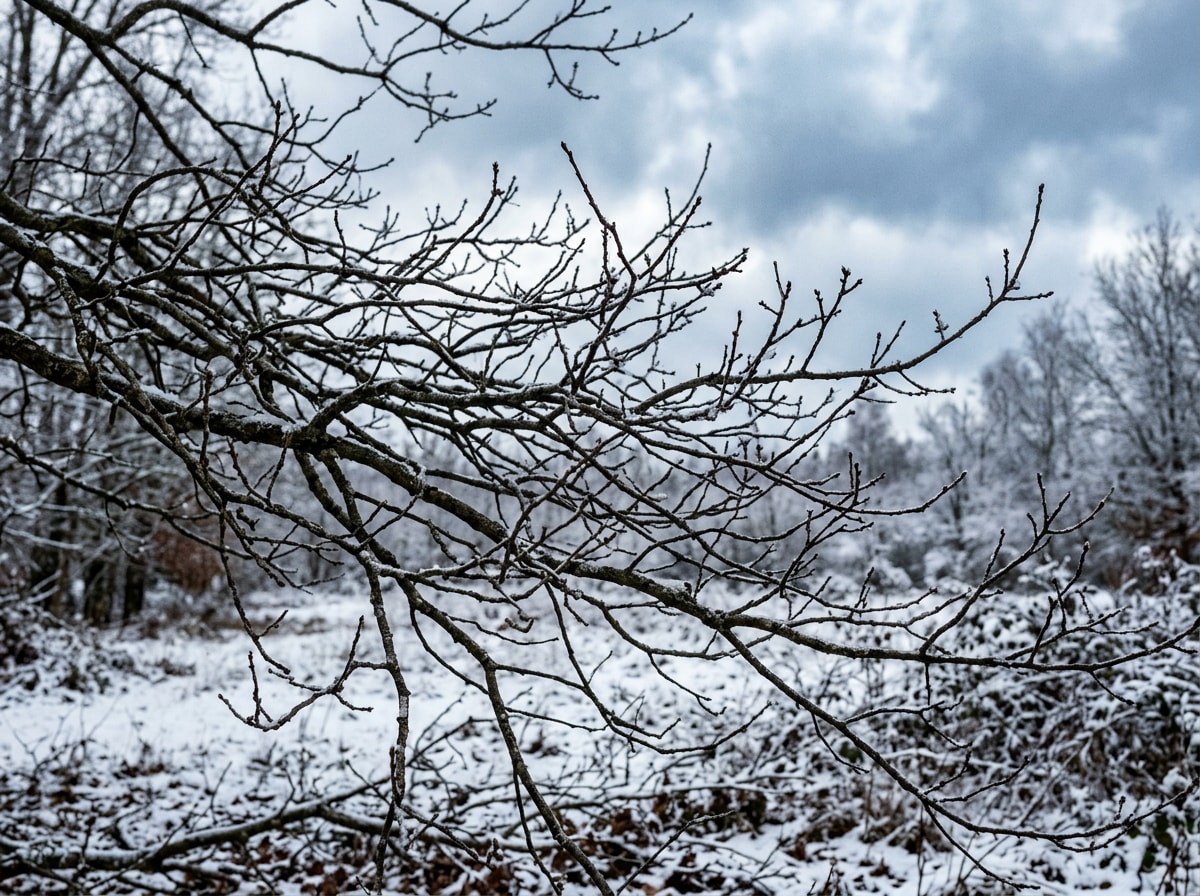
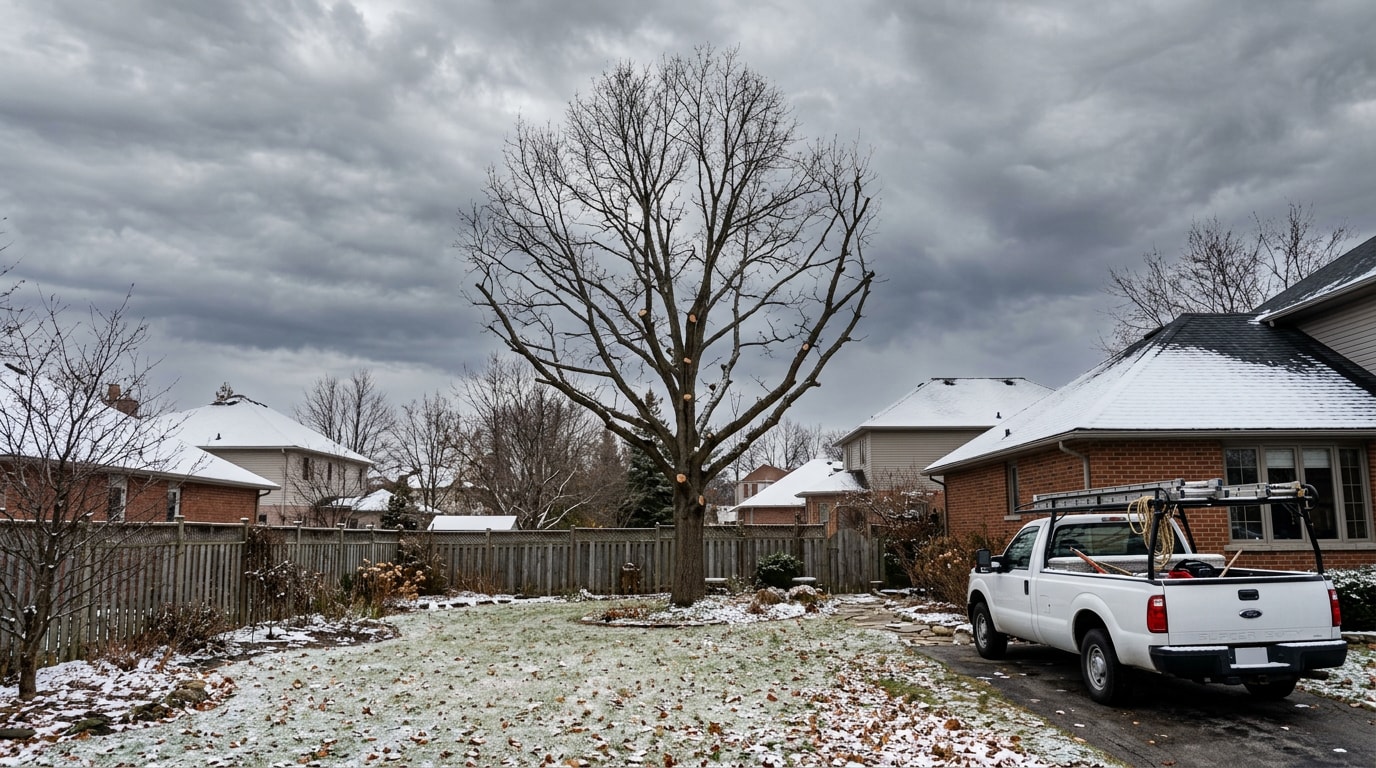
This dormant-season preference isn't cosmetic. It's a genuine storm-prep decision, since wounds made before growth resumes have the most time to seal over before the tree takes on a winter's worth of weight.
How Thinning Fits Into Broader Tree Care
Thinning rarely happens in isolation. A crown thinning visit often turns up related work: a few dead limbs that need cutting back, debris that needs hauling, or a tree past saving that's better off coming down. On a typical job:
- A crew inspects the full crown, not just the obvious problem branches.
- Cuts are made at the branch collar, spread evenly through the crown rather than concentrated in one area.
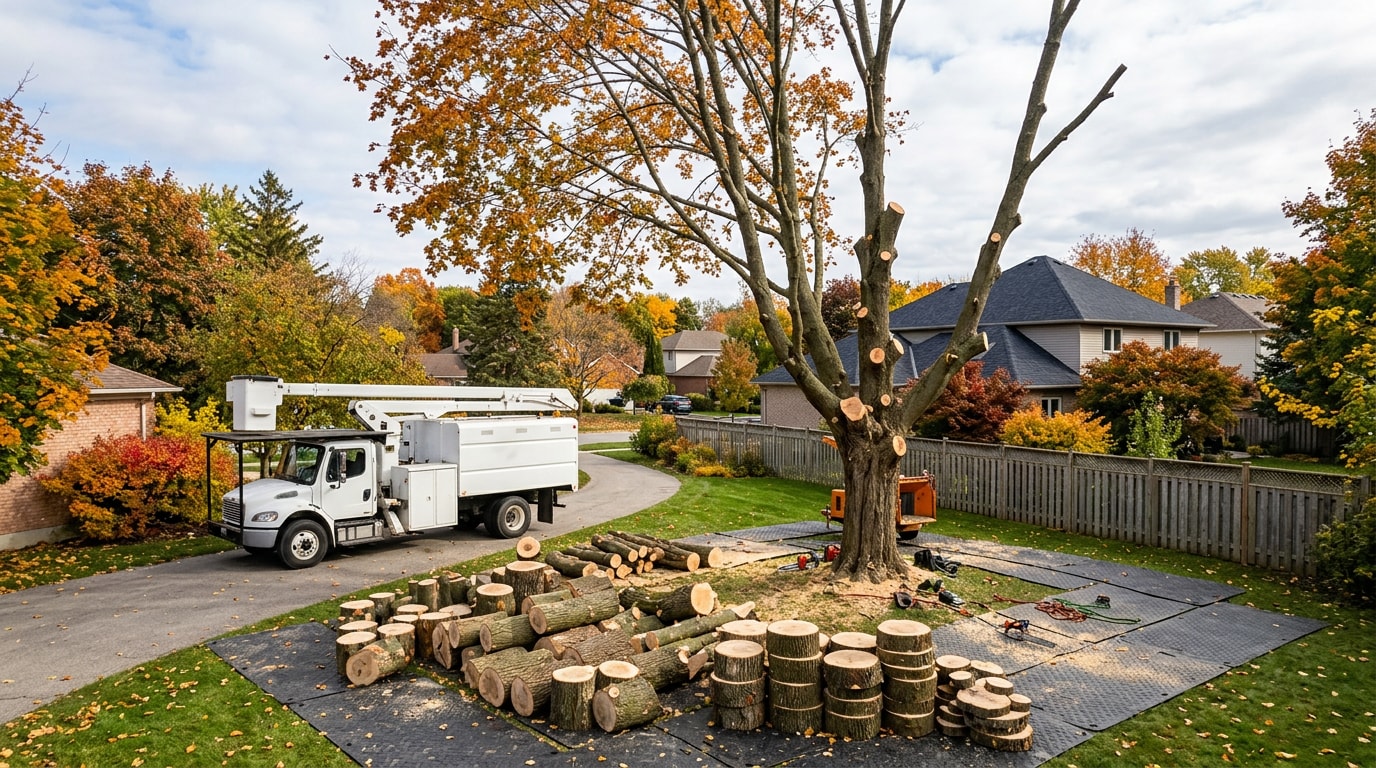
- Cut material and brush get cleared from the property.
- Any separate concerns, like a dying tree or a leftover stump, get flagged for a follow-up quote.
That overlap is why thinning pairs naturally with tree trimming, brush removal, and, where a tree is already too far gone, tree removal. For more on how Buffalo-area crews handle canopy work day to day, see this guide to tree limb trimming in Buffalo, NY.
Tree Thinning Service Areas Near Buffalo, NY
Coverage extends across Buffalo and the surrounding Western New York suburbs, including:
- Buffalo, NY
- Amherst, NY
- Clarence, NY
- Orchard Park, NY
- Cheektowaga, NY
- West Seneca, NY
- Hamburg, NY
- East Aurora, NY
Visit the homepage for the full list of tree and land services, or browse the tree service category for everything from pruning to emergency removal.
FAQ
What's the difference between tree thinning and tree trimming?
Thinning removes select interior branches to reduce density throughout the crown. Trimming is broader and often focused on shape, clearance, or size rather than internal density specifically.
When is the best time to thin trees in Buffalo, NY?
Late winter, roughly late January through early April, while trees are dormant. Wounds close faster and disease pressure is lowest.
How much does tree thinning cost in Buffalo, NY?
It depends on tree size, species, access, and how much of the crown needs work. Because the range is wide, an on-site estimate is the only reliable number.
Can I thin a tree in summer in Western New York?
It's not ideal. Actively growing trees are more vulnerable to stress and pest exposure after fresh cuts, so summer work is usually limited to removing hazards.
How much of a tree's crown can be thinned at once?
Industry guidance caps thinning at roughly 25 percent of the live crown in a single season. Removing more than that stresses the tree instead of helping it.
Should I thin trees before lake-effect snow season?
Yes. Reducing canopy density before storm season cuts down on the snow load and wind resistance a tree has to carry through winter.
Does tree thinning hurt a healthy tree if done correctly?
No. Proper thinning that stays within crown-density limits improves light and air movement without harming a healthy tree's structure or growth.