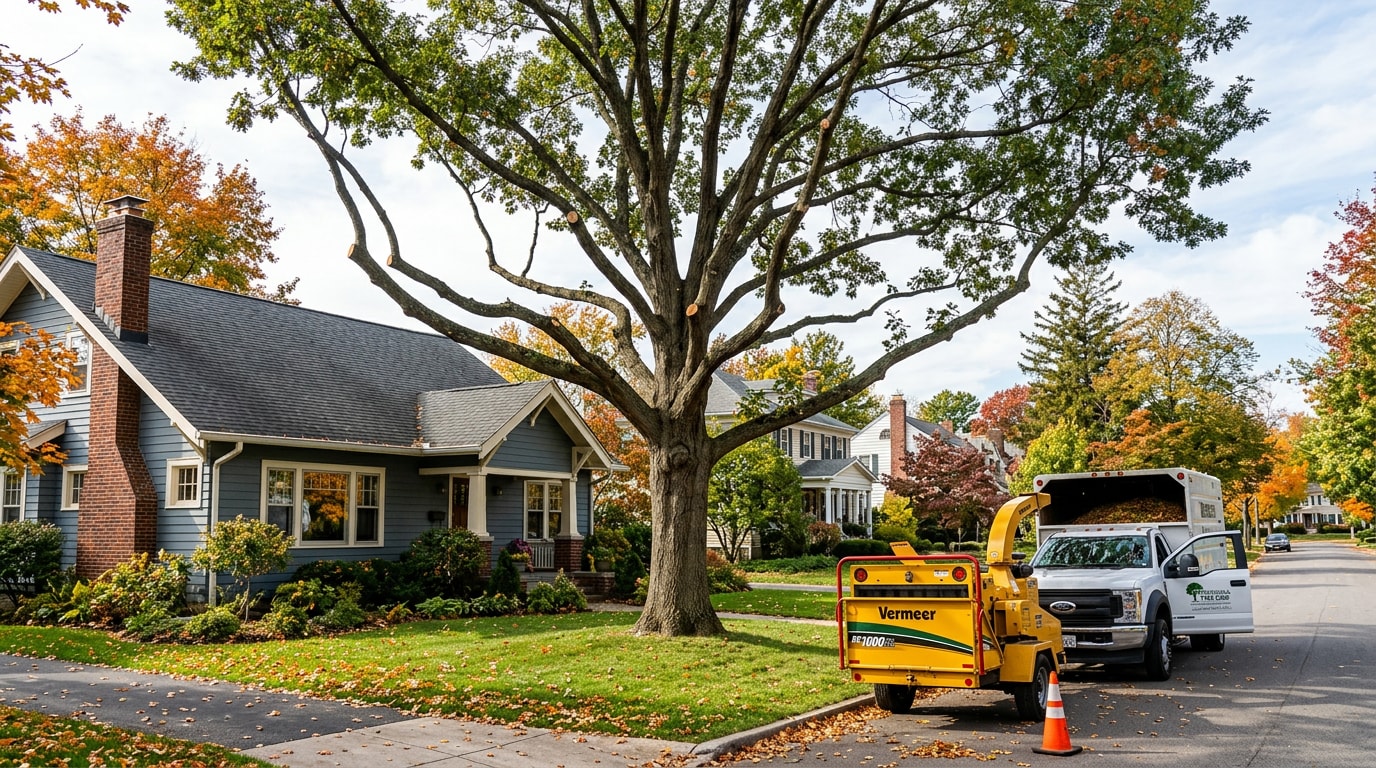
Large tree removal in Amherst, NY isn't a weekend chainsaw project once a trunk clears 50 feet or leans toward a roofline. Size changes the math on rigging, access, and what a mistake costs you. Here's what actually determines the price, the permit, and the crew you need.
What Counts as a "Large" Tree in Amherst
Most tree services split jobs by height and trunk diameter because both drive equipment choice.
- Small tree: under 25 feet, usually hand tools and a single climber
- Medium tree: 25 to 50 feet, climbing plus rigging
- Large tree: 50 to 80 feet, often needs a bucket truck or crane
- Very large tree: 80 feet or taller, almost always crane-assisted
Amherst's older neighborhoods carry a lot of mature silver maple, Norway maple, and ash that fall into that 50-to-80-foot range. Many of those ash trees are also weakened by emerald ash borer, which changes how a crew approaches the cut.
Do You Need a Permit for Large Tree Removal in Amherst, NY?
This is the first question most homeowners ask, and the answer depends on the lot, not the tree.
The Town of Amherst Building Department's Tree Removal Permit applies to undeveloped property and parcels over one acre, where the living trees are 4 inches in caliper or greater. A standard developed residential lot under an acre typically doesn't trigger that permit for a single large tree. If your property sits near a wetland, borders a right-of-way, or exceeds that acreage threshold, call the Building Department before scheduling the crew. Confirm your specific lot against the Town of Amherst's permit page and the Building Department's official permit listing before you sign a contract. Some HOA-governed subdivisions also require written board approval regardless of what the town requires, so check your covenants too.
For a deeper walkthrough of permit math specific to a common large-species removal, see our guide on oak tree removal in Amherst, NY.
How Much Does Large Tree Removal Cost in Amherst?
Price scales with height, trunk diameter, and how close the tree stands to a structure, fence, or power line. These are typical regional ranges homeowners should expect to see on a quote, not a fixed price for every job.
| Tree Size | Typical Range | Notes |
|---|---|---|
| Small (under 25 ft) | Lower end | Hand tools, single climber |
| Medium (25–50 ft) | Mid-range | Climbing and rigging |
| Large (50–80 ft) | Higher range | Bucket truck or crane likely |
| Very large (80 ft+) | Premium | Usually crane-assisted |
| Stump grinding | Priced separately | Scales with diameter |
A few factors push a quote to the top of the large-tree range:
- Crane day-rate and setup time on a tight lot
- Canopy overhanging a roof, deck, or power line
- A job that runs past a single day
- Limited truck access on older, narrow streets
Permit research, if your parcel requires one, can add its own line item. We cover that more in the FAQ below.
Crane-Assisted Removal: When It's Necessary
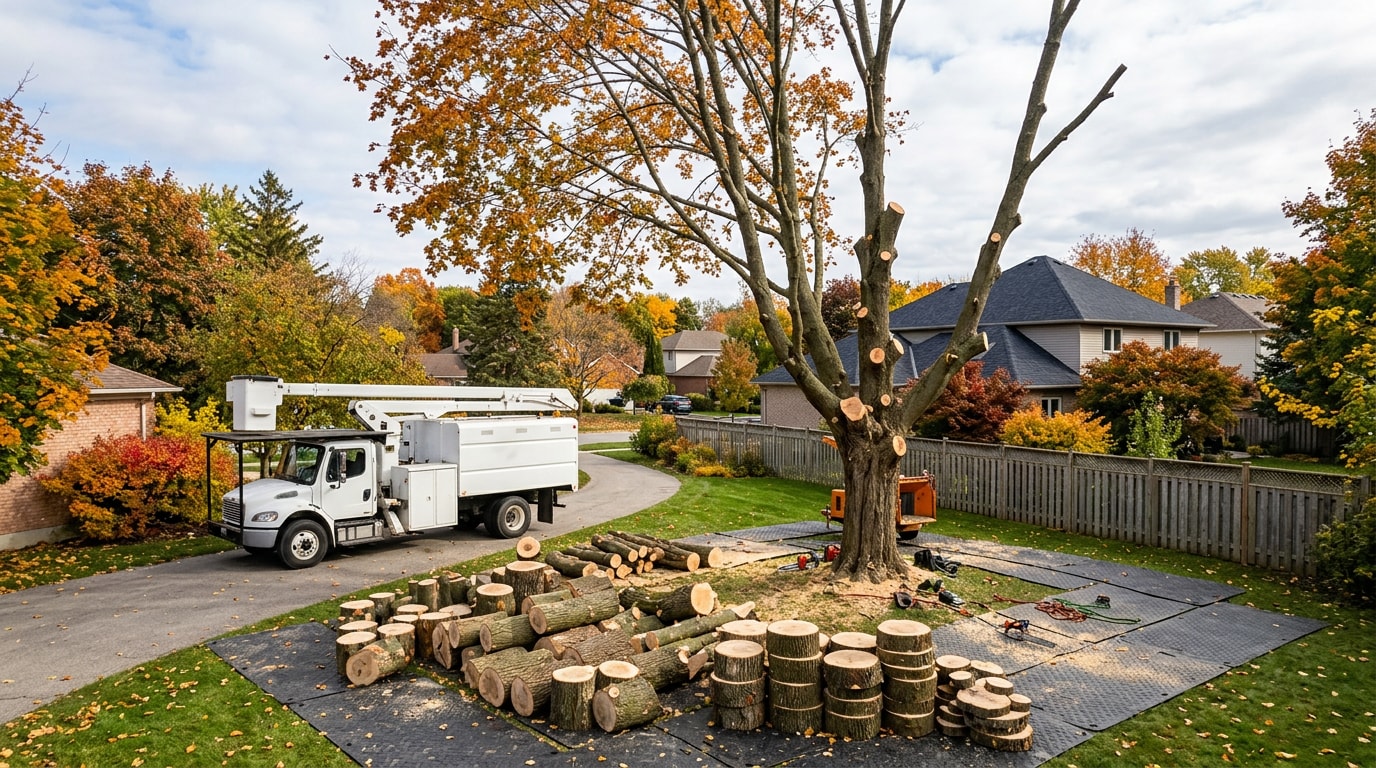
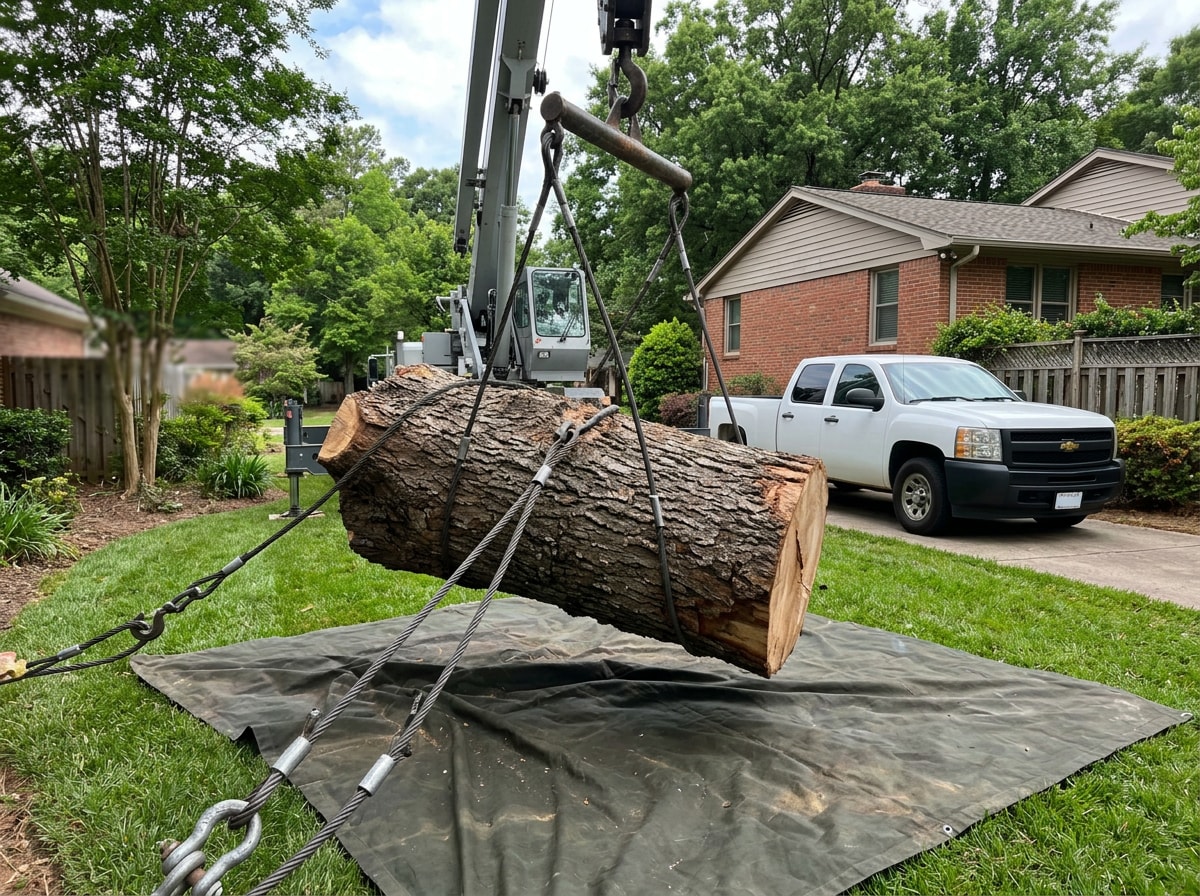
A crane becomes the right call when a large tree stands in a tight, older Amherst lot where free-climbing or ground rigging can't safely control where limbs and trunk sections land.
In jobs we've handled across Amherst's narrower, tree-lined streets, anything over roughly 60 feet near a driveway or fence usually needs a crane instead of ground-based rigging. Uncontrolled rigging of heavy sections on a tall tree creates shock-loading on the remaining limbs, which is exactly the risk a crane removes by lowering cut sections directly instead of dropping them.
That approach lines up with industry-wide safety practice. ANSI Z133.1 sets requirements for all climbing and rigging equipment used in tree care, and OSHA references it as part of its tree care industry safety guidance. Ask any crew you hire whether their rigging and crane work follows that standard.
The Large Tree Removal Process, Step by Step
- Site assessment — the crew checks lean, decay, root condition, and distance to structures and lines.
- Access planning — ground protection, drop zones, and crane placement get mapped before a saw starts.
- Permit check — confirmed against your parcel size and the tree's caliper if required.
- Rigging or crane setup — sections get secured for controlled lowering, not free fall.
- Dismantling — the canopy comes down in sections, largest first on crane jobs.
- Felling the trunk — once limbs are clear, the trunk comes down in managed cuts.
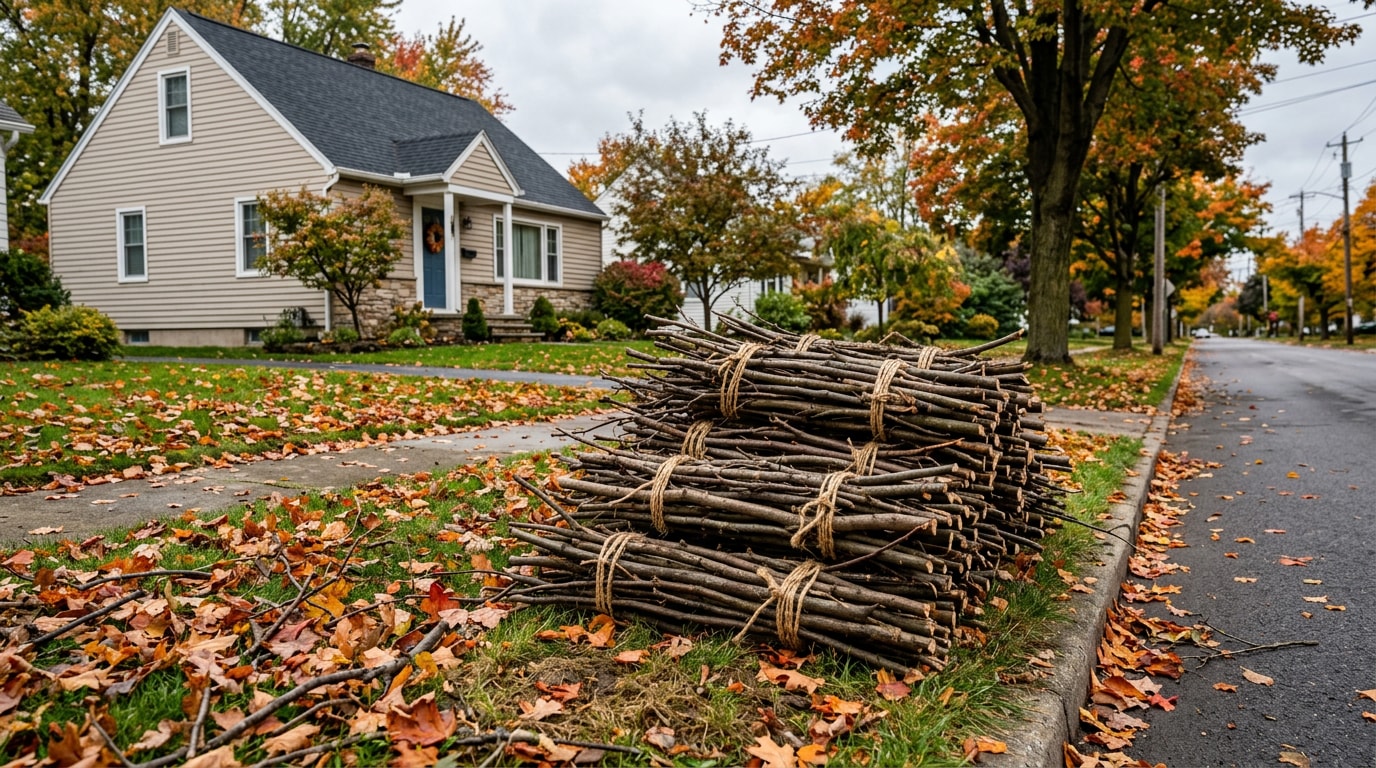
- Debris and brush cleanup — limbs get chipped, logs bucked, and the site cleared.
- Stump handling — ground, removed, or left for a separate visit, based on your plan.
If a tree already came down in a storm, the process starts at cleanup instead of assessment. Our emergency tree removal and hazardous tree removal crews handle that scenario directly.
Emergency and Storm-Damaged Large Tree Removal
Winter ice, summer downbursts, and fall wind events all produce the same call: a leaning or split large tree now threatens a roof, driveway, or power line and can't wait for a scheduled appointment.
Western New York sees enough of these storms that cleanup is a recurring job, not a rare one. Once the immediate hazard is down, some homeowners use the opening to replace a weak species with one better suited to the site.
Request a free estimate if a large tree on your property is leaning, split, or already down. We work with both emergency calls and scheduled large removals.
Stump Removal After a Large Tree Comes Down
A large tree leaves a wide-diameter stump, and that takes noticeably longer to grind than a small-tree stump. Stump work is typically priced and scheduled apart from the removal itself.
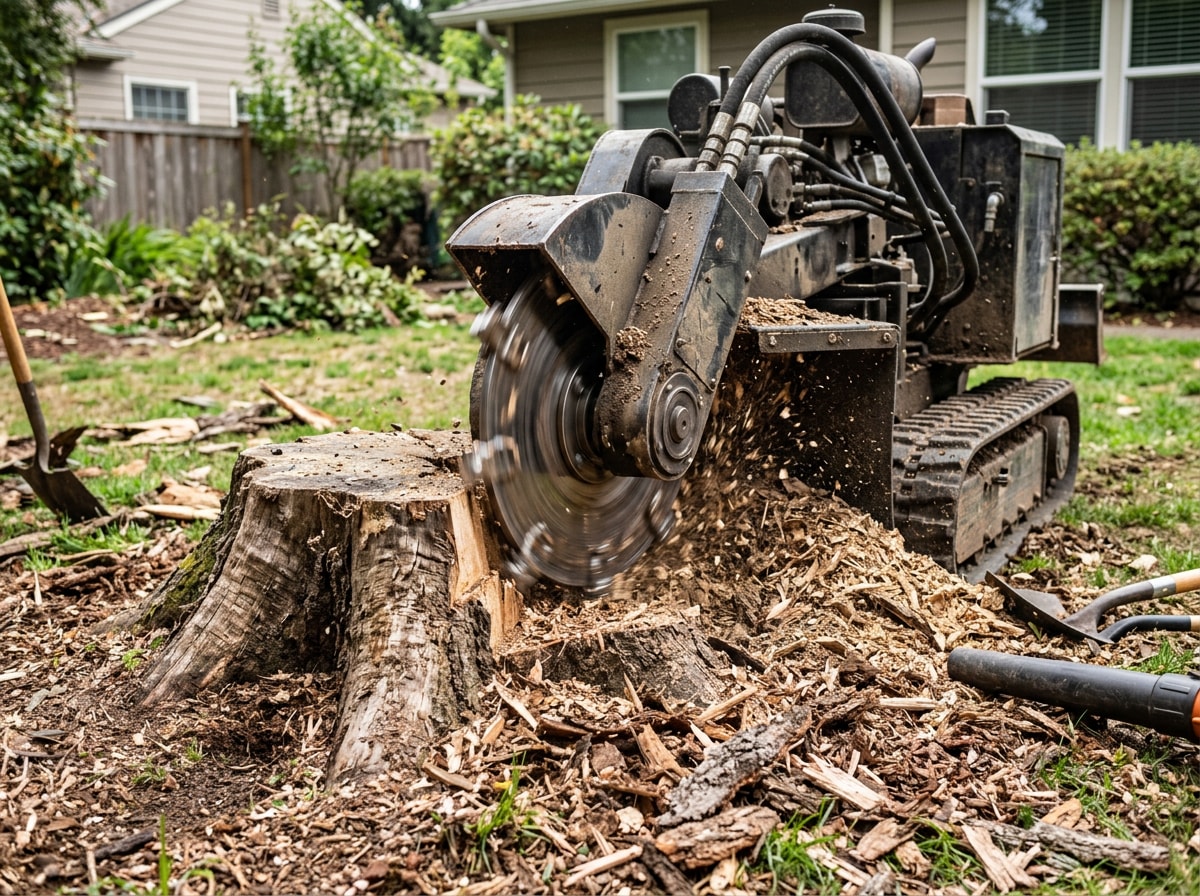
If you want the stump handled the same visit or on a separate schedule, our stump grinding and large stump removal pages cover the options and typical turnaround.
Choosing a Company for a Large Tree Removal
A large or hazardous tree isn't the job to hire on price alone. Before you book, ask:
- Are they insured for the full value of your home and neighboring property?
- Does their rigging and crane work follow ANSI Z133 safety practice?
- Will they confirm permit status before scheduling, not after?
- Do they clean up brush, logs, and ground debris as part of the quote?
- Can they handle the stump the same day, or will that be a separate visit?
See our full tree removal service page for what's included in a standard quote, or visit the Amherst, NY service area page for coverage details specific to your neighborhood. You can also start from our homepage to see the full range of tree and land services we run across the region.
FAQ
Do I need a permit to remove a large tree in Amherst, NY?
Generally no, if your property is a standard developed residential lot under one acre. The Town of Amherst Building Department issues a Tree Removal Permit for undeveloped property or properties over 1 acre in size, where the living trees to be removed are 4 inches caliper or greater; standard residential lots under 1 acre typically do not require a permit for single-tree removal. Confirm with the Building Department if you're unsure which category your lot falls into.
How much does large tree removal cost in Amherst, NY?
Cost scales with height, trunk diameter, and access. Large trees (50 to 80 feet) typically land in a higher price bracket than small or medium trees, and very large trees (80 feet or taller) usually run highest because crane work is involved. Request a free estimate for a price specific to your tree and lot.
How long does it take to remove a large tree?
A small or medium tree often comes down in two to four hours. A 60-to-80-foot or taller tree requiring crane-assisted removal can take a full day, especially with tight access or canopy over structures.
Can I remove a large tree myself?
Small trees under roughly 20 to 25 feet, away from structures and power lines, may be manageable DIY projects. Anything taller, leaning, or near a structure or power line should go to a trained crew with proper rigging equipment and insurance.
Does homeowners insurance cover large tree removal?
Standard homeowners insurance policies cover damage to trees and shrubs due to disasters or an accident, including trees felled by wind, lightning or hail. Preventive removal of a tree that's simply large, old, or inconvenient is generally not covered. Check the specifics with your carrier or review the Insurance Information Institute's guidance on tree damage coverage.
Do you offer emergency large tree removal in Amherst?
Yes. Storm-damaged, leaning, and split large trees that threaten a structure get prioritized over scheduled work. Contact us for same-day assessment when a tree is actively hazardous.
What happens to the stump after a large tree is removed?
Stump grinding is usually quoted and scheduled separately from the tree removal. Wide-diameter stumps from large trees take longer to grind than small-tree stumps, so expect that cost to scale with trunk size.