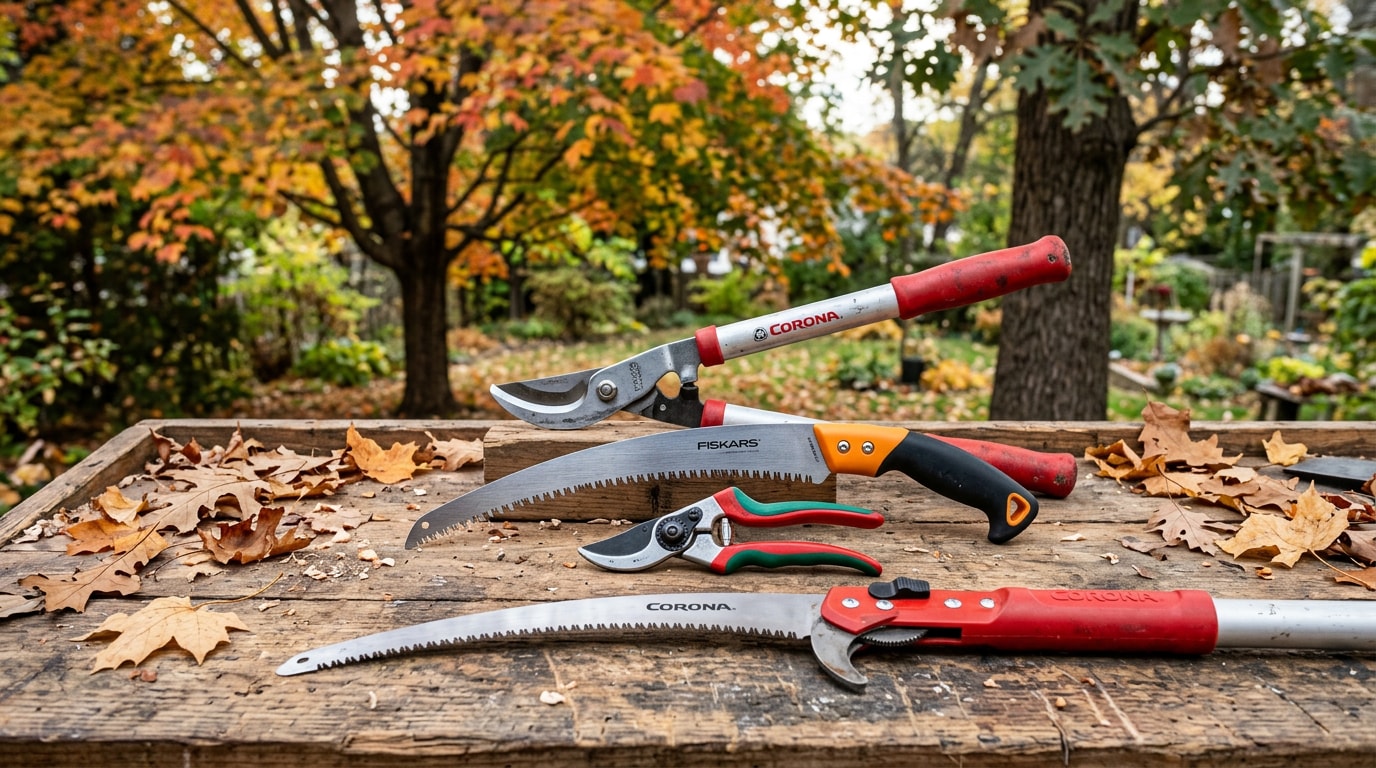
Picking the right tree trimmer tool in East Aurora, NY starts with matching the tool to the branch, not grabbing whatever is closest in the garage. Western New York's mix of mature maples, oaks, ash, and backyard fruit trees means a bypass pruner that handles a cherry sapling will barely scratch a storm-damaged oak limb. This guide breaks down every tool category, the safety gear that goes with it, and the exact point where a weekend job turns into a call to a licensed crew.
Why Tool Choice Matters More in East Aurora Right Now
Western New York is in the middle of a long-running emerald ash borer problem. New York's DEC confirms the emerald ash borer has spread to every county except Hamilton and Lewis, threatening millions of ash trees statewide. Erie County falls squarely inside that spread.
Dead ash wood behaves differently under a blade than live hardwood does. It's brittle, drier, and far more likely to pinch a saw or kick back unexpectedly.
On properties we service in and around East Aurora, that shift has pushed more homeowners toward heavier pole saws and chainsaws, even for mid-size limbs. Dead ash simply doesn't yield to a hand pruner the way a live maple branch does.
If you're staring down a dead or declining ash tree on your lot, our hazardous tree removal page covers the warning signs worth knowing before you pick up any tool at all.
Types of Tree Trimming Tools
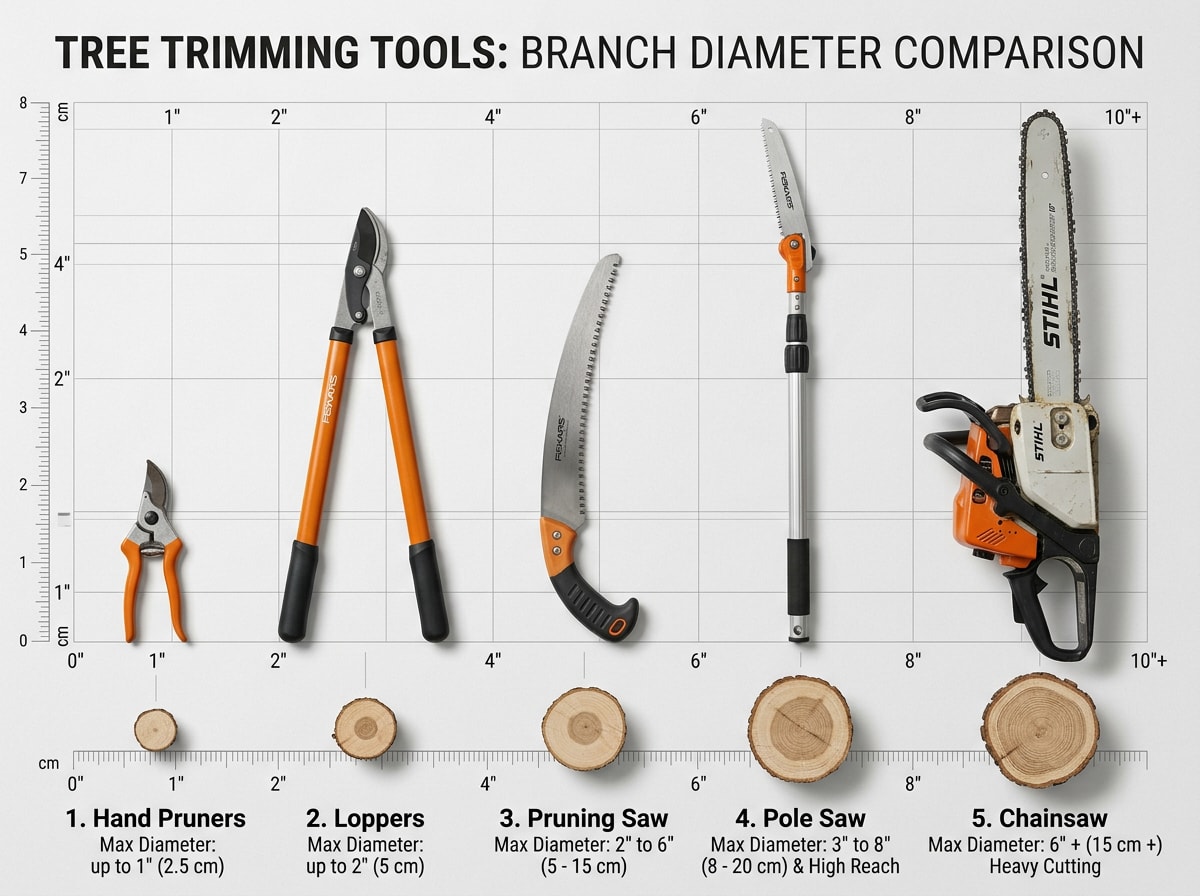
The right tree trimmer tool depends on three things: how thick the branch is, what species you're cutting, and whether this is a one-time DIY task or a recurring job. Tree trimming tools generally fall into five categories, each built for a specific branch-size range. Understanding these categories before you shop saves money and prevents damage to both the tree and your hands.
For routine upkeep on properties around the village, a tree trimming or tree pruning crew can also handle the categories below once the scope grows past a weekend project.
Hand Pruners (Pruning Shears)
Hand pruners are the workhorses of light trimming, handling branches up to about ¾ inch thick. Bypass pruners use a scissor-like action, making a clean cut ideal for live, green wood. Anvil pruners close a blade against a flat surface, which works better on dead or dried-out branches but tends to crush live stems.
For young trees, flower bushes, or precise shaping cuts, bypass pruners are usually the better pick. Anvil styles are handy for clearing deadwood but shouldn't be your go-to for healthy growth. Most homeowners keep both in a garden bag, since fruit trees and ornamentals often need both types in the same session.
Loppers
Loppers are essentially oversized pruners with long handles, giving you the leverage to cut through branches in the 1 to 2 inch range. The extra handle length also means you don't need to get as close to the branch, which helps with awkward angles or thorny shrubs.
Like hand pruners, loppers come in bypass and anvil versions. Bypass loppers suit live branches and give a cleaner cut that heals faster, while anvil loppers handle thicker deadwood with less blade wear. If you're regularly cutting branches thicker than two inches, a lopper starts to feel like the wrong tool for the job, and that's your cue to move up to a saw.
Pruning Saws & Handsaws
Once branches exceed roughly 2 inches, pruning saws take over, typically handling diameters up to 5 inches. These saws come in folding, curved, and straight-blade designs, each suited to slightly different tasks.
Folding pruning saws are compact and safe to carry in a pocket or bag, making them popular for quick trims. Curved-blade saws cut on the pull stroke, which gives better control on overhead branches, while straight-blade saws are often preferred for horizontal cuts near the trunk. A sharp pruning saw with aggressive teeth will outperform a dull chainsaw chain on mid-sized limbs, so don't underestimate a good handsaw.
Pole Saws & Pole Pruners
Pole saws and pole pruners extend your reach anywhere from 8 to 15 feet, letting you trim higher branches without climbing a ladder. They come in three main types: manual (rope-operated), electric (corded or battery), and gas-powered.
Manual pole pruners work well for occasional light trimming and are the most affordable option. Electric pole saws add motorized cutting power for thicker branches without the weight or fumes of a gas model. Gas-powered versions offer the most cutting power and reach but are heavier and louder, so they suit larger properties with more frequent trimming needs.
A pole saw matters most when a tree's lower limbs are gone but upper branches still overhang a roof, driveway, or power line. These are situations where a ladder adds real fall risk.
Chainsaws
Chainsaws come in gas, corded electric, and battery-powered versions, and they're the right call once branches exceed what a pruning saw can comfortably handle, generally anything above 4 to 5 inches in diameter. Gas chainsaws deliver the most power for large limbs or trunk work, while battery models have gotten strong enough for most homeowner trimming tasks without the maintenance of a gas engine.
Before buying, check for a chain brake, which stops the chain almost instantly if it kicks back, and look for vibration-reduction handles to cut fatigue on longer jobs. Chainsaws remove a lot of wood fast, which is exactly why they demand more respect and protective gear than any tool listed above.
Essential Safety Equipment
The gear you need changes depending on which tool is in your hands. Hand pruners call for little more than sturdy gloves, while a chainsaw demands a full protective setup. Matching your safety equipment to your tool, not just grabbing a generic "safety kit," is what actually prevents injuries.
For hand pruners and loppers, cut-resistant gloves and safety glasses cover most risks from flying debris or slipping blades. Once you move to a pruning saw or pole saw, add a hard hat if you're working under a canopy, since falling debris becomes a real concern. Chainsaws raise the stakes considerably: chainsaw chaps, steel-toed boots, hearing protection, and a face shield or safety glasses are non-negotiable.
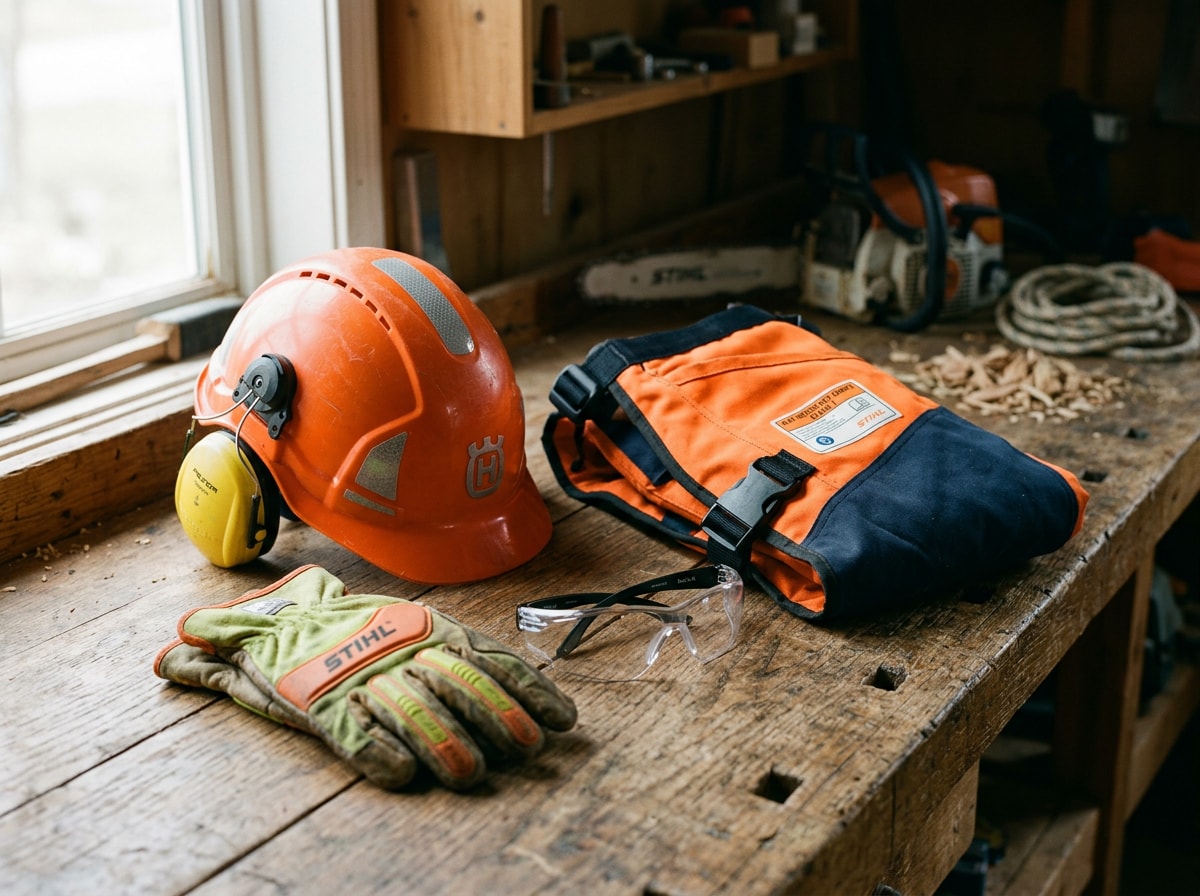
Fit matters too. A glove that's too bulky or a tool that's too heavy for your grip strength increases the odds of a slip. OSHA's own guidance notes that tree trimming and removal work should assume all power lines are energized, and crews should contact the utility company to discuss de-energizing lines before work begins . The full OSHA tree trimming safety guidance is worth reviewing before any job involving height or power lines.
Choosing the Right Tree Trimming Tool
Matching tool to branch diameter is the starting point, but tree species and how often you trim also shape the decision. A tool that works for a small ornamental cherry won't keep up with a mature oak.

Consider Your Tree Type and Size
Fruit trees like apple and cherry generally respond well to hand pruners and loppers, since their branches tend to be thinner and benefit from precise, frequent shaping cuts. Hardwoods common across Western New York, such as maple, oak, and elm, often need heavier-duty loppers, pole saws, or a chainsaw once limbs thicken with age.
Property owners in and around East Aurora often deal with a mix of both: ornamental trees near the house and larger hardwoods along the property line. Matching the tool to each tree type, rather than using one tool for everything, keeps cuts clean and reduces stress on the tree.
For guidance on exactly where to cut relative to the branch collar, the University of Minnesota Extension's pruning guide walks through proper cut placement with diagrams worth bookmarking. Before making the final cut severing a branch from the main stem, it helps to identify the branch collar, which grows from the stem tissue around the base of the branch.
When to Call a Professional Tree Trimming Crew
Consumer-grade tools have limits, and recognizing them early prevents accidents. Once a job involves working above 10 to 15 feet, cutting near power lines, or removing a trunk over roughly 6 inches in diameter, it's generally time to call a professional rather than stretch a pole saw or chainsaw beyond safe use.
A certified arborist brings more than bigger equipment. They bring training in how a cut affects the tree's long-term health, plus rigging and climbing techniques that prevent property damage during removal. The ISA's Find an Arborist directory is worth checking when vetting a local crew's credentials.
If overhead limbs call for a bucket truck instead of a ladder, our breakdown of what a bucket crew needs to get it right walks through the equipment a professional outfit brings to the job.
If a job on your property checks any of these boxes (height, power lines, large trunk diameter), it's reasonable to stop reaching for the pole saw and request a free estimate instead. The cost of a professional crew is often lower than the cost of a fall or a damaged roof.
Maintaining Your Tree Trimming Tools
Tools last years longer with a basic seasonal routine instead of occasional, inconsistent care. Sap, moisture, and dull blades are the three biggest reasons pruners and saws wear out early.
Pre-season: Before spring trimming starts, sharpen every blade. Pruning shears and loppers typically need a 20-25 degree bevel angle maintained with a sharpening stone; a dull blade crushes stems instead of cutting cleanly, which invites disease into the wound.
After each use: Wipe sap and plant residue off blades with a cloth dampened in rubbing alcohol or a mild solvent. Sap buildup is one of the fastest ways to gum up a hinge or pivot point, and it's far easier to remove fresh than dried.
End of season: Apply a light coat of machine oil to blades and pivot points before storing tools for winter. This prevents rust from forming over months of disuse, which is a common reason tools fail the following spring. Store pruners and loppers in a dry space, ideally hanging rather than piled in a bin where blades can nick each other.
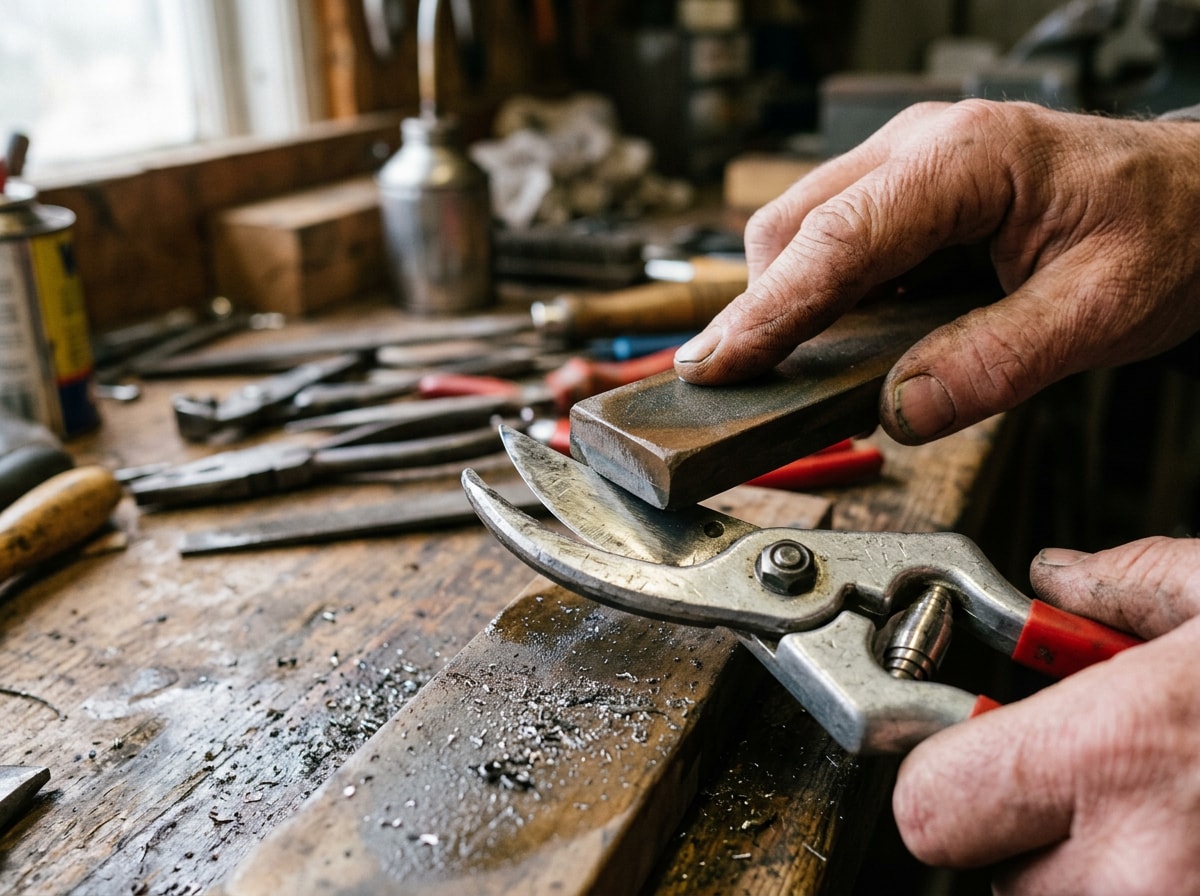
Following this three-point schedule (sharpen before the season, clean after every use, oil before storage) adds years to a tool's working life and keeps cuts cleaner throughout the season.
Tree Service Equipment Price Guide (2026)
Hand tools cover most homeowner needs, but it helps to know where DIY equipment ends and professional-grade gear begins. Here's a condensed reference, with typical retail price ranges:
| Equipment Category | Examples | Typical Price Range |
|---|---|---|
| Safety gear | Gloves, eye/ear protection, chaps | $50 – $250 |
| Cutting tools | Pruners, loppers, pruning saws | $20 – $80 each |
| Pole equipment | Manual, electric, or gas pole saws | $60 – $400 |
| Chainsaws | Battery, corded, or gas models | $100 – $600 |
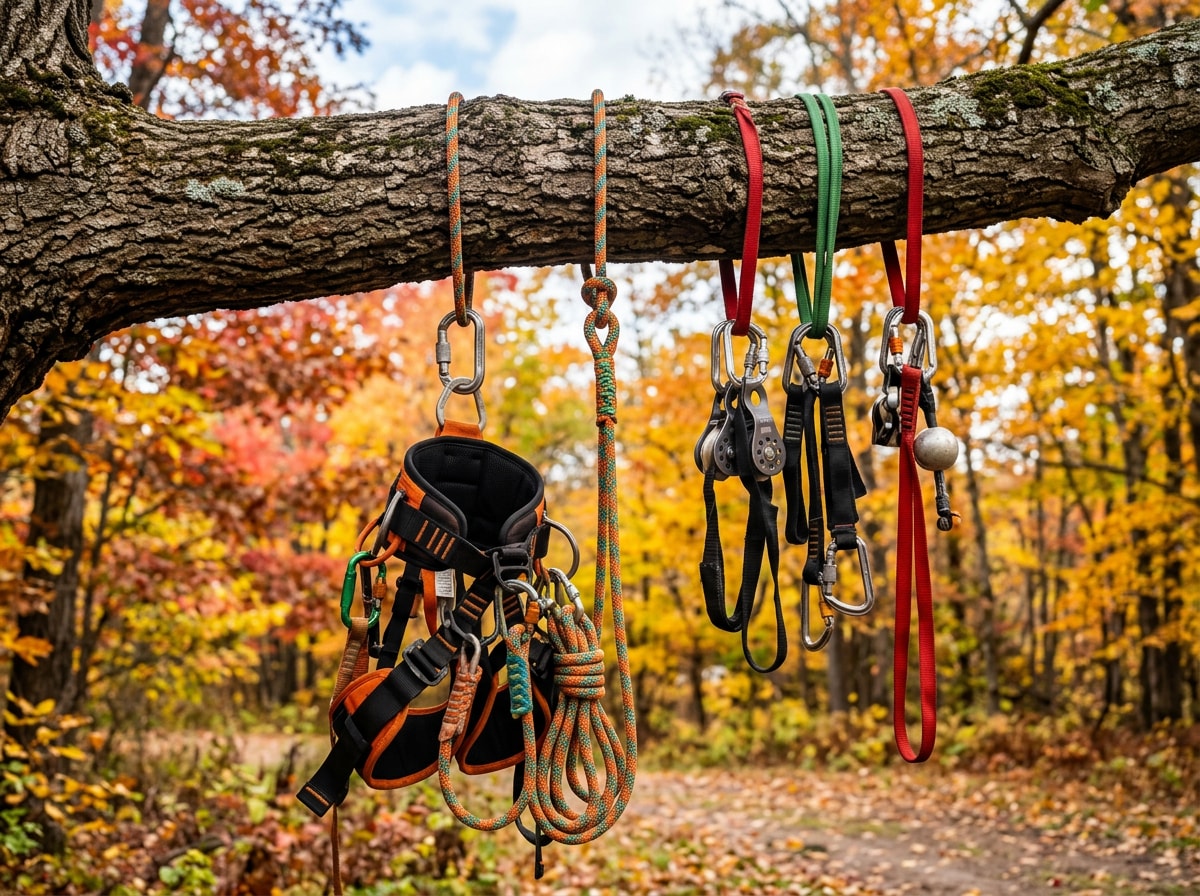
| Climbing and rigging gear | Harnesses, ropes, carabiners (professional use) | $300 – $1,500 |
| Heavy machinery | Chippers, stump grinders, bucket trucks | $2,000+ (typically contractor-owned) |
Once a project requires climbing gear or heavy machinery, it has usually moved past the DIY-tool range and into professional territory. Browsing our full tree service category page can help clarify which services bridge that gap.
Common Mistakes to Avoid
The most frequent mistake is using an anvil blade on live wood, which crushes the stem instead of cutting it cleanly and slows healing. A close second is working with dull blades, which forces extra pressure and raises the odds of a slip.
- Overreaching: stretching a lopper or pole saw to its absolute limit instead of grabbing the next-sized tool or a step ladder rated for outdoor use.
- Skipping maintenance: a neglected blade is more likely to bind, slip, or break mid-cut.
- Ignoring dead ash: treating a brittle, EAB-killed limb like ordinary live wood, which increases kickback risk.
- Working alone near height or power lines: a second set of eyes and hands matters more than most homeowners assume.
If you're trimming trees anywhere in our East Aurora service area, avoiding these basics will save both your trees and your tools from unnecessary wear.
About 1776 Tree Service
1776 Tree Service is based in East Aurora and runs certified crews across 14 Western New York communities, handling everything from routine pruning to emergency and hazardous tree removal. Our crews see the EAB-driven shift toward heavier-duty tools firsthand on nearly every job site in this region, which is part of why this guide leans on real branch conditions rather than generic tool specs. Questions about a specific tree on your property? Call (716) 309-4050 or visit our homepage to see the full range of services we cover.
FAQ
What is the best tool for trimming trees?
There's no single best tool, it depends on branch size. Use hand pruners for branches under ¾ inch, loppers up to 2 inches, pruning saws up to 5 inches, and a chainsaw or professional help for anything thicker.
What is the difference between pruning shears and loppers?
Pruning shears are one-handed tools for branches under ¾ inch, while loppers use two-handed, long-handle leverage to cut branches up to about 2 inches. Loppers trade precision for cutting power.
What size branches can loppers cut?
Most loppers handle branches between 1 and 2 inches in diameter, with some heavy-duty models reaching 2.5 inches. Beyond that, switch to a pruning saw for a cleaner, safer cut.
What's the best tool for branches I can't reach from the ground?
A pole saw or pole pruner extends your reach 8 to 15 feet without a ladder. Once branches sit higher than that, or near a power line, hand tools stop being the safe option and it's time to call a professional crew.
Do I need a professional, or can I trim trees myself?
DIY tools work fine for branches you can reach from the ground or a short ladder. Once height, power lines, or large trunk diameters are involved, hiring a certified arborist is the safer choice.
Do I need a permit to trim or remove trees in East Aurora, NY?
Routine pruning on your own property typically doesn't require a permit, but rules can vary by parcel and by tree location. Work near power lines always requires coordination with the utility, regardless of permit status. Check with the Village of East Aurora's code office before removing a large or boundary-line tree.
How do I maintain my tree trimming tools?
Sharpen blades before the season starts, wipe off sap after every use, and oil metal parts before winter storage. This three-step routine prevents rust and keeps cuts clean year-round.

