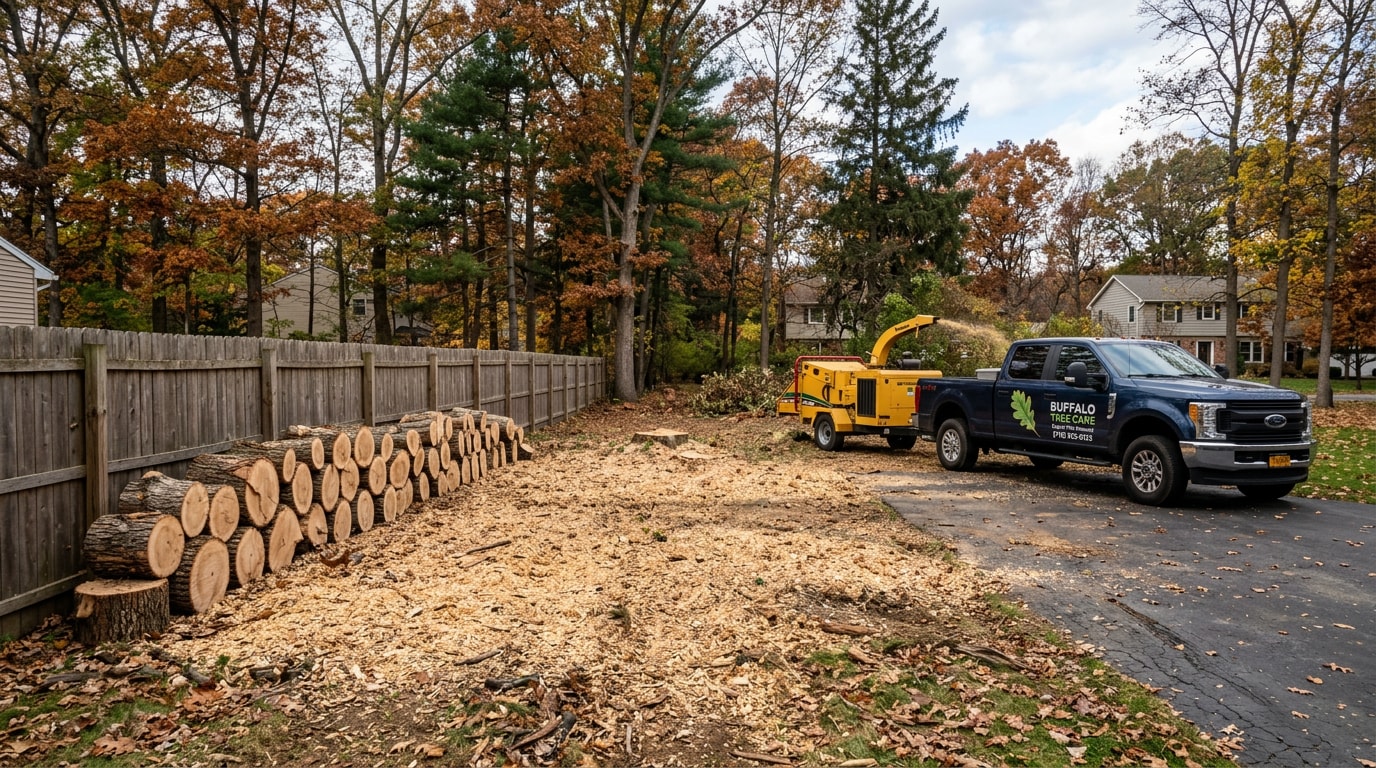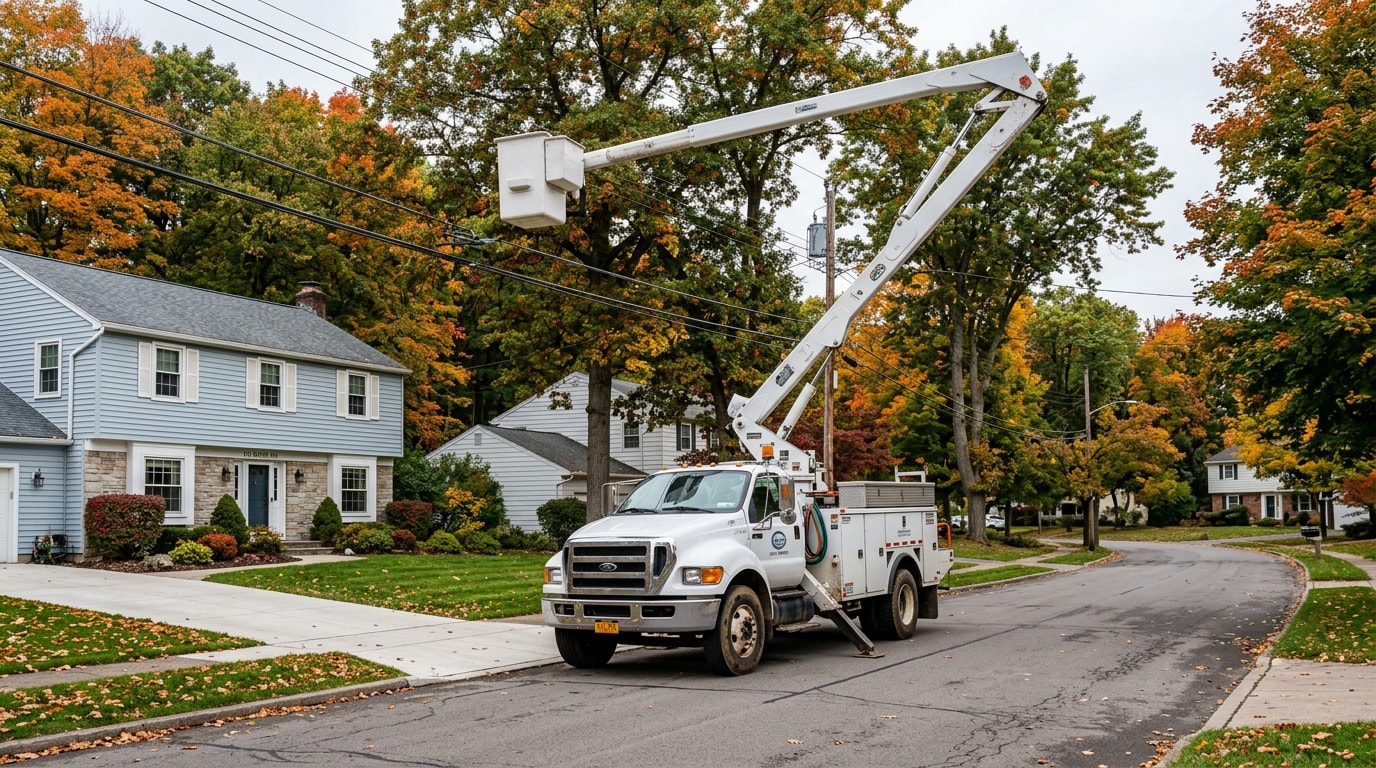

Forestry land clearing in Buffalo, NY means dealing with dense hardwood brush, clay-heavy soil, and a permit system that splits between the City and Erie County. Skip a step and a project that should take two days can stretch into two weeks of stuck equipment and stop-work orders. Here's what the process, the equipment, and the real 2026 pricing look like before you call a crew.
What Does Forestry Land Clearing Cost in Buffalo, NY?
Pricing depends almost entirely on what's growing on the lot and how dense it is. A quarter-acre of overgrown field clears for a fraction of what a mature hardwood stand costs, and stump removal or off-site hauling adds to either number.
| Vegetation Type | Typical Cost per Acre (2026) | Notes |
|---|---|---|
| Light brush / overgrown field | $800 – $2,000 | Minimal stumps, fast mulching pass |
| Mixed brush with small-to-medium trees | $1,500 – $3,500 | Most common residential lot in WNY |
| Heavily wooded hardwood lot | $3,000 – $6,000+ | Mature oak and maple, stump removal needed |
| Full site prep with grading | $4,000 – $8,000+ | New construction, debris hauled off-site |
Two things push Buffalo-area jobs toward the higher end of these ranges more often than you'd see in flatter, drier regions: heavy clay subsoil that stays saturated into late spring, and the hardwood mix (oak, maple, ash) common on Erie County lots, which is denser and slower to mulch than softwood brush. Forestry mulching usually lands cheaper per acre than cut-and-haul clearing because it skips disposal fees entirely.
What's Included in Professional Forestry Land Clearing
A standalone "clearing" line item rarely covers the whole job. Most Buffalo-area projects actually bundle several services:
- Tree felling and removal for anything too large to mulch standing
- Brush removal for understory growth, vines, and saplings
- Stump grinding or extraction where grading or construction follows
- Root removal near foundations, driveways, or septic lines
- Site preparation — final grading and debris cleanup before building
If you're only dealing with a handful of large trees rather than a full lot, tree removal or hazardous tree removal may be the more accurate service to request instead of a full clearing crew.
The Equipment Buffalo Crews Actually Use
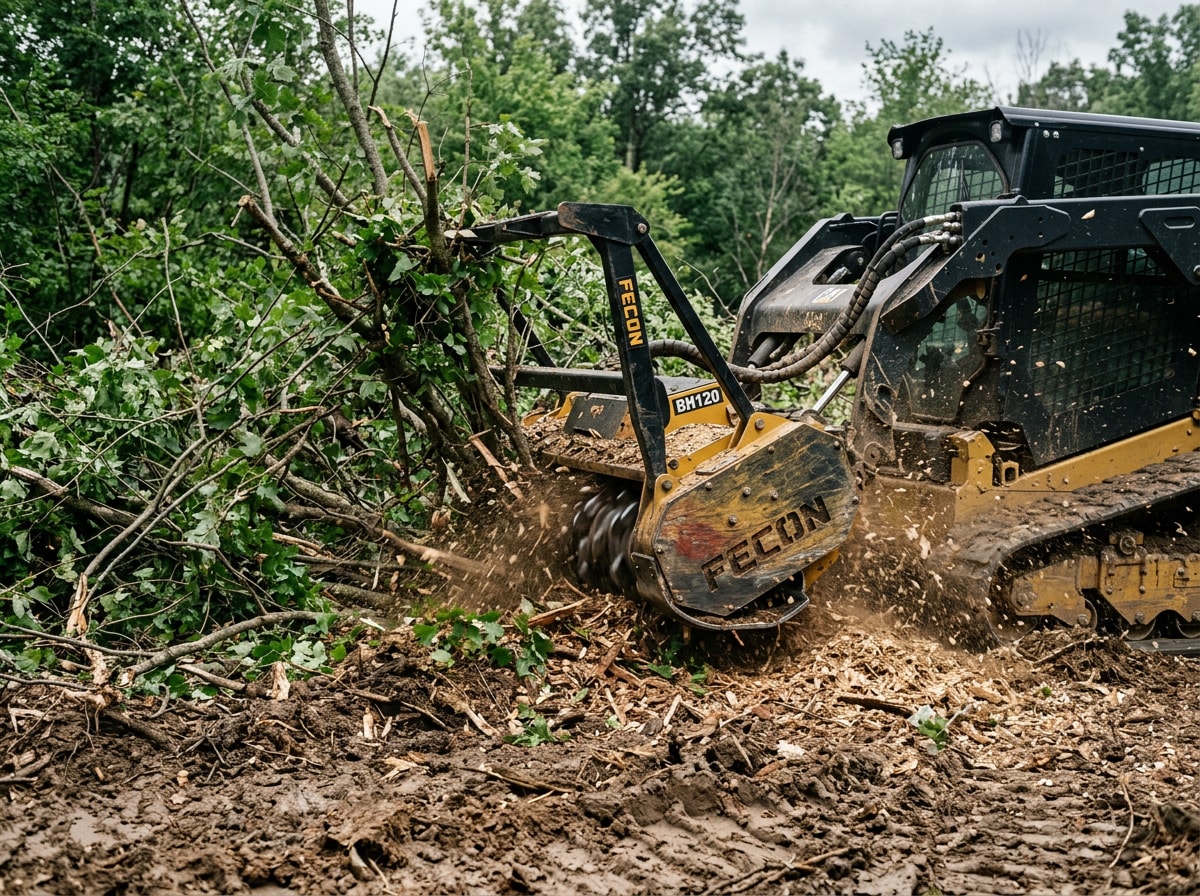
A rented chainsaw and a pickup truck don't scale to an acre of hardwood brush. Professional crews run purpose-built machines matched to the job:
- Disc mulcher – grinds standing brush and small-diameter trees in place
- Skid-steer mulching head – works tighter, sloped, or wet-access areas a full-size mulcher can't reach
- Excavator – pulls larger stumps and root balls once trees are down
- Chipper – processes limb debris that doesn't go through the mulcher
On Buffalo's mixed hardwood lots and heavy clay soils, this combination clears ground without the excessive grading or compaction a dozer-only approach tends to leave behind. Heavy equipment also carries real injury risk without trained operators — a point reinforced by OSHA's logging and forestry operations standard, which covers felling, chipping, and machine operation hazards regardless of the end use of the wood.
How the Clearing Process Works, Step by Step
- Site assessment – crews map obstacles, equipment access points, drainage patterns, utility lines, and any wetland buffer before anything comes down.
- Tree felling – large trees come down first; working out of order slows everything downstream.
- Brush and understory clearing – saplings, vines, and dense brush get mulched or cleared next.
- Stump removal or grinding – handled once the canopy and brush are gone and access is clear.
- Debris processing – material is either mulched on-site, chipped, or hauled off, depending on the plan set during the assessment.
Leftover mulch between phases actually helps stabilize bare clay soil on Buffalo sites prone to rutting — a small detail, but it's one reason experienced crews don't rush straight to grading. If an oak or two on the lot needs special handling before the rest of the clearing starts, our oak tree removal guide for Amherst, NY walks through cost and process specifics for that species.
Permits and Regulations for Land Clearing in Buffalo, NY
Permit requirements come from two separate levels, and both can apply to the same project.
City of Buffalo: A DPW Tree Work Permit is required to prune, plant, or remove trees within the city right-of-way, and the City of Buffalo's Forestry Division FAQ confirms there's no fee attached. Private-property clearing generally doesn't require this specific permit, but heritage trees and street-adjacent trees usually do.
State level: If the parcel sits near a wetland or waterway, New York's Freshwater Wetlands Permit Program may apply to any clearing, grading, or filling within a wetland or its 100-foot adjacent area.
Local grading permits run through the City of Buffalo or your Erie County suburb's planning office, separately from either of the above. Check all three before equipment shows up on-site. Most crews also recommend scheduling clearing for late summer through fall, or late spring once the ground firms up, since Buffalo's clay soil holds moisture well into the season and can bog down equipment earlier than drier regions.
Environmentally Friendly Clearing Practices
Mulch-in-place clearing cuts runoff compared to bare, graded clay soil. The University of Minnesota Extension's guidance on preventing erosion on wooded land notes that ground cover and filter strips near water bodies significantly reduce sediment movement during and after clearing work — the same logic applies to mulch left in place on a cleared Buffalo lot.
Beyond erosion control, responsible clearing also means:
- Preserving topsoil instead of stripping a site bare
- Managing invasive species encountered during clearing
- Protecting existing wildlife habitat wherever the project scope allows it
That combination makes mulch-based land clearing a practical choice on erosion-prone sites, not just a sustainability talking point.
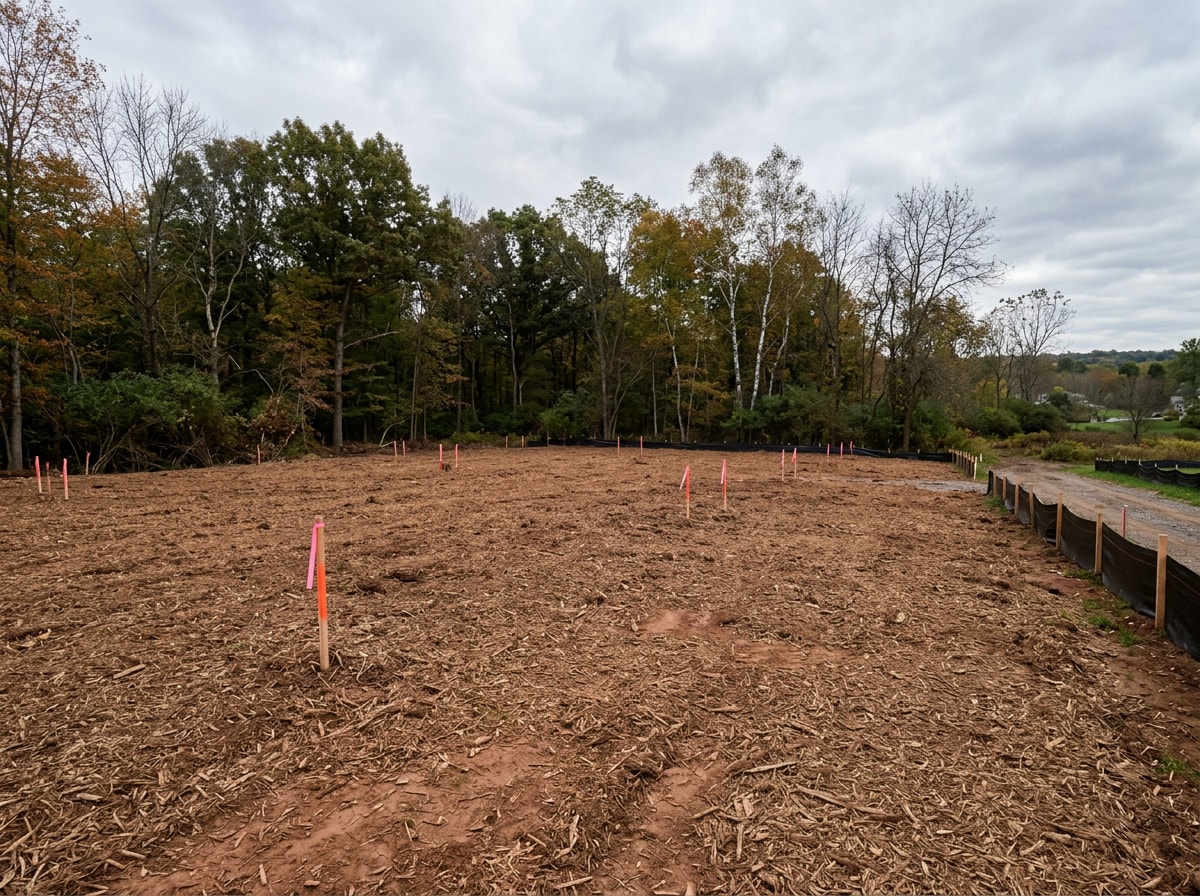
Lot Clearing vs. Land Clearing vs. Brush Removal
These terms get used interchangeably, but they aren't the same scope of work:
- Lot clearing — smaller residential parcels prepping for construction or landscaping
- Land clearing — larger acreage for farming, development, or forest management
- Brush removal — understory clearing without necessarily removing mature trees
- Vegetation removal — targeted clearing of invasive or overgrown plant species
- Site preparation — final grading and debris cleanup ahead of construction
If stumps are the main obstacle rather than standing trees, that's a separate scope covered under stump grinding, stump extraction, or large stump removal depending on size and access.
Choosing a Forestry Land Clearing Contractor in Buffalo
A general contractor or weekend crew often lacks the forestry mulcher, excavator, or chipper needed to clear dense Buffalo-area brush efficiently. Beyond equipment, an experienced crew understands access points, soil stability, and how to sequence work so nothing on the property gets damaged along the way.
We run crews across Buffalo, Amherst, Clarence, Orchard Park, Cheektowaga, West Seneca, Hamburg, and East Aurora, and the clay-and-hardwood pattern repeats across nearly every one of those sites. If you've got an overgrown lot, a hunting property, or a new build that needs the ground opened up, visit our homepage to see the full range of tree and land services, or go straight to a free estimate and we'll walk the site with you before anything is quoted.
FAQ
Do I need a permit for forestry land clearing in Buffalo, NY?
It depends on location and scope. City right-of-way trees need a free DPW Tree Work Permit. Private-property clearing near a wetland or waterway may trigger a state Freshwater Wetlands Permit. Grading permits are separate and run through your local municipality.
What's the difference between forestry mulching and traditional land clearing?
Mulching grinds material and leaves it on-site, cutting erosion and hauling costs. Traditional clearing removes debris entirely, which usually fits grading-heavy jobs better.
What happens to the removed trees and brush?
Depending on the project, material gets ground into mulch, chipped, hauled off for composting, or cut into usable timber if the trees are large enough.
How long does a typical land clearing project take?
Small residential lots often take a day or two. Large, densely forested acreage can take several weeks. Your contractor should confirm a timeline after the site assessment.
How much does land clearing cost in Buffalo, NY?
Pricing typically runs $800 to $6,000+ per acre, depending on vegetation density, stump removal needs, and whether debris is mulched on-site or hauled away.
What is the difference between lot clearing and land clearing?
Lot clearing usually means smaller residential parcels prepping for construction. Land clearing refers to larger acreage for farming, development, or forest management.