Tree assessment services in Orchard Park, NY give homeowners a documented, arborist-verified read on risk before a leaning trunk or storm-weakened limb turns into an expensive emergency. Dead wood, root damage, and pest infestations rarely announce themselves until a tree is already failing. Here's what a real assessment covers, what it costs locally, and when to call in a certified arborist instead of guessing from the driveway.
Key Takeaways
- A professional tree assessment catches disease, decay, and structural defects before they become safety hazards.
- Certified arborists evaluate the root zone, trunk, branch structure, and crown, not just what's visible from the street.
- Most single-tree visual assessments in Orchard Park run roughly $150 to $350, with multi-tree properties and diagnostic testing costing more.
- Schedule one after storms, before buying a home, or the moment you spot warning signs like cracked bark, cavities, or a worsening lean.
What Is a Tree Assessment?
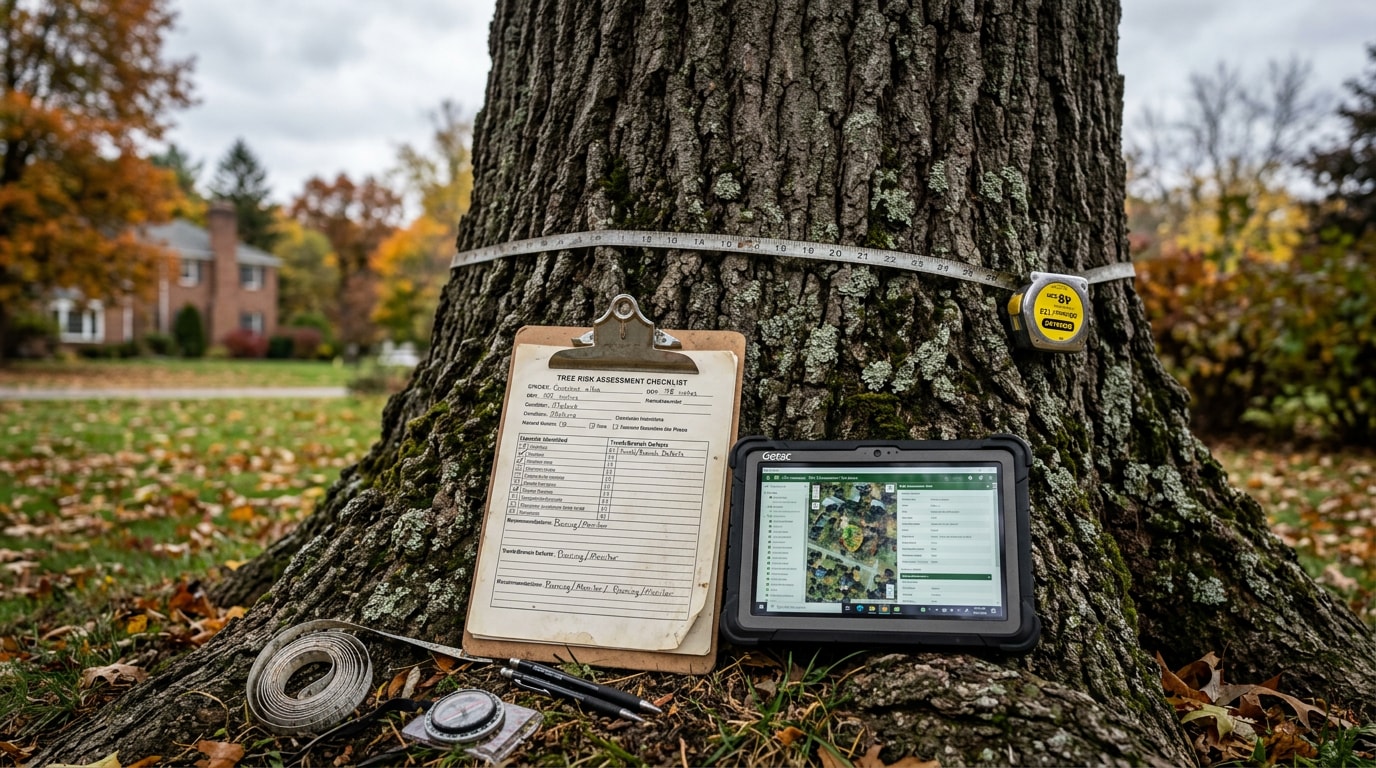
A tree assessment is a structured evaluation of a tree's biological condition, structural integrity, and overall risk level, carried out by a certified arborist rather than a general landscaper. Two related terms get used interchangeably but mean different things.
A tree health assessment looks at vitality: disease, pests, nutrient deficiencies, and canopy decline. A tree risk assessment focuses specifically on failure potential and threats to people or property.
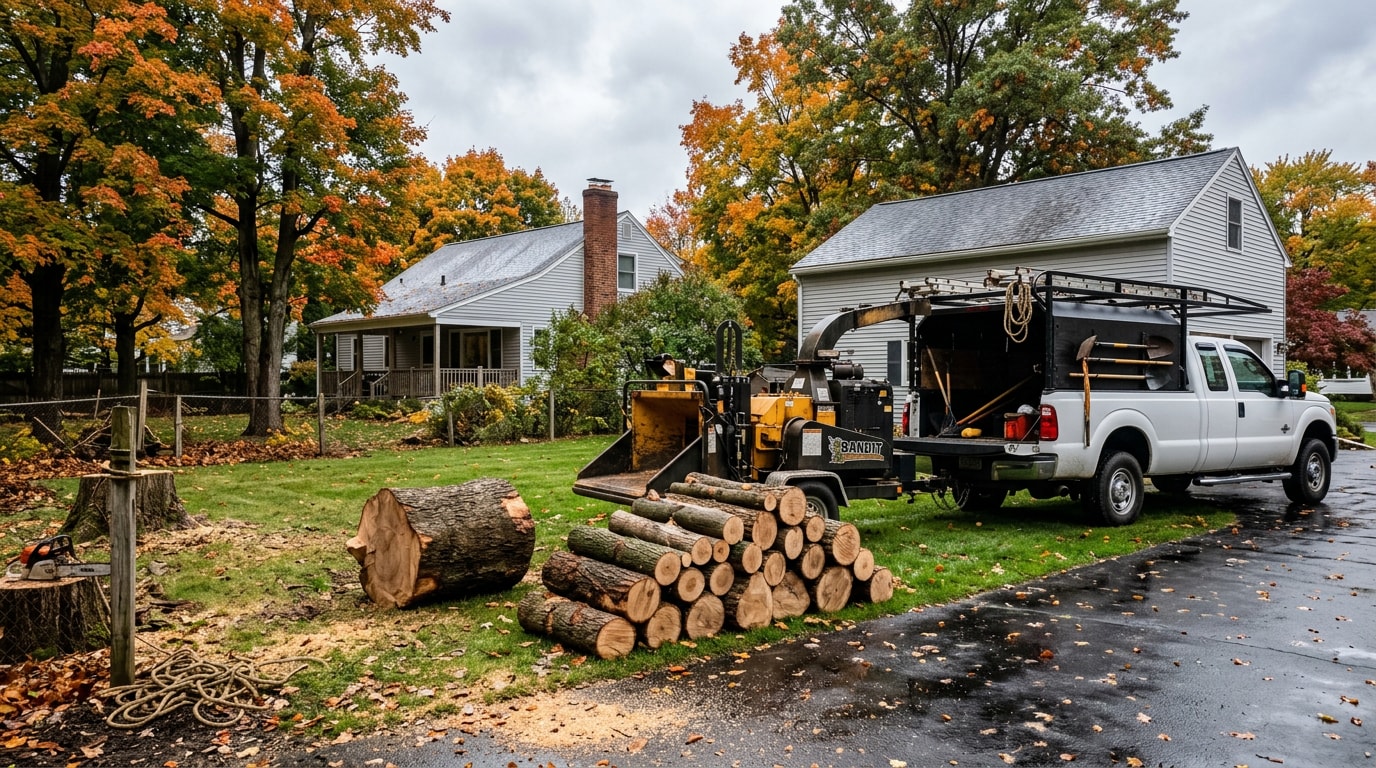
Think of it as a diagnostic exam with a written report, not a quick glance while mowing the lawn. If you want the full scope of what a local crew offers beyond assessments, the tree service page breaks down trimming, pruning, and removal options together.
Signs Your Property Needs a Tree Risk Assessment
Several conditions should prompt a call sooner rather than later. Don't wait for all of these to show up at once; any one of them is reason enough.
- A mature tree standing within falling distance of a house, driveway, or power line
- A visible or worsening lean in the trunk
- Cracked bark, open cavities, or large dead limbs in the canopy
- Mushrooms or conks growing on the trunk, root flare, or nearby soil
- Recent construction, grading, or trenching near the root zone
- A neighboring tree that already failed in a storm
Western New York's ice storms are notorious for delayed damage. Limb stress often doesn't show up as dieback until weeks later, which is one reason a prompt hazardous tree removal evaluation matters more here than in milder climates. If a storm has already brought a limb down on your property, our emergency tree removal crew can assess and clear it the same day.
Why Tree Assessments Matter for Orchard Park Homeowners
Orchard Park's older neighborhoods carry a lot of mature oak and maple canopy, much of it planted decades before current storm patterns and lake-effect snow loads became the norm. That combination of age and weather exposure is exactly why routine assessments pay for themselves.
Prevention Before Problems Escalate
A routine assessment lets an arborist observe a tree's environment, root flare, and limb unions over time, not just on the day something looks wrong. Catching a developing weak union or early decay pocket before a windstorm hits is the difference between a $300 pruning job and a $3,000 emergency removal.
In our own visits across Orchard Park's tighter, older lots, we see this play out most often on trees planted close to foundations decades ago, where root competition and soil compaction have quietly weakened structure that still looks fine from the yard.
Early Pest and Disease Detection
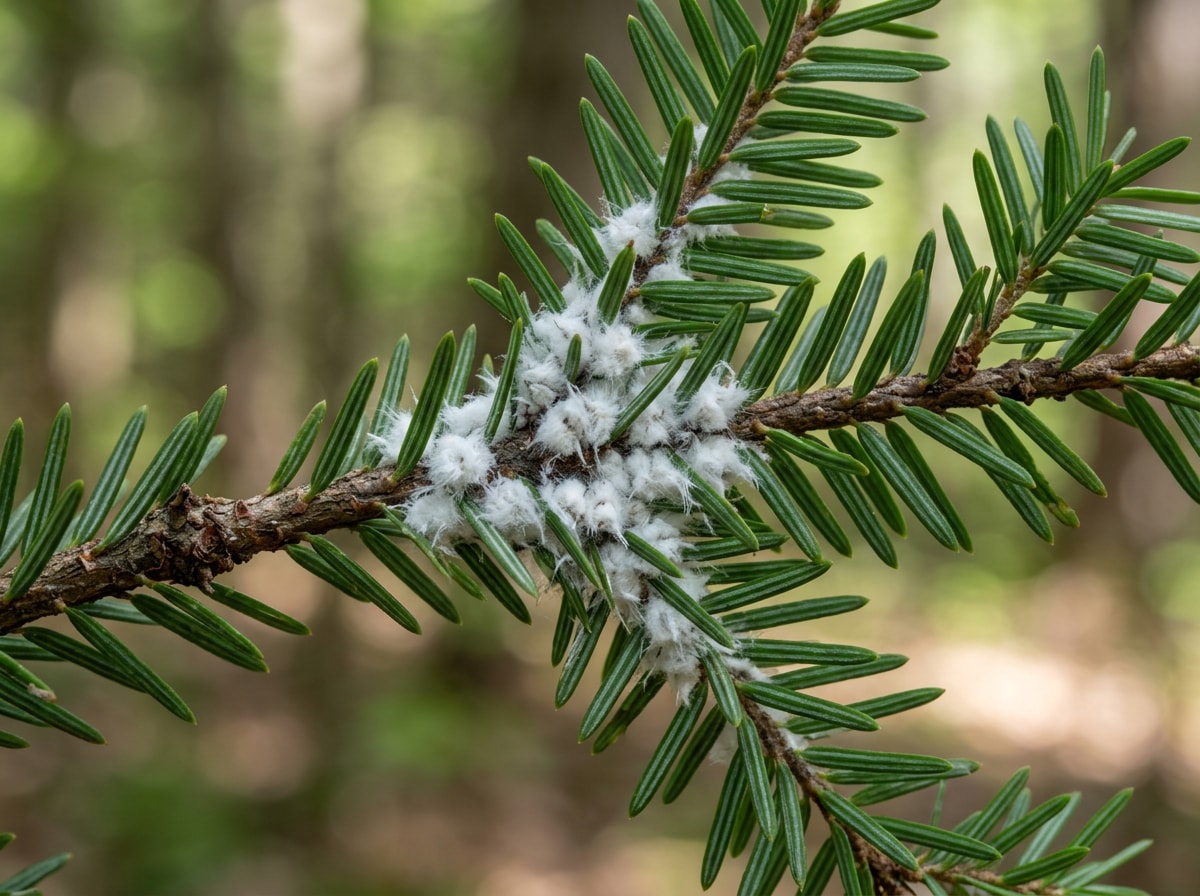
Pest and disease detection is just as important as structural checks. Emerald Ash Borer has devastated ash populations across Western New York, and Hemlock Woolly Adelgid is a growing concern closer to home than many homeowners realize.
The New York State Department of Environmental Conservation has confirmed a silver fly release targeting Hemlock Woolly Adelgid at Chestnut Ridge Park in Erie County , which sits inside Orchard Park's own town limits. Left untreated, this pest can kill a healthy tree within 10 years , according to NYSDEC's hemlock woolly adelgid page. Catching an infestation early often means a hemlock can be treated and saved instead of removed.
What a Tree Assessment Evaluates
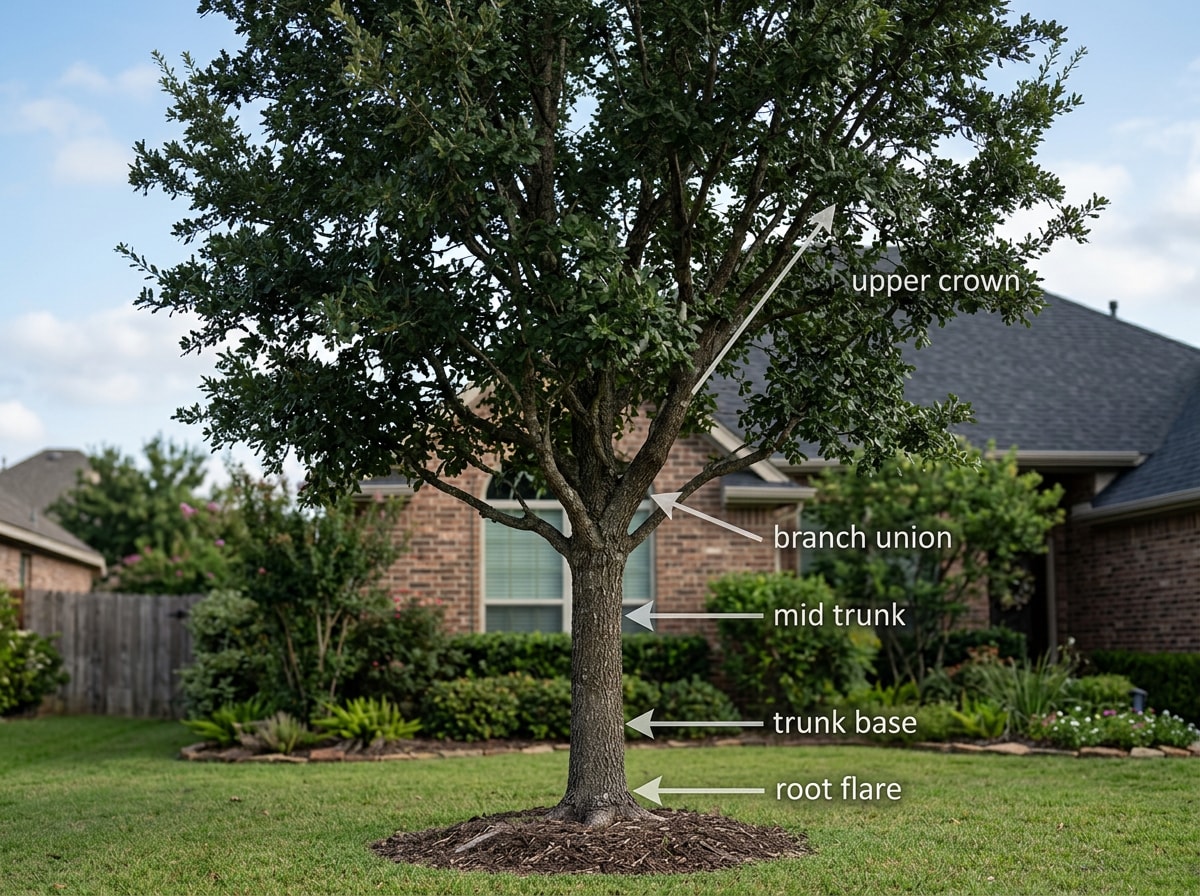
A thorough inspection moves root-to-crown: root zone, trunk integrity, branch structure, and canopy health. Depth varies from a visual walk-around to tool-assisted diagnostics like resistance drilling or sonic tomography.
Root Zone and Soil
Arborists check for soil compaction, girdling roots, root flare burial, and fungal growth at the base, since root problems are often invisible until a tree is already leaning.
Trunk and Branch Structure
Cracks, included bark, cavities, and co-dominant stems with weak unions all get documented, along with any decay indicators found on the bark surface or at pruning wound sites.
Crown and Canopy
Leaf size, color, and density get compared against species norms and the time of year. Sparse foliage, early leaf drop, or dieback at the branch tips are red flags an arborist won't dismiss as "just a dry summer."
Tree Assessment Costs in Orchard Park, NY (2026)
Pricing depends on assessment depth, tree count, and whether diagnostic tools are involved.
| Assessment Type | Typical Cost | What's Included |
|---|---|---|
| Single-tree visual assessment | $150–$350 | Walk-around inspection, visual defect check, verbal findings |
| Multi-tree property assessment | $300–$800+ | Several trees evaluated in one visit, comparative notes |
| Written arborist report | $150–$400 (often added to assessment fee) | Documented findings for insurance, real estate, or municipal use |
| Advanced diagnostics (resistance drilling, tomography) | $400–$1,200+ | Internal decay mapping, used when visual signs are ambiguous |
Property access, tree size, and whether a written report is needed for insurance or real estate purposes all move these numbers. A single mature oak on a tight lot with limited truck access will cost more to assess thoroughly than an open-yard maple.
Why Tree Inspections Matter When Buying a Home
Standard home inspections skip trees entirely. That gap matters more in Orchard Park than in newer suburbs, because home buying decisions here often involve older lots with decades-old canopy already close to the structure.
Safety Considerations
Overhanging branches can come down during ice storms, and aggressive root systems crack sidewalks, driveways, and foundations over time. This is especially relevant on Orchard Park's older, tighter lots where mature trees sit close to the home, compared with newer developments where canopy is still young and small.
Insurance Implications
Homeowners insurance often won't cover tree-related damage if the insurer determines the owner knew about a dangerous tree beforehand. The Iowa Insurance Division notes that if a tree falls due to neglect, disease, or rot, and the risk was known beforehand the claim may be denied , a pattern that holds across most carriers regardless of state. A documented assessment creates a paper trail that supports a future claim instead of undermining it.
If you're weighing a pre-purchase inspection against general yard cleanup needs, our guide on tree and limb removal in Buffalo, NY covers what typically gets flagged during that first walk-through.
How to Choose the Right Arborist
Home inspectors don't carry tree training, so look specifically for a licensed, insured arborist familiar with local regulations and Western New York species.
Confirm ISA Certified Arborist credentials first, then ask whether the individual also holds a Tree Risk Assessment Qualification (TRAQ). According to the International Society of Arboriculture, TRAQ is a voluntary qualification program designed to train and assess candidates in a specialized field of arboriculture, and credential holders must retrain and retest every seven years to keep it current. That renewal cycle is worth asking about directly. An arborist whose TRAQ credential lapsed years ago isn't working from the current standard.
You can review exactly what the credential requires on the ISA's TRAQ certification page. A qualified provider should also deliver a written report usable for real estate transactions or insurance documentation, not just a verbal opinion.
If you're coordinating assessment with trimming work on the same visit, our tree trimming truck guide for Orchard Park explains what access a bucket crew actually needs on tighter lots.
How Often Should You Schedule One?
Purdue University's Forestry and Natural Resources extension recommends that trees should be assessed through inspections by a qualified arborist, preferably an ISA Certified Arborist, with further inspections conducted after major weather events, and at a minimum trees should be inspected every five years or according to the owner's risk tolerance . In practice, most Orchard Park homeowners with mature trees near structures do better checking every one to three years, given the region's storm frequency.
Schedule a Tree Assessment at Your Orchard Park Property
Ready to get a professional opinion on a tree you're worried about? Visit 1776 Stump Grinding or go straight to the contact page to request a free estimate and speak with a certified arborist directly. We also serve nearby Hamburg and West Seneca properties if you're assessing trees across multiple addresses.
If there's no immediate answer, leave your name, location, and a short description of what you're seeing. Someone follows up promptly, usually the same business day.
FAQ
What is a tree risk assessment?
A tree risk assessment is a systematic evaluation by a professional arborist that identifies structural defects, disease, pest damage, or site conditions that could cause a tree to fail and harm people or property.
When should I schedule a tree risk assessment?
Schedule one after major storms, before buying or selling a property, or as soon as you notice visible defects like cracked bark, a new lean, or dead limbs.
How often should trees be inspected?
Mature trees should be inspected every one to three years, with immediate inspection after any major storm. Trees near structures or high-traffic areas warrant more frequent checks than trees in open yards.
How long does a tree inspection take?
A single-property visual assessment typically takes 30 to 60 minutes. Multi-tree properties or diagnostic testing can extend the visit to a couple of hours.
Does a standard home inspection check trees?
No. Standard home inspections focus on the structure and systems of the house itself and generally exclude trees entirely, which is why a separate pre-purchase tree assessment matters for older Orchard Park properties.
Will homeowners insurance cover a tree that fails without an assessment?
It depends on whether the insurer can show you knew about the hazard beforehand. A documented assessment and written report work in your favor if a claim is ever filed.